Most home offices look like they were assembled from the same big-box store catalogue, complete with a particleboard desk, an aisle-nine adjustable chair, and bare white walls. For a room where a man logs 40-plus hours a week, that is a significant missed opportunity.
These seven cool home office upgrades cover everything from lighting color temperature to statement wall pieces. None of them require a contractor or a major renovation budget, needing just better decisions instead.
1. The Command Center
The desk stands as the command pivot of the room, meaning someone who works from home should prioritize a surface that communicates solid permanence. Particleboard laminate wrapped with a printed wood grain finish operates merely as the furniture equivalent of a cardboard placeholder.
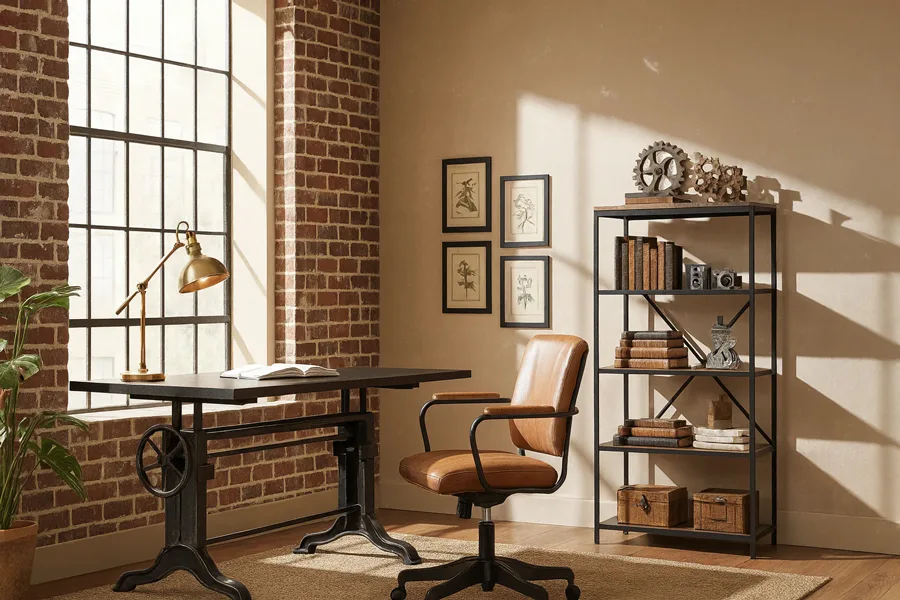
Opting for raw steel legs, solid thick hardwood, or heavy cast iron communicates that the person utilizing the surface intends to stay focused and productive. These robust industrial home office furniture pieces develop natural character over time rather than just cracking at the artificial edges.
A height-adjustable surface earns its footprint by letting you stand for conference calls and sit for heavy document focus. The lifting mechanism changes how the spine feels across eight hours without functioning like a gimmicky gadget.
Procuring a durable rustic industrial conference table from Knox Deco built from reclaimed hardwood on a heavy-duty steel base creates exactly the kind of centrepiece that alters the room dynamic. The visible craftsmanship detail highlights the distinction between a mass-produced cheap desk and a carefully chosen anchor piece long before anyone initiates a meeting.
2. Armor Up the Wall
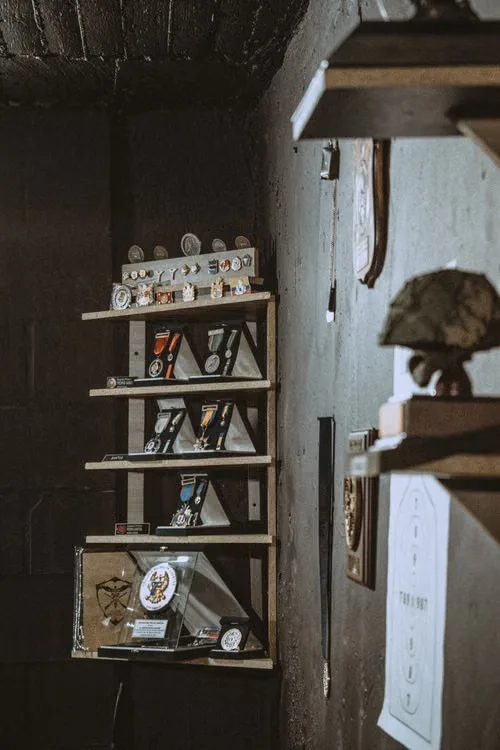
Statement pieces for home office spaces fall into items that merely occupy bare drywall and designs that freeze a visitor mid-sentence. Typical framed canvas prints and motivational quotes just serve as visual filler that adds no mechanical or historical value to the environment.
What separates a considered masculine home office design from a generic study is an object carrying actual physical weight, unique history, and an implied origin story. Displaying historical gear or armor directly provokes immediate specific questions before anyone even sits down to talk.
The display formats remain highly adaptable, ranging from a mounted great helm hovering above a bookshelf to a complete plated suit standing guard in a corner. Each positioning tactic works effectively because the metal equipment possesses three-dimensionality, heavy material density, and a tangible historical narrative.
Securing this setup resembles collecting authentic vintage maps or rare first-edition books rather than wearing replica costumes. Mounting a dedicated piece of decorative medieval armor from Medieval Collectibles brings that scarce combination of visual mass and historical presence that leaves a commanding impression.
3. Light the Fire
Overhead LED panels are the fastest way to make a room feel like a mundane waiting area. The fix relies on layered lighting from a warm desk lamp, a directional floor lamp, and one ambient source.
A color temperature of 2700 K is more advantageous to moods than 6500 K in ambient lighting, instantly shifting the atmosphere from institutional to a private study. This difference becomes immediately visible on video calls, since warm light fills facial shadows rather than flattening them out entirely.
A metal-shade or Edison-style desk lamp adds physical character alongside the functional light upgrades. Dimmer switches cost under twenty dollars at most local hardware stores, giving the room a flexible range that a single overhead fixture lacks. Install one on the directional floor lamp to make the setup dynamically adjustable across the shifting light of a full workday.
4. Shelf Control
Bookshelves function as a physical footprint of personal taste rather than basic paper storage. A curated shelf communicates intellectual life, making it one of the most effective home office décor ideas for men who want a room that reads as deliberate.
The practical rule dictates mixing books with varied objects to intentionally break up the space. A vintage brass clock, a small globe, or a piece of collected hardware carries far more visual weight than a row of unbroken spines.
Bring vertical layering into the layout to prevent visual stagnation. Not every book needs to stand upright, since stacking three or four horizontally creates a functional platform for smaller objects.
You must edit the display ruthlessly and remove placeholder items that lack conversational or historical value. Dark-stained or raw wood floating shelves reinforce the masculine aesthetics that the layered lighting profile has already established.
5. Sit Like You Mean It
Genuine leather and high-grade woven fabric both hold their shape and clean appearance over decades, unlike mesh and faux materials that notoriously sag or fade.
A tall-back executive chair broadcasts deliberate authority, while a well-chosen vintage task chair showcases specific personal taste. Both legitimate seating options beat generic ergonomic models that look permanently borrowed from a corporate cubicle floor.
A proper backrest must conform to the natural curvature of your spine and provide adequate lumbar support. Adjust your seat height to lock feet flat on the floor with knees fixed at ninety degrees, which eliminates physical tension that accumulates across a long schedule.
Secure this baseline ergonomic foundation before spending money on any other decorative upgrades.
6. Pull the Room Together With a Rug
A well-chosen textile rug physically defines the workspace zone while heavily dampening the acoustic bounce on exposed hardwood floors. Dark or deep-toned visual options like charcoal, navy, or heavy burgundy hold a grounded palette without reading as excessive visual noise.
Natural fiber materials like woven jute or thick wool bring in a rugged texture that synthetic foam alternatives fail to replicate, wearing down far more honestly over passing seasons.
The standard floor sizing rule dictates that the front chair casters and main desk legs must sit firmly on the rug at bare minimum. A tiny rug floating randomly in the center of the room without anchoring the surrounding core furniture reads as an accidental afterthought.
Beyond mere room aesthetics, the added thick fabric surface area actively absorbs echo, noticeably improving audio microphone clarity during long virtual meetings.
7. Control the Cables
Nothing undermines an otherwise detailed man cave office setup faster than a massive tangled waterfall of visible monitor and power cables. Installing a metal under-desk routing tray offers a durable hidden fix that remains consistent with your heavy industrial hardware aesthetic.
Reusable Velcro wraps easily beat static plastic zip ties for managing individual monitor runs, maintaining the protective external cable jackets perfectly intact during re-routing. Consolidating every dangling cord into one heavy-duty power strip mounted directly onto the desk backing funnels the surrounding electrical chaos into a single controlled junction.
The rapid operational payoff matters just as much as the flawlessly clean visual result beneath the monitors. A properly managed wire routing system takes roughly two minutes to safely reconfigure when swapping out charging blocks, replacing the torturous untangling project that a neglected nest normally demands.
| Pro Tip: Replace zip ties with reusable Velcro straps and install a metal under-desk cable tray to consolidate cords. The setup stays tight, neat, and reconfigures in under two minutes whenever you rearrange your workspace. |
The Real Impact
Layering warm directed light, curating functional hardware shelves, and investing in structurally supportive leather seating establish the mechanical baseline for daily productivity. Anchoring the floorplan with a heavy industrial steel desk and mounting historical decorative armor shifts the environment from a temporary holding pen to a specialized command bunker.
Grounding the floor surface with thick natural fibers and routing stray cables out of sight ensures these major core investments stay exactly at the visual focal point. Relying strictly on solid heavy wood, iron framing, and raw textiles guarantees the custom workspace serves immediate operational demands without requiring frequent part replacement.