


8 minute read
Some weekend plans do not need weeks of preparation. A friend texts on Friday afternoon: “Want to camp out for a night?” The weather looks good, work wraps up early, and suddenly you are checking the map, pulling out folding chairs, looking over the cooler, and tossing coffee, a jacket, charging cables, and a change of clothes into the car.
That is the appeal of a quick camping trip. It does not have to feel overly planned. If the car can get there, the gear fits in the trunk, there is a decent place to sleep, and the next morning starts with a slow cup of coffee, an ordinary weekend already feels a little different.
Comfortable car camping is not about filling every inch of cargo space. The best gear makes leaving easier, setting up faster, and packing down less annoying. Otherwise, camping can quickly shift from “let’s get outside for a night” to “let’s reorganize our stuff in a different location.”
Start by Turning the Trunk Into a System
The easiest mistake on a short camping trip is not usually packing too little. It is worrying that something might be missing, then throwing almost everything into the car. Extra cookware, several blankets, multiple storage bins, and a pile of “just in case” items can turn the trunk into a rolling storage closet before the trip even starts.
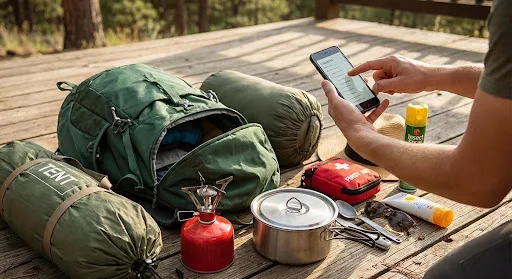
A better approach is to break your gear into clear categories: sleep, lighting, food, warmth, storage, and cleanup. Each category should have what it actually needs, and each item should have a consistent place. Know where the light is, where the stove is, and where the jacket is before you pull into camp.
The advantage of car camping is that you do not have to carry everything on your back. That does not mean the car should be chaos. When you arrive near sunset, the goal is to open a drink, turn on a light, and start dinner — not spread the trunk across the ground and sort your life outdoors.
The Tent Should Solve the First Hour
The first hour can shape the entire camping trip. Leave after work, lose a little time on the road, and you may reach the campsite just as the light starts to fade. If the tent is complicated, full of parts, or unfamiliar, the evening can feel frustrating before it has really begun.
For weekend car camping, the best tent is not always the largest one. What matters first is whether it can become usable quickly and give the campsite a stable base. Once the tent is up, the chairs, lights, dinner setup, and sleeping gear all fall into place more easily.
That is where inflatable tents have become useful for shorter trips. They reduce the time spent threading poles, assembling frames, and making repeated adjustments, leaving more of the evening for the campsite itself: the air, the light, the pre-dinner conversation, and that first moment when everyone finally sits down.
A Small Tent Is Not for Everyone, But It Works for Many Weekend Trips
A small tent is not the right answer for every camper. If the plan involves a large family setup, a long stay, or plenty of indoor living space, a compact tent can feel limiting. Too little room can force sleeping gear, luggage, and downtime into the same cramped area.
For solo campers, couples, two or three friends, or anyone trying car camping for the first time, smaller can make more sense. A compact tent is easier to carry, easier to store, and easier to fit into a simple campsite. For an ordinary weekend, practical, quick, and easy to pack away often matters more than having the biggest setup possible.
ZONKOO Lyra fits naturally into this kind of lighter trunk-based camping as one of those small inflatable tents made for quick overnight plans. Its 1–4 person capacity and 3-minute quick setup help cut down the waiting time after arrival, while the compact interior still gives sleeping gear, personal bags, and a small rest area clearer places to go. It is not trying to replace a full family basecamp. It simply makes the idea of camping out for one night easier to act on.
Food and Coffee Often Make the Trip
A weekend at camp is rarely remembered only by how well everyone slept. The warm dinner, the unhurried morning coffee, or the drink someone pulls from the cooler at exactly the right moment can be the detail that makes everyone want to do it again.
That means the gear list should not be built only around sleeping overnight. A small stove, a reliable cooler, a few easy-to-cook ingredients, camp-friendly cups, and warm lighting can turn the evening from “good enough” into something worth enjoying. You do not need to cook an elaborate outdoor meal, but the night should feel like more than just getting by.
A practical inflatable camping tent plays the role of a base space here. It does not need to become the main attraction. It just needs to keep sleeping gear, personal items, and the rest area from collapsing into one messy pile, so dinner, conversation, and cleanup can happen without everything getting in the way.
Good Gear Reduces Small Decisions
The tiring part of camping is not always the physical work. Sometimes it is the constant stream of small decisions. Where should the light hang? Which side should the shoes go on? Where does the damp jacket land? When do the sleeping bags come out? Should the dinner gear be cleaned now or dealt with later?
Gear that works well cuts down those decisions. The tent has a clear sense of space. Chairs naturally sit near the entrance. The light hangs somewhere easy to reach. Frequently used items stay in the same storage bin. The smoother the setup feels after arrival, the faster everyone can relax.
That is one of the differences between experienced campers and beginners. It is not always about bringing more gear. It is about knowing what each item is supposed to do. When everything has a job, the campsite stops looking like a scattered pile of stuff and starts working like a temporary space for eating, resting, and sleeping.
A Weekend Outside Does Not Need to Be a Hard Test
Camping does not have to be treated like a test of endurance. Bringing a comfortable chair, packing better coffee, or choosing a tent that is easier to set up does not make the outdoor experience less real. A weekend trip does not need to prove how much discomfort you can handle.
It can simply be a night away from the city, a meal under the trees, a conversation you normally do not have time for, and a morning that makes the short drive feel worth it. That is the charm of trunk-based camping: it sits somewhere between daily life and adventure. You do not have to disconnect from everything, and you do not have to drop your comfort level to zero.
A good outdoor weekend does not need chaos to feel authentic. It can be simple, organized, and comfortable enough to enjoy. If you are outside, feeling the air, the night, the firelight, and the sound of people nearby, the experience has already done its job.
Make the Next Trip Easier Before It Starts
When the end of a short camping trip is miserable, the next one becomes harder to start. A tent that is difficult to pack down, gear thrown everywhere, a messy car, and half a day of cleanup after getting home can slowly wear down your interest in camping.
The smarter move is to keep your gear in a state that makes the next trip easier. Use a tent that is easy to set up and pack away. Keep regular items in the same storage bin. Wash the camp dishes and put them back where they belong. Recharge the lights. Keep the sleeping bag dry. Then, when someone suggests heading out for the weekend, your first thought is not the hassle. It is the car keys, the route, and what to make for dinner.
Camping that fits into real life should not be saved only for long vacations. It can be an ordinary weekend, a place the car can reach, a few pieces of gear that actually work, and a small adventure that does not require weeks of planning.
Sometimes the best weekend upgrade is not flying somewhere farther away. It is getting the trunk organized, bringing what you will actually use, and giving yourself a reason to spend a night outside.