One aloe supplement label reads 10,000 mg. Another says 300 mg per capsule. Neither number tells you how much acemannan is inside.
Acemannan is a naturally occurring polysaccharide in aloe vera, and laboratories use it as a marker of the plant’s identity. Its presence alone doesn’t prove a health benefit from swallowing it.
For anyone considering an aloe supplement, the useful questions are which part of the plant was used, what the label numbers mean, what the testing covers and whether aloe is safe for you.
Key Takeaways
- Acemannan is a long-chain sugar molecule in aloe and a recognized marker of aloe identity.
- Acemannan and aloin are different compounds, so a result for one tells you nothing about the other.
- Front-label milligram figures often describe gel equivalency, not the weight of aloe in the capsule or its acemannan content.
- A useful lab report names the product, lot, method, units and results.
- Pregnancy, breastfeeding, regular medication and existing conditions are reasons to talk to a clinician before taking aloe.
What Acemannan Tells You About Aloe
Acemannan is a polysaccharide, a long chain of linked sugar units. It is one of several compounds in aloe vera, so describing it as the single ingredient behind all of aloe’s effects oversimplifies the plant.
It is a marker of identity. The International Aloe Science Council, an industry body, describes acemannan as a naturally occurring polysaccharide used to identify aloe through laboratory analysis. Detecting it helps confirm a material is aloe, but that is a narrower question than whether it benefits health.
It is not aloin. Aloin is an anthraquinone found in aloe latex, and the National Institute of Environmental Health Sciences notes it may give the plant its laxative qualities. A label that says “aloin removed” makes a claim about that compound, and you still need a separate measurement to know the acemannan content.
What the Research Can and Cannot Tell You
Aloe research spans laboratory experiments, dental materials, topical preparations and swallowed supplements. Before applying a finding to a capsule, check what was tested and how it was used.
Laboratory studies of acemannan in dental materials, for example, measure effects on cells rather than outcomes in people swallowing capsules. A topical gel, a dental material and an oral supplement expose the body to an ingredient in different ways.
For an oral-supplement study, look for a comparable preparation, relevant participants, a comparison group and an outcome that matters to you. The National Center for Complementary and Integrative Health describes the evidence on oral aloe gel safety as short-term, which doesn’t establish the safety of indefinite daily use.
Start With the Part of the Aloe Leaf
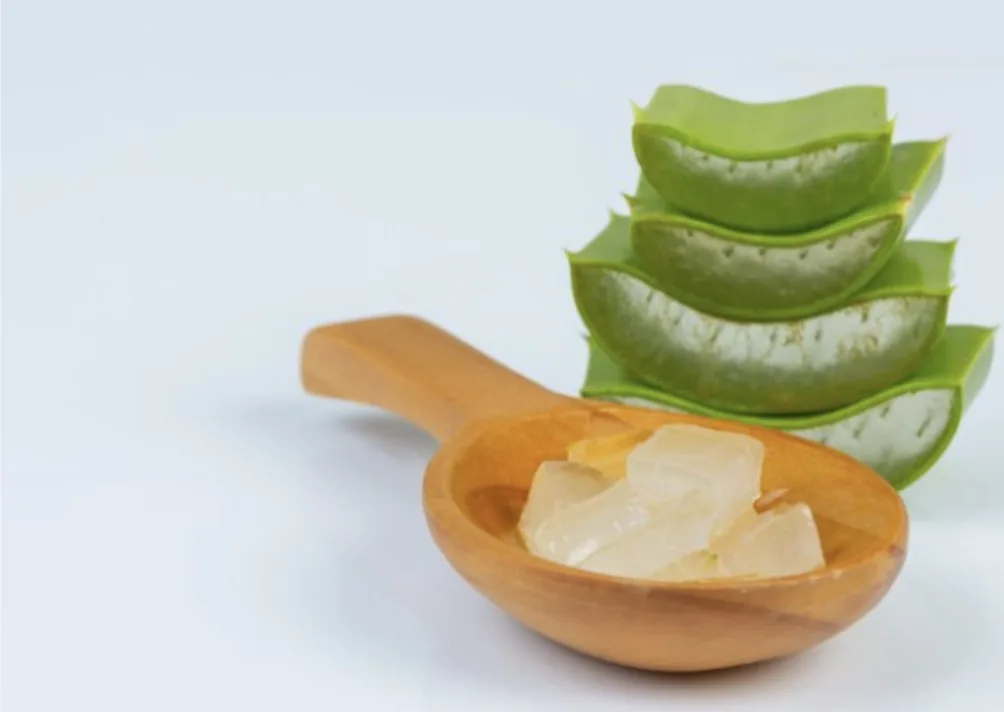
An aloe leaf contains inner gel, a latex layer and an outer rind. Products use these in different combinations and processing steps.
| Label term | What it describes | What to check |
| Inner-leaf gel (inner fillet) | The inner portion of the leaf, separated from rind and latex | Finished-product results for residual aloin and any claimed acemannan content |
| Latex | The anthraquinone-containing layer beneath the rind, a source of aloin | Mayo Clinic advises against taking aloe latex by mouth |
| Decolorized whole-leaf extract | Whole leaf processed to reduce anthraquinones such as aloin | Results showing how much aloin remains after processing |
| Non-decolorized whole-leaf extract | Whole-leaf extract without that removal step | The preparation NIEHS associates with intestinal tumors in rodent research |
The rodent findings are specific to non-decolorized whole-leaf extract. They don’t establish identical risks for every aloe product, nor do they show that other preparations are risk-free.
If a label says only “aloe vera” or “whole leaf,” ask the manufacturer which part of the plant was used and how it was processed before comparing concentration claims.
Read Beyond the Big Number on the Label
Start with the Supplement Facts panel, not the front label. Serving size, ingredient weight, gel equivalency and acemannan content all describe different things.
Serving size. Quantities are stated per serving, which may be one capsule, two softgels or a measured liquid dose. Convert everything to the same basis before comparing, and check how many servings the container holds.
Ingredient weight versus gel equivalency. As an illustration, a label might list 100 mg of aloe extract per serving, “equivalent to 20,000 mg of aloe gel.” The larger figure describes how much gel the concentrate represents, not what is in the capsule or how much acemannan it contains.
| Type of figure | What it measures |
| Actual ingredient weight | Mass of aloe material in the serving |
| Gel-equivalent weight | Amount of gel the concentrated ingredient represents |
| Compound-specific content | Measured amount or percentage of acemannan |
Acemannan disclosure. If a product emphasizes acemannan, look for a stated amount or percentage, the basis of that measurement and test documentation to support it.
For readers asking what is Acemannan on an actual label, almä’s inner-leaf aloe capsules show what clear disclosure looks like: inner-leaf gel only, a stated 40%+ acemannan concentration and every batch tested by HPLC and FTIR, with lot results published.
Other ingredients. Check the capsule material and any other listed ingredients against your dietary restrictions and allergies.
Check What the Test Report Covers
A quality seal, a general testing statement and a lot-specific certificate of analysis tell you different things. In the United States, the Food and Drug Administration does not approve dietary supplements for safety and effectiveness before they are sold.
Use these questions with any brand:
- Does the report match the product and lot? A raw-material report doesn’t confirm results for finished capsules.
- Does it give numbers? For an acemannan claim, look for a measured result with units, not just a pass or fail.
- How was aloin measured? AOAC Official Method 2016.09 uses HPLC, a laboratory separation technique, to measure aloin A, aloin B and aloe-emodin in raw materials and finished products. It doesn’t measure acemannan.
- What is the detection limit? For an “aloin-free” claim, a result below the method’s detection limit isn’t proof of absolute zero.
- Are contaminants covered? Check for heavy metals, microbes and pesticide residues, which an identity test alone doesn’t address.
The NIH Office of Dietary Supplements notes that quality seals don’t guarantee safety or effectiveness. Check that any certification applies to the exact product you’re buying.
Know When to Pause Before Buying
A label and lab report can’t tell you whether oral aloe suits your health history. Review that first.
Pregnancy and breastfeeding. Mayo Clinic advises against aloe use during pregnancy or breastfeeding.
Medications and existing conditions. If you take regular medication or manage a diagnosed condition, talk to a clinician or pharmacist before starting. For children, seek qualified clinical advice.
Rare liver injury. LiverTox, the NIH reference on drug- and supplement-related liver injury, reports rare cases of clinically apparent liver injury linked to oral aloe. Stop taking it and seek medical advice if you feel unwell.
Laxative-type effects. Loose stools or cramping are reasons to stop and seek advice, not signs of “cleansing.”
No established general-wellness dose. Serving instructions on a label don’t establish a therapeutic dose or the safety of long-term use. With so many supplement products now on the market, bringing the bottle and your medication list to a clinician or pharmacist is the simplest way to check for interactions.
Compare the Full Cost Before Committing
If you decide to try a product, compare spending by labeled servings rather than front-label milligrams. Divide the delivered price, including shipping, by the number of servings on the label.
Before choosing a subscription, find the renewal price, billing interval and cancellation method in the checkout terms. Liquids and capsules also have different storage needs, so check the label before you buy.
FAQ
What is acemannan?
Acemannan is a naturally occurring polysaccharide in aloe vera, made of linked sugar units. Laboratories use it as a marker to confirm aloe identity.
Is acemannan the same as aloin?
No. Aloin is an anthraquinone found in aloe latex with laxative effects, while acemannan is a polysaccharide. Each needs its own test result.
What does “10,000 mg” on an aloe label mean?
It often describes gel equivalency, the amount of gel a concentrate represents, rather than the weight of aloe in the capsule or its acemannan content.
How can I check an aloe supplement’s quality?
Look for a lot-specific report that names the product and gives the method, units and results for identity, aloin and contaminants.
Who should avoid oral aloe?
People who are pregnant or breastfeeding should avoid it, and anyone on regular medication or with a health condition should talk to a clinician first.

