Go to any parent and ask them about maths homework, and you’ll get 10 different answers. Other people swear by worksheets. Others give her a tablet and she breathes easier. So which one works? The truth is not quite as sensational as the headlines. While there’s no substitute for good old-fashioned teaching, math apps can be a useful tool for learning. We’re going to look at both sides, review the numbers, and offer suggestions on how to select the most effective learning options for children at home.
What Are Traditional Learning Methods in Math?
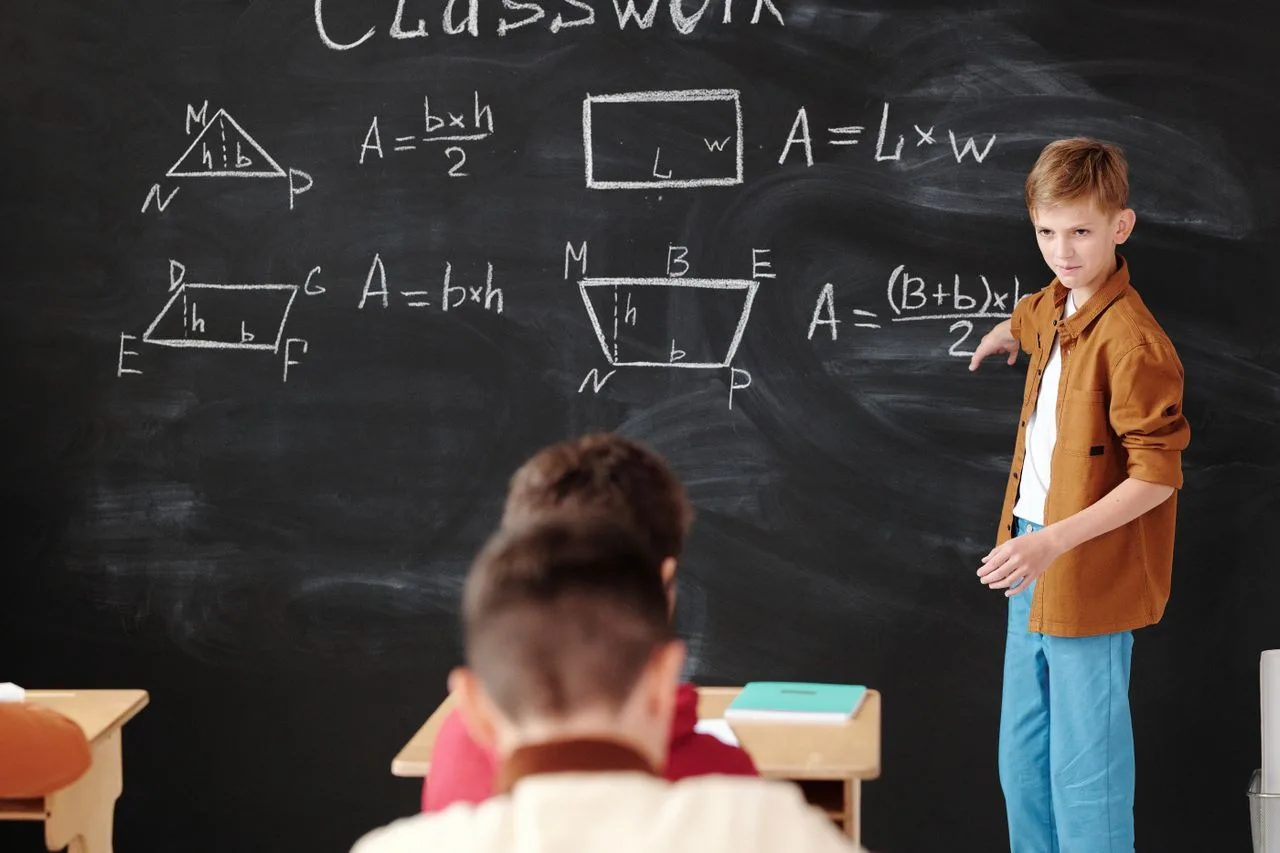
Consider books, blackboards, flash cards and reciting times tables aloud. Paper and pencil. Teacher going down the aisles and pointing to the wrong answer and saying, “Look at that step again.”
The traditional ways of learning are not without their merits. Handwriting causes a delay in the child’s writing which is the source of thinking. A teacher can look at a face and see that someone is confused, even if that person doesn’t tell their teacher that they are. Group work helps students to explain ideas verbally – a difficult task for children.
However, there are also weaknesses. A teacher and 30 students. So there’s someone who’s bored and someone who’s lost. It is often not until a day later that feedback is given for homework, causing the mistake to become a habit.
Why Kids Often Enjoy Math Apps
Let’s face it – math apps are designed to be fun. Little characters that cheered, points, badges. That is better than a page of 40 sums for a 7 year old to do.
Instant feedback
In the event the kid responds incorrectly, the application responds in seconds. No waiting. In early math, the brain associates the error with the correction as long as they are both fresh in the memory.
Practice that adapts
A good app will increase or decrease in difficulty as needed. Three correct answers in succession? Harder questions appear. Struggling? The app steps back. It’s similar to a private teacher. In 1984, educational psychologist Benjamin Bloom came back from the field with the report that students who were tutored one-on-one in schools scored about two standard deviations higher than other students in regular classrooms. Apps are not full tutors by themselves but personal pacing is precisely why many schools have them.
Low pressure
Some children become paralysed when they make a mistake in front of their peers. An app doesn’t raise its eyebrows, it doesn’t sigh. A child may try ten times in private, and fail ten times before he or she gets it.
Where Math Apps Fall Short
Not everything glitters. A lot of the well-known math applications are simply digital flashcards with confetti beads on top. They don’t care about understanding, they’re focused on hitting and speeding. A child could gain three stars without being aware of why 3/4 is greater than 2/3.
Add screen time, too. The American Academy of Pediatrics recommends limiting 2-5 year old children to 1 hour per day of high-quality screen time. A lot of homes exceed that limit without realizing it.
Another issue is distractions. One notice and the fractions lesson is lost! An app also cannot detect any hint of aggravation or partial obliteration of the work on a page.
But quality is very inconsistent. There are thousands of math apps available, however, very few of them have been evaluated by researchers.
What Does the Research Say?
The outcomes have been mixed yet are mostly positive. In general, math-related technology evaluations tend to yield small to moderate results, particularly in cases where the app is used in addition to the teacher instead of instead of the teacher. Applications that provide tips and clues for errors do much better than applications that just indicate right or wrong answers.
The context also counts. NAEP mathematics scores for 2022 were 5 points lower for 4th-grade students and 8 points lower for 8th-grade students in the U.S. compared to 2019. That’s a big decline, and that makes it a matter of urgency for schools and parents to find any system that will help kids catch up. Apps can be one solution. They aren’t the only ones.
The pattern is easy. There is no clear winner or loser. It is important that a child continues to practise as often as they can, and that an adult checks that the idea has stuck.
Using a Math Solver Without Losing the Learning
Eventually, homework becomes as difficult as a parent’s memory. That’s where a math problem solver can come in useful. For example, AI Math Problem Solver includes all of the steps, not just the answer. So the little fellow works this out for himself, then looks and reads what he got wrong in the step. When used like this AI math app acts as an answer key and explanations. It is used as a convenience and doesn’t teach anything. Attempt first, correct second.
How to Mix Both Approaches
You don’t have to pick a side. Most families get the best results from a blend. Here’s a simple routine that works for many kids:
- Learn new ideas on paper. Fractions, long division, word problems. Let your child write, draw, and make a mess.
- Practice with an app. Ten to fifteen minutes a few times a week is plenty. Choose apps with hints and no ads.
- Talk it through. Once a week, ask your child to teach you one thing they learned. If they can explain it, they know it.
- Watch the clock. Keep sessions short and screen-free time protected.
One more tip: listen to your child’s emotions. A child who doesn’t enjoy worksheets may enjoy an app. A second might be more of a sensory seeker and enjoy a still notebook. Both children are correct.
So, Are Math Apps More Effective?
Sometimes, yes. Math apps can be more effective than a basic worksheet when it comes to fast practice, instant feedback, and holding a child’s interest, especially when he or she is reluctant. Traditional approaches to learning are difficult to replace for building deep understandings, working with difficult concepts, and articulating reasoning.
The best strategy is to “use” the app as a tool, rather than a teacher. Mix them with books, conversation and a patient adult on hand, and you’ll provide your child with the best blend of learning styles to date for children.