



5 minute read
Industrial pumps play a crucial role in various industries, providing the ability to move liquids and slurries efficiently. These pumps are found in multiple sectors with unique requirements and operational challenges. The versatility of industrial pumps is evident from the extraction of natural resources to irrigation in farming. The selection of an appropriate type often depends on the nature of the fluid, pressure requirements, and the specific application at hand. As companies navigate the complexities of their respective industries, understanding the different configurations of pumps becomes essential for optimizing performance. Whether for mining, agriculture, or hydraulic systems, the right pump choice improves productivity and reduces operational costs.
Mining Applications of Industrial Pumps
Mining industries rely heavily on industrial pumps to transport slurry, water, and chemicals to facilitate extraction. Slurry pumps are designed to handle abrasive materials, ensuring minimal wear and tear during operation. When sourcing these tools, it’s vital to consider the capabilities of different manufacturers, especially those specializing in slurry pumps and dredge equipment. Opting for industrial-grade pumps can enhance performance and efficiency in this sector. Operations often become more streamlined with reliable pumps, significantly reducing downtime and maintenance costs. Statistics indicate that proper pump selection can lead to a 30% reduction in operational inefficiencies, reinforcing the importance of tailored equipment in mining.
Agricultural Use of Industrial Pumps
Agriculture is another sector that significantly benefits from industrial pumps, which are vital for irrigation, fertilization, and water management. Pumps facilitate water movement from sources to fields, ensuring crops receive hydration. High-efficiency pumps can positively impact crop yields, making them essential for modern farming practices. Furthermore, using pumps to distribute fertilizers increases efficiency and reduces resource wastage. Using precision irrigation systems powered by pumps can lead to savings in water usage of nearly 50%. Selecting the correct type of pump for agricultural use may depend on factors like field size and crop type, highlighting the demand for customized solutions in this industry.
Industrial Pumps in the Oil and Gas Sector
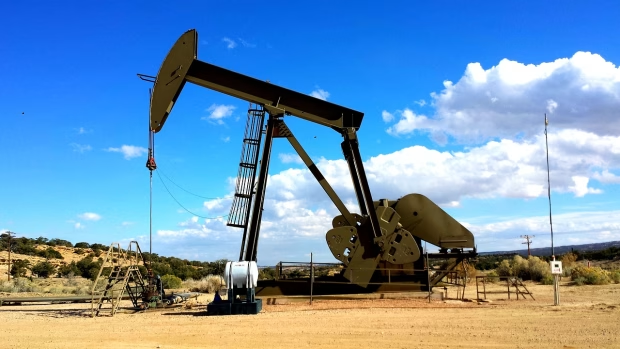
The oil and gas industry utilizes industrial pumps to manage crude oil extraction, transportation, and refinement processes. During drilling, pumps are essential for delivering fluids and cooling equipment to the job site and facilitating extraction. After extraction, pumps help transport crude oil through pipelines to refineries, forming a critical part of the supply chain. In this sector, centrifugal and positive displacement pumps commonly handle varying fluid viscosities and pressures effectively. The environment can be treacherous, and the robustness of industrial pumps helps withstand extreme temperatures and corrosive substances. Reports suggest that the efficiency of these pumps can directly influence operational costs, inviting companies to prioritize their selection and maintenance rigorously.
Pumps in Wastewater Management Systems
Industrial pumps are pivotal in wastewater management, where they help transport sewage and treat contaminated water. City infrastructure greatly depends on pumping systems for adequate sanitation and public health. Efforts towards sustainable practices have led to the development of advanced pumping solutions that minimize energy consumption and environmental impact. Submersible pumps, for example, are widely adopted in these systems as they are effective for transporting sewage and treating wastewater. Studies estimate that over 70% of municipal water treatment plants use various forms of industrial pumps in their operations. Continuous technological advancements promise even greater efficiencies, reinforcing the importance of this industry’s investment in modern pumping solutions.
Industrial Pumps in Chemical Processing
The chemical processing industry employs industrial pumps to move toxic, corrosive, or high-temperature substances safely and efficiently. Specialized pumps are designed to process the unique challenges of transferring chemicals, ensuring safety and productivity. The design requirements in this sector often include factors such as material compatibility and pressure ratings. Positive displacement pumps are commonly utilized for their ability to provide precise flow rates and sterilization processes. As safety and environmental impact regulations tighten, companies invest in pumps that meet all necessary compliance mandates. Automation and monitoring capabilities are increasingly integrated with modern chemical pumps to enhance reliability and performance.
Impact of Technology on Industrial Pump Efficiency
Technology integration has profoundly impacted the efficiency of industrial pumps across all sectors. Smart pumps equipped with sensors and monitoring software can provide real-time data on performance metrics, enabling proactive maintenance. This capability helps to optimize operational efficiency and prolong equipment lifespan. Wireless technology even allows for remote monitoring, reducing the need for manual checks and minimizing downtime. As a result, companies can capitalize on data analytics that inform future purchasing decisions for pump systems. Splurging on advanced pumping solutions may seem daunting, but the potential cost savings and enhanced productivity are worth the investment.
The versatility of industrial pumps cannot be overstated. Their applications range from mining and agriculture to oil, gas, and chemical processing. Investing in quality, reliable pumps leads to significant operational efficiencies, careful consideration of equipment maintenance, and technology integration. With an understanding of the diverse applications and benefits of industrial pumps, organizations can confidently navigate their industries.