A bomber jacket can look right on a product page and feel wrong with your clothes. The sleeves bunch over your hoodie, the hem lands awkwardly on your jeans, or the shiny finish clashes with everything else you own. The fix is simple: start with the outfits you already wear, then check the jacket’s fit and finish against those pieces.
For an easy starting point, try an olive or navy bomber with a white tee, straight dark jeans and white sneakers. From there, you can adjust the layers and shoes for weekends, travel days or casual dinners.
Key Takeaways
- Build around two outfits you already own before you shop.
- Choose a finish (shine, texture, detailing) that suits the rest of your wardrobe.
- Check the fit over the layer you’ll wear most often, not just a tee.
- Compare size-chart measurements with a jacket that already fits you well.
- Read the product’s fabric, insulation and care details before buying.
Start With Outfits You Already Wear
Ribbed or elasticated cuffs and hems are the classic bomber details. They gather the jacket at the wrists and waist. Length, volume, collars and pockets vary, so judge each design on its own rather than assuming every bomber fits the same.
Before you shop, make three decisions:
Name two outfits you already own. Pull out the pants and shoes you wear most. If your weeks run on straight jeans and sneakers, check the jacket against those first.
Identify the layer underneath. A tee, hoodie and sweater need different amounts of room in the chest and shoulders. Decide which you’ll wear most, then use it for the fit check.
Choose the main occasion. Weekends, airport days and casual dinners call for different details. A roomy jacket suits a hoodie for travel, while a low-detail style sits more easily over a shirt for dinner.
You don’t need to change your favorite pant shape, either. Short, rounded bombers can look great with wide-leg trousers, not just slim pants. Start with the trousers you like and check where the jacket’s hem meets the waistband.
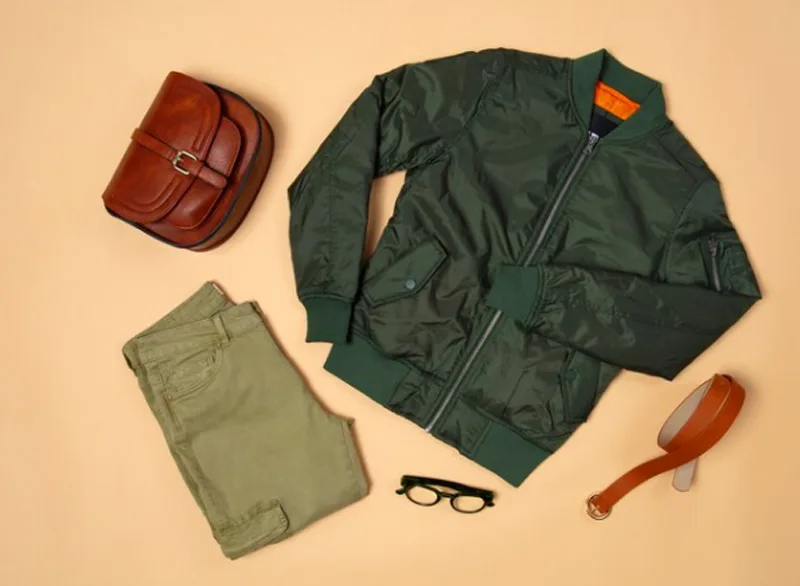
Choose a Finish That Suits Your Wardrobe
Once you know the outfits, compare texture, shine and detailing. These decide how much the jacket stands out. Photos show the look, but always check the product description for fabric, insulation and care.
Smooth shells. Nylon gives a light sheen and a sporty feel that works with sneakers and denim. A shell fabric doesn’t tell you what’s inside, so check the lining and fill separately.
Matte cotton or twill. Low-shine fabrics blend quietly into casual outfits. Washed cotton twill has a relaxed, lived-in look.
Faux leather. A coated finish gives a leather-like look without being genuine leather. Check the coating, base fabric and silhouette before ordering.
Suede-look. Check whether the texture comes from genuine suede or a suede-like fabric finish. A clear listing will say which, and the two need different care.
| Finish | Look | What to check |
| Smooth nylon | Light sheen, sporty | Shell fiber, lining, any stated water-repellent finish |
| Matte cotton or twill | Low shine, blends in | Fiber percentages, stretch content, care method |
| Faux leather | Leather-like sheen | Coating type, base fabric, silhouette |
| Suede-look | Soft, napped texture | Whether it’s a fabric finish or genuine suede |
Think about the rest of your wardrobe too. A textured jacket stands out against a plain tee and smooth trousers, while a low-shine jacket is easier to wear with clothes that already have strong textures or details.
Get the Fit Right Over Your Usual Layers
Try the bomber over the layer you plan to wear underneath. If you’ll usually wear a hoodie, trying it over a tee won’t tell you whether there’s enough room.
Shoulders. On a classic cut, the seam sits near the end of your shoulder. On a relaxed cut with dropped shoulders, it falls past it. Make sure you like the shape and can move comfortably.
Closed chest. Zip the jacket all the way and look for horizontal pulling across the chest. A boxy design will naturally leave more room than a close-fitting one.
Hem. Between the waist and upper hip is a good starting point for a classic bomber, but relaxed styles may sit lower by design.
Sleeves. Check where the cuffs rest with your arms relaxed, then bend your elbows. Ribbed cuffs can gather a little extra length, but they won’t fix a sleeve that’s too short.
Movement. Sit down, then reach forward as if picking something up. Watch for pulling across the upper back and bunching under the arms, especially in padded or non-stretch fabrics.
When shopping online, read the size chart before picking a size letter. A garment measurement and a body measurement aren’t the same thing, so check which one the chart uses. The ROVADAY bomber jackets collection is a useful example: it covers nylon, polyester, cotton, suede-like and faux leather finishes, and many styles share a relaxed, boxy cut with ribbed cuffs and hem, often with dropped shoulders. Every size chart lists measurements in centimeters, and the brand suggests comparing length, chest, shoulder width and sleeve length with a jacket you already own, rather than sizing up by default, since the cuts are already roomy. Its faux leather and suede-like styles are surface finishes, not genuine leather or suede.
Build Five Bomber Jacket Outfits
Use these combinations as starting points, then swap one piece at a time.
- Everyday casual. Pair an olive bomber with a white crewneck tee, straight dark or medium-wash jeans and white low-top sneakers. The white tee separates the jacket from the denim, and the sneakers repeat its lighter tone. Swap: go navy if your wardrobe leans blue.
- Relaxed travel day. Wear a black relaxed-cut bomber over a lightweight gray hoodie, with charcoal chinos and low-profile sneakers. The gray hood breaks up the black while keeping the palette calm. Swap: if the hood bunches at the collar, use a gray crewneck sweatshirt instead.
- Relaxed office. Try a navy bomber with minimal hardware, a pale-blue Oxford shirt, stone chinos and brown loafers, where your dress code allows it. The shirt collar adds structure, and the low-detail jacket keeps things understated. Swap: clean white leather sneakers where they’re accepted.
- Dinner out. Combine a brown suede-look bomber with a dark fine-knit crewneck, charcoal trousers and Chelsea boots. Keeping the supporting pieces smooth and mostly tonal lets the jacket’s texture take the lead. Swap: a dark gray merino turtleneck for a cooler evening.
- Tonal weekend. Wear a black faux leather bomber with a black tee, washed-black jeans and black boots. Texture and shade separate the pieces: the jacket has sheen, the tee is matte, and the faded denim leans charcoal. Swap: dark indigo jeans for more contrast.
| Occasion | Top | Pants | Shoes |
| Everyday casual | White crewneck tee | Straight dark or medium-wash jeans | White low-top sneakers |
| Travel day | Lightweight gray hoodie | Charcoal chinos | Low-profile sneakers |
| Relaxed office | Pale-blue Oxford shirt | Stone chinos | Brown loafers |
| Dinner out | Dark fine-knit crewneck | Charcoal trousers | Chelsea boots |
| Tonal weekend | Black tee | Washed-black jeans | Black boots |
Adjust for the Weather
Changing the layer underneath makes a bomber useful across more days, but its limits depend on how it’s made. For layering pieces that work across the seasons, this guide to men’s fashion essentials for every occasion covers knitwear, overshirts and other outerwear worth owning. Check the shell, lining, fill and any stated weather protection rather than judging warmth or rain resistance by looks.
Mild and dry. A tee under an unlined or thinly lined bomber keeps things light. Check how the hem sits if your tee is longer than the jacket.
Cooler days. Add a fine-knit sweater or sweatshirt if the jacket has room, then repeat the sitting and reaching checks.
Wet or cold. Read the product’s insulation and weather claims. Padding or a stated water-repellent finish helps, but “water-repellent” means protection against light rain, not waterproofing. A quilted look or a glossy shell on its own doesn’t guarantee either. If you need real insulation or rain protection, choose outerwear built for it.
Check the Care Instructions Before Buying
Care is garment-specific. Two jackets with the same shape can need completely different washing methods, so include care in your comparison before you order.
Read the label. Some bombers need cold hand washing, while others can go in the machine. Don’t borrow one jacket’s method for another.
Read composition and care together. A coated finish, suede-look surface or waxed shell doesn’t tell you the full cleaning method on its own.
Pick a routine you’ll actually follow. If a jacket needs hand washing and you know it’ll end up in the machine, choose a different one.
Conclusion
The best bomber jacket is the one that works with what’s already in your closet. Start with two outfits you love, choose a finish that suits them, and check the fit over the layer you’ll wear most. Compare size-chart measurements with a jacket that already fits, and read the fabric and care details before you buy. Get those basics right, and one bomber can carry you from Saturday errands to dinner with ease.
FAQs
Should I size up in a bomber jacket?
Not by default. Many bombers are already cut relaxed or boxy, so compare the size chart with a jacket you own before sizing up.
What color bomber jacket is the most versatile?
Olive, navy and black work with most wardrobes and pair easily with denim, chinos and neutral tops.
Can I wear a bomber jacket to the office?
In relaxed workplaces, yes. A low-detail navy bomber over an Oxford shirt and chinos works well where the dress code allows.
Is a faux leather bomber the same as leather?
No. Faux leather is a coated finish that looks like leather but isn’t, so follow its own care instructions.

