Tennis feels better when your racquet fits the way you actually play. A frame that suits a beginner can feel clumsy for an advanced player, while a pro-style racquet can tire out a returning player quickly.
Choosing a tennis racquet comes down to five specs: head size, weight and balance, length, grip size, and string pattern. Once you understand those basics, it is much easier to compare options.
Use the targets below to compare specs by level, then test the feel before you commit.
Quick fit by skill level
These are starting points. Your swing style, strength, and comfort matter as much as your skill label.
- Beginner: choose an oversize head around 105 to 110 square inches, a lighter frame, and an open 16×19 string pattern for easier power and forgiveness.
- Intermediate: look for a midplus head around 100 to 105 square inches, medium weight, and a slightly head-light balance for control with maneuverability.
- Advanced: consider a 95 to 100 square inch head, more weight for stability, and a denser 18×20 pattern if you want extra control.
Adult head sizes commonly range from roughly 93 to 135 square inches.
If you want to compare options by head size, weight, balance, and junior length, this Australian collection of tennis racquets for all players makes those filters easy to use. It also serves shoppers in Australia and New Zealand.
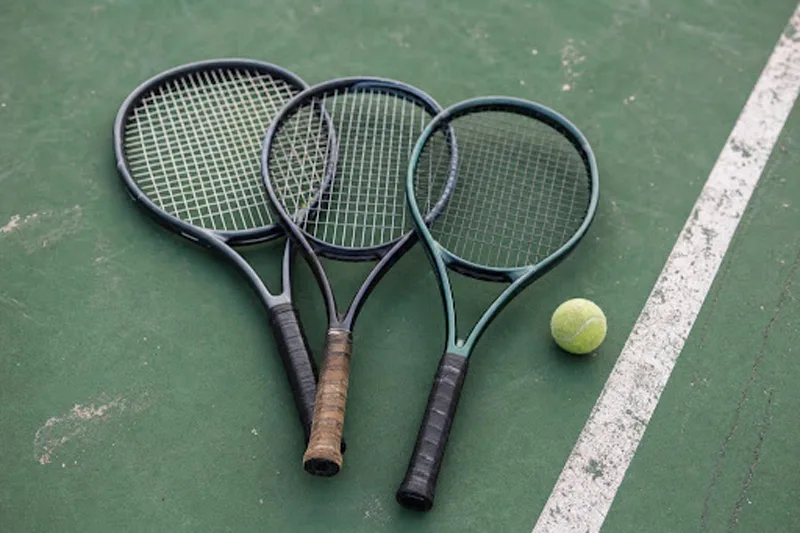
Head size and the power versus control tradeoff
A bigger head gives you a larger sweet spot and more forgiveness on off-center hits. A smaller head rewards cleaner contact with more control.
If you are still building consistency, extra forgiveness helps you keep rallies going and enjoy the game sooner.
Weight and balance
Lighter frames are easier to swing and move quickly, which helps at the net and on fast exchanges. Heavier frames add stability and absorb pace on hard hits.
Balance describes where the weight sits. A head-light racquet feels easier to maneuver, while a head-heavy racquet puts more mass toward the top of the frame.
If you have a history of tennis elbow, consider a lighter unstrung weight under 300 grams paired with a larger head around 102 to 105 square inches.
Length
The standard adult racquet is 27 inches long. Commercial adult frames usually range from 26.5 to 29 inches, which is the legal maximum.
An extended-length frame can add leverage on serves, but the extra length can feel slower during quick net play and defensive swings.
Grip size
Try the index-finger test. Hold the racquet in a normal grip and check that you can just fit the index finger of your other hand in the gap between your fingertips and palm.
Standard adult grip sizes are 4, 4 1/8, 4 1/4, 4 3/8, 4 1/2, and 4 5/8 inches, often labeled 0 through 5.
If you fall between sizes, choose the smaller grip and add an overgrip. It is easier to build up a grip than to make one smaller.
String pattern and stiffness
An open string pattern, such as 16×19, tends to give more spin and a softer feel. A denser pattern, such as 18×20, offers more control and may help strings last longer.
Frame stiffness matters too. A stiffer frame can add power, but it may also transmit more shock to your arm. If comfort is a priority, test the frame with the string type and tension you expect to use.
For parents: junior sizing
Junior racquets typically run from 17 to 26 inches. As a broad guide, younger children use shorter frames and older juniors move toward 26 inches before a full adult racquet.
Height helps too. Juniors around 55 inches tall often move to 26-inch frames, then to a full 27-inch racquet above roughly 59 inches depending on strength and readiness.
Recheck the fit after each growth spurt so the frame keeps pace with your child.
Try before you buy
Specs on paper only tell you so much. The feel in your hand tells you the rest.
Demo programs, borrowing a friend’s frame, or renting for a session are low-risk ways to compare options. If possible, hit serves, volleys, returns, and groundstrokes rather than judging the racquet from a few easy rallies.
A racquet is one of the more sensible fitness investments you can make because a good fit encourages you to play more often. Model names change, but the fit questions stay the same: can you swing it comfortably, control the ball and play without arm discomfort?
Frequently asked questions
What head size should a beginner choose?
An oversize head around 105 to 110 square inches gives most beginners a larger sweet spot and more forgiveness.
What grip should I pick if I am between sizes?
Choose the smaller grip and add an overgrip to fine-tune the fit.
How heavy should my tennis racquet be?
Most adult frames sit somewhere between roughly 250 and 320 grams unstrung. Lighter frames are easier to swing and better for quick net play, while heavier frames stay stable against pace. If your arm tires before your legs do, drop weight before you drop head size.
Is a 16×19 or 18×20 string pattern better?
Neither is better outright. A 16×19 open pattern gives more spin and a softer feel, which suits players still building consistency, while an 18×20 pattern gives more control and often longer string life for cleaner, faster swings.
What size tennis racquet does my child need?
Go by height rather than age. Juniors around 55 inches tall usually move to a 26-inch frame, then to a full 27-inch adult racquet above roughly 59 inches, depending on strength and readiness.
Can the wrong racquet cause tennis elbow?
A frame that is too heavy, too stiff or strung too tightly can add strain to your arm. If you have a history of tennis elbow, look at a lighter unstrung weight under 300 grams with a head around 102 to 105 square inches, and test it with the string setup you actually plan to use.