Starting watercolor should feel simple. The trick is buying a set that matches how you plan to paint, not the biggest box on the shelf. You can buy watercolour paint from reputable online retailers that let you compare formats, grades and color counts before committing to a full set.
Get that right and you can save money while avoiding early frustration. A good first kit also travels well, which matters if you like to sketch on trips or capture a scene from a hotel balcony.
If documenting your travels is part of the appeal, a small travel watercolor habit pairs well with photos and notes. Use this plain buying path to choose a set that fits your needs.
Quick Picks by Scenario
Start with the way you paint most often, then narrow your choices from there.
- Travel sketching: choose a compact 12 to 24 color pan set that fits in a jacket pocket or daypack.
- Desk practice at home: try a small tube set plus empty pans you can fill and refill.
- Work you want to display: prioritize colors rated for permanence and lean on single-pigment earths.
None of these require a big spend. They simply point you toward the right format and color count.
Format First: Pans vs Tubes
Watercolor paint is pigment held in a gum arabic binder, with other ingredients added for stability and lightfastness. That same paint usually comes in two main formats.
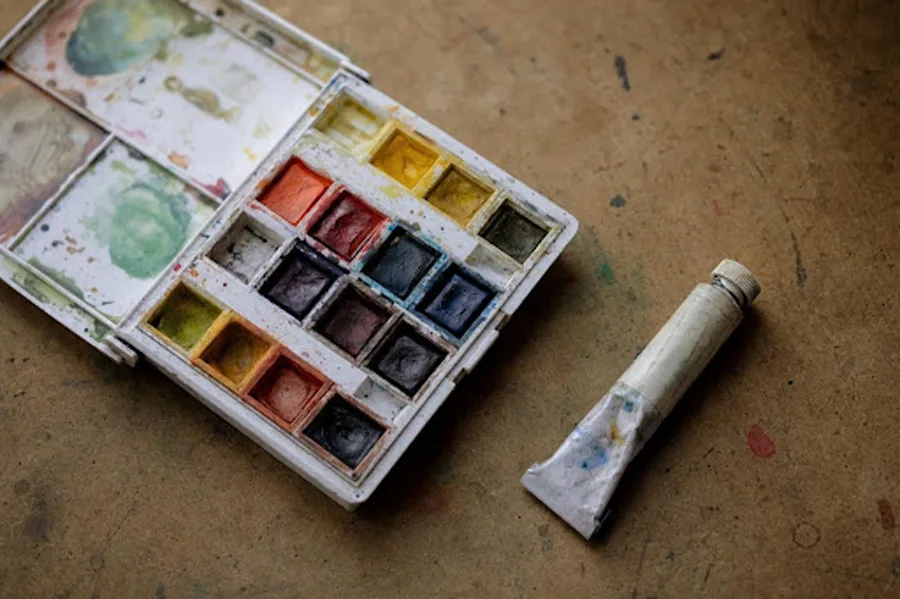
Pans are dry cakes of paint in small trays. They are portable, easy to store, and simple to drop into a boxed palette. They take a moment to activate with a wet brush.
Tubes hold moist paint that you squeeze onto a palette. They make strong color mixes faster and tend to be more economical by volume. Common tube sizes include 5, 10, 14, 15, and 21 ml. You can also use tubes to refill empty pans.
Some brands also sell watercolor sticks, a hybrid format you can draw with dry or dissolve with water.
Grade Next: Student vs Artist
Sets are usually sold in two quality grades, and the difference mostly comes down to pigment load and pigment choice.
Student quality costs less and may use less pigment or more affordable substitutes. It often includes more premixed hues, which can be helpful for practice.
Artist quality, sometimes called professional quality, carries a higher pigment load. That tends to mean cleaner mixing, stronger color, and more permanence options.
Watch for the word hue in a color name. It signals a mixture made to imitate a traditional pigment rather than the single pigment itself. That is not a problem, but it is useful to know what you are buying.
How Many Colors to Start With
You do not need a giant palette. A practical beginner set usually has 12 to 24 colors.
Aim for a warm and cool version of each primary, a couple of earth tones, and maybe one convenience green or neutral. That mix covers a wide range without overwhelming you.
You can grow later by adding single tubes based on what you paint. Landscapes and portraits pull colors in different directions, so let your subjects guide future additions.
Read the Label
Labels tell you how a color will behave and how long it is likely to last. A few terms are worth learning.
Lightfastness: the ASTM scale runs from I to V, where I is excellent and V is very poor. Ratings of I and II are considered permanent for artists’ use, so favor those for anything you want to keep.
Transparency and opacity: small symbols show whether a color lets light through or covers what is beneath it.
Staining and granulation: some colors sink into the paper and resist lifting, while granulating colors settle into a speckled texture.
Pigment codes: these tell you whether a paint uses a single pigment or a blend, which affects how cleanly it mixes.
Match Your Setup
Once format and grade are settled, build a kit around where you paint.
For travel, a pan set, a water brush, and a small pad of postcard paper keep things light. Everything should fit in one hand or one small pouch.
For a desk, a tube set with a mixing palette and two jars of water gives you room to make bigger, stronger washes. One jar is for rinsing, and one stays clean for mixing.
Compact options exist for both approaches, so you can keep a small travel kit and a larger home setup without duplicating everything.
Budget Tips That Still Look Good
You can spend carefully and still end up with colors you enjoy using.
Many makers offer dot cards, which are small printed samples of dried paint you can test with a wet brush before committing to full tubes or pans. They are a low-risk way to compare transparency, staining, granulation, and color strength.
Fill empty pans from tubes you already like. This stretches your paint and keeps a travel palette current
Start with primaries, then add colors as your subjects demand. Buying one thoughtful tube at a time is often better than replacing a whole set later.
Where to Compare Sets
Seeing formats side by side makes the decision easier, especially when you are new to watercolor.
If you want one place to browse beginner sets, student options, and professional ranges together, a category where you can buy watercolour paint can help you compare formats before you decide. Treat it as a way to understand your options rather than a shortcut to any one product.
Whatever you pick, follow the same order: choose the format, choose the grade, keep the palette lean, and check the label. That process keeps the decision simple.
Frequently Asked Questions
What is the difference between student and artist grade watercolor?
Student grade uses less pigment or more affordable pigment substitutes, making it budget-friendly for practice. Artist grade has higher pigment load, which means cleaner mixing, stronger color and more permanence options. Start with student grade while learning, then switch to artist quality for work you want to display long-term.
Do I really need lightfast colors for a beginner set?
Not for practice sketches, but yes for anything you want to keep or display. Lightfastness ratings of I and II on the ASTM scale are considered permanent. Check the label before buying if you plan to paint subjects worth preserving. For travel studies or quick captures, standard colors are fine.
Can I mix my own colors instead of buying every shade?
Yes, and it is often a better investment. A warm and cool version of each primary, plus a couple of earth tones, can mix most colors you need. Learning to mix teaches you how colors behave together. For creative color mixing, start with a lean palette and add single tubes only when your subjects demand a color you cannot mix.
What size watercolor set should a beginner buy?
Twelve to twenty-four colors is ideal for beginners. Bigger boxes are overwhelming and wasteful. Let your painting subjects guide future additions. Landscapes and portraits pull different colors, so buy thoughtfully over time rather than one large set upfront.