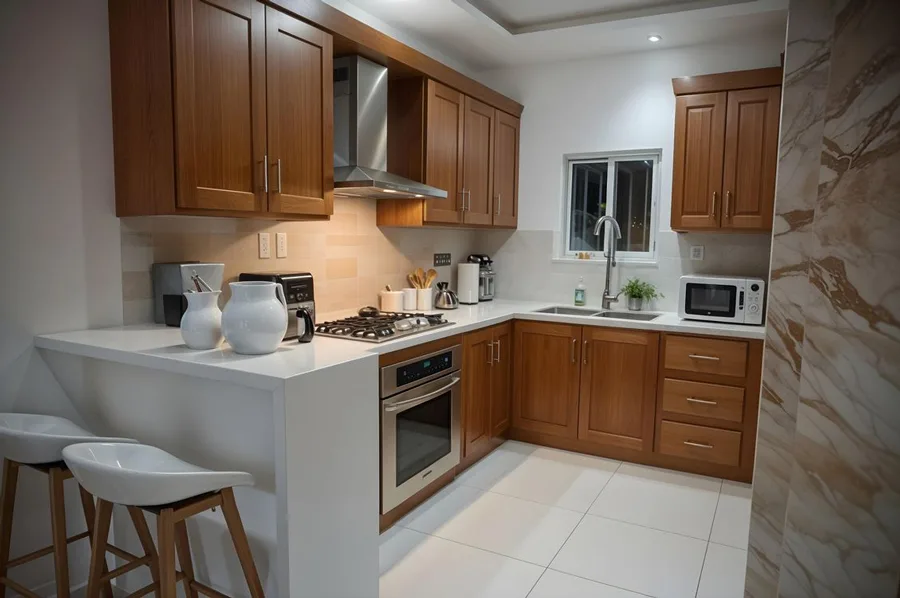
Kitchens are notorious heat sinks, and since we spend over 1,000 hours a year in them on average, they need to be kept comfortable. Between cold subfloors, heavy exhaust fans pulling warm air outdoors, and large uninsulated cabinet voids against exterior walls, keeping this room warm often feels like burning money. Here’s how to strike the right balance between being frugal and ensuring that the heart of your home is welcoming year-round.
Stop Thermal Bleed at the Base
The most direct way to fix a freezing kitchen is to target the floor plane where heat escapes fastest. Tile, stone, and vinyl feel perpetually cold because their high thermal mass pulls heat right out of your feet.
Upgrading your floor substrate to an efficient subfloor panel system creates a continuous thermal barrier. Incorporating a modern home radiant heating solution directly under tile or hardwood keeps the surface consistently warm without straining your central furnace. Radiant heat warms objects and occupants directly, eliminating the drafty convection currents created by traditional forced air systems.
Insulating underneath lower cabinetry also prevents cold air pockets from leaking into prep zones. Uninsulated cabinet bases sitting on cold slabs function like mini-refrigerators along your perimeter walls.
Eliminate Invisible Drafts Around Cabinets and Windows
There are dozens of micro-drafts leaking warm air out of your kitchen every day. Finding and sealing these air gaps is the single most cost-effective heating upgrade you can make.
Air leaks usually concentrate where plumbing penetrations in exterior walls pass beneath the sink. Pulling back toe kicks and filling those voids with expanding foam prevents frigid air from pooling at floor level. You should also check window frames and exterior door jambs for seal degradation.
- Applying low-expansion spray foam around sink pipe penetrations stops hidden air infiltration
- Adding silicone weatherstripping around drafty exterior kitchen doors creates an airtight seal
- Installing thermal cellular blinds over large window spans keeps radiant warmth indoors
Properly draught-proofing fixed ventilation points stops cold air from invading while keeping moisture under control. It preserves the ambient room temperature so your thermostat isn’t constantly cycling on.
Balance Mechanical Ventilation with Heat Retention
Cooking generates significant moisture and grease, making range hood ventilation mandatory. However, running a high-CFM exhaust fan on high for an hour dumps all your heated indoor air straight onto the roof.
To keep your kitchen warm while cooking, run the range fan on its lowest effective setting. Turn off the exhaust fan fifteen minutes after you finish cooking rather than leaving it on indefinitely.
You can also leverage residual heat from your cooking appliances. Leaving the oven door slightly cracked after turning it off allows the trapped heat to passively warm the room rather than letting it bleed away into the cabinet.
Implementing targeted micro-zones prevents you from overheating the whole house just to stay comfortable at the island. Using smart thermostatic valves or independent underfloor heating zones lets you direct thermal energy straight to high-traffic prep areas during morning and dinner rushes. Also, learning the basics of HVAC is a must if you’re at all concerned about your current setup and how to make the most of it.
Smart Upgrades for Long-Term Kitchen Comfort
Maintaining an energy-efficient, warm kitchen comes down to combining smart air-sealing habits with targeted, conductive heating. Stopping air leaks under cabinets and utilizing radiant floor systems keeps your core living space comfortable without driving up utility bills. Check out our home energy archives for more tips on optimizing your HVAC efficiency across every room, and read our posts across a range of other topics, including tech and entertainment, for even more information on the things that matter to you.