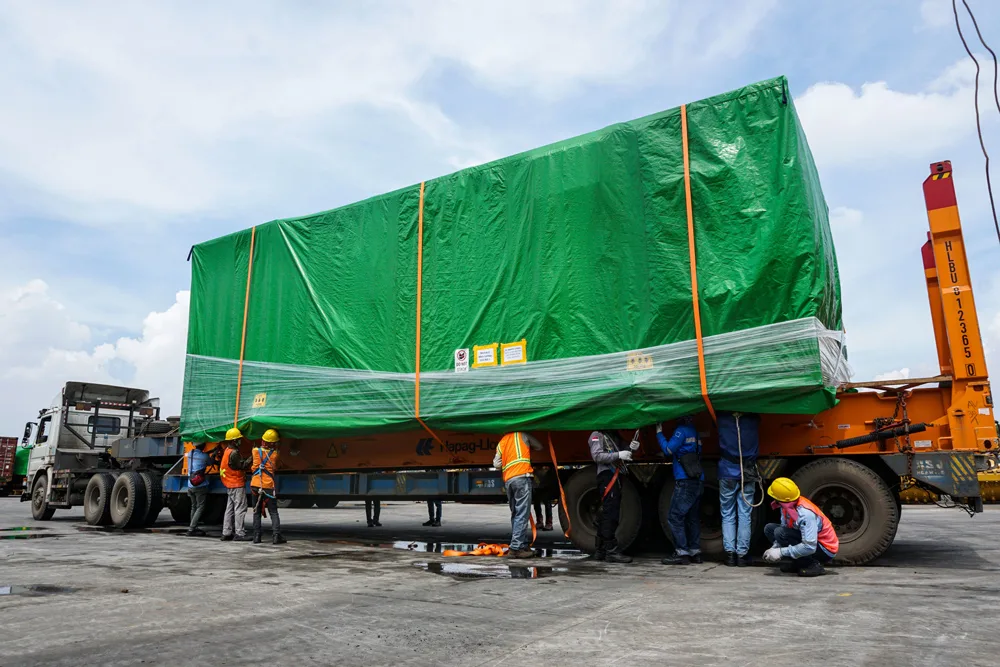
A machine can be ready for work and still become a project problem before it reaches the job site. The wrong trailer, tight entrance, low clearance, or rushed loading plan can waste time.
You can avoid those headaches by planning transport around the equipment first. Work through the route, loading method, securement, and delivery schedule before the truck moves.
Know Your Machine Before You Book the Trailer
You may need to start with the machine, not the trailer. Recording its weight, length, width, height, ground clearance, wheelbase, and attachment dimensions can be your best move. Also, include buckets, forks, booms, and tools, since each of these can quite change the transport setup you need.
Next, think about how the machine will get onto the trailer. A skid steer may handle a ramp easily, while low-clearance equipment may need a gentler loading setup. If you are comparing different hauling options, GharPedia’s guide to construction hauling equipment might be your best help to better understand which transport types suit different construction needs.
Choose a Loading Setup That Fits the Job
For construction equipment, getting onto the trailer can be the hardest part. A hydraulic drop deck can lower the deck close to ground level, making direct loading possible for equipment that is awkward to handle with conventional ramps.
Drop Deck Direct provides hydraulic drop deck trailers designed for ground-level loading. Its trailer range includes different payload capacities, so you still need to match the trailer to your equipment and towing setup. You’re actually choosing a loading method that fits the machine, crew, and site conditions, not just a trending must-do.
Check the Route From Start to Finish
Sometimes, it’s not a good call to assume that a route works because your truck can reach the neighborhood based on your map. Back your judgment with due diligence, like checking bridge clearances, road width, weight limits, steep grades, sharp turns, construction zones, and traffic controls.
You can then inspect the final approach to the property. A narrow gate, soft shoulder, overhead branch, or cramped driveway can turn an easy delivery into a frustrating one. For residential construction, this matters on tight streets. Your equipment may need to pass through roads not designed for large vehicles.
Prepare the Loading Area Before Arrival
Give the trailer enough space to position. Clear debris, keep people away, and make sure the surface can support the equipment and trailer.
OSHA advises employers to control hazards during material handling and loading activities. It also helps the operator focus on the machine instead of avoidable obstacles. If ground-level loading suits your equipment, it may simplify the transition from ground to deck. That can make loading easier in tight spaces.
Secure Every Machine Before You Roll
A machine is not ready because it is sitting on the deck. You need to prevent movement in every direction during travel.
Use suitable tiedowns, blocking, chocks, and anchor points according to the equipment and cargo securement rules. FMCSA requires cargo to be properly secured against movement and provides requirements for heavy equipment. Before you leave the dispatch area, inspect the securement system. A second check can catch a loose strap, poor anchor position, or missed attachment.
Build Transport Into Your Construction Schedule
Your equipment delivery time has to match when your crew needs it; otherwise, it’ll cost you big time. It is best to confirm who will receive it, where it will unload, and where it will remain afterward.
Based on your location, you might need to leave reasonable time for traffic, weather, inspections, route restrictions, and uncalculated delays for each delivery. If you have several machines coming, you may have to schedule them by work sequence to give your loading areas breathing space and avoid mishaps.
Turn Transport Into Part of the Plan
Your equipment transport blueprint actually starts long before your trailer arrives. That is why you need to measure the machine, choose the loading works, check the route, prepare the site, secure the load, and coordinate delivery in real-time.
You have to treat each equipment transport as part of your project planning, not just a last-minute task. When you do, you give your crew a safer move, protect equipment, and give your construction schedule a better chance of staying on track.