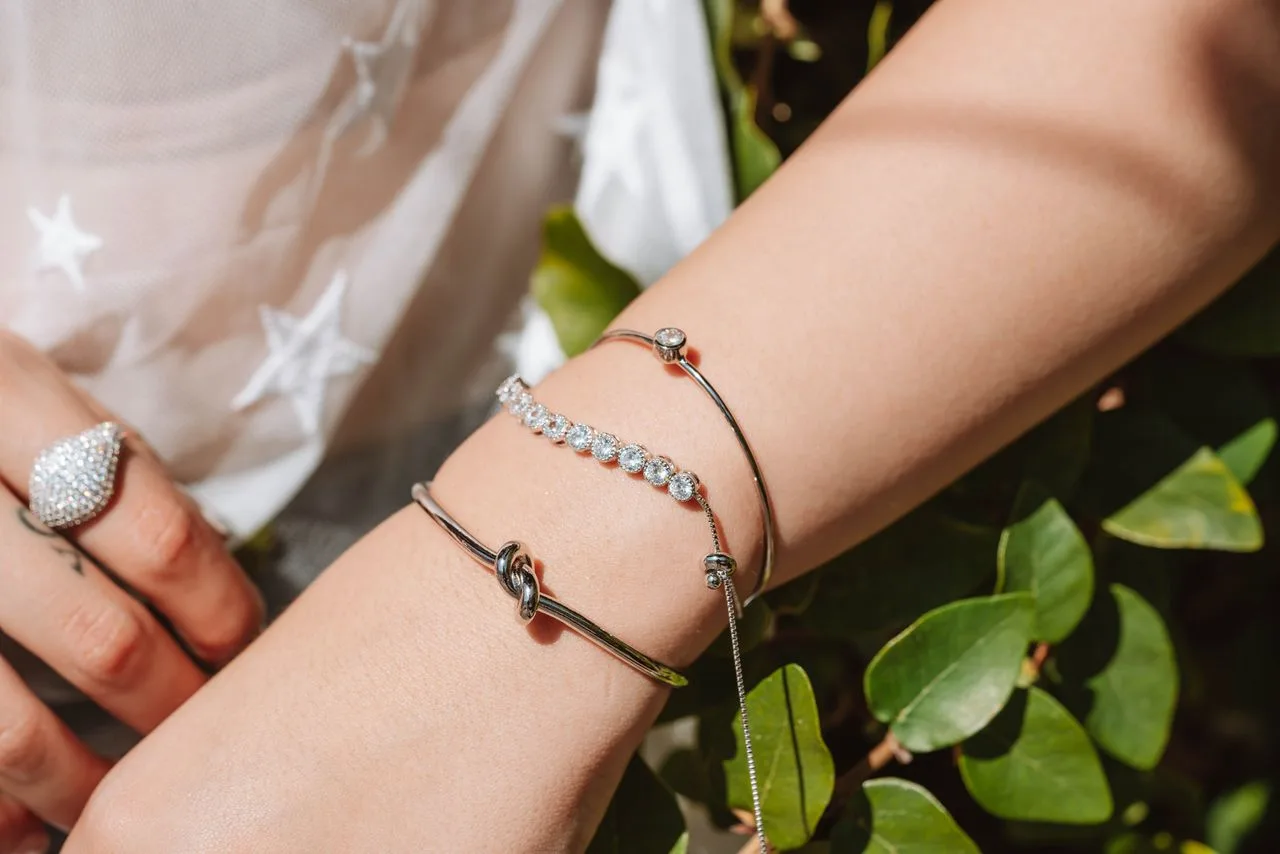
A tennis bracelet is known for dressing up an outfit, but it need not be reserved for weddings, black-tie events or expensive dinners. The right styling can make a sparkling bracelet feel completely at home with denim, knitwear, tailoring or even a simple T-shirt.
The trick is balance. Keep the rest of your accessories understated, match the bracelet to the mood of your outfit, and let one piece do the talking. A slimmer design can work particularly well for daytime looks, while a more substantial style can become the focal point of an evening outfit.
For anyone wondering whether tennis bracelets can be worn casually, the answer is yes. Their traditional appeal lies in a continuous line of diamonds or gemstones, but that does not dictate how you have to wear them. Chisholm Hunter’s collection features diamond and gemstone designs in white gold, yellow gold, silver, and rose gold, offering plenty of options to suit different personal styles.
Why Tennis Bracelets Work With Casual Style
The appeal of a tennis bracelet lies in its simplicity. Unlike a large statement necklace or an oversized cocktail ring, it sits close to the wrist, adding detail without dominating an outfit.
That makes it surprisingly easy to dress down.
Consider a simple white shirt, straight-leg jeans and loafers. A delicate bracelet gives the outfit a polished finish without altering its relaxed character. The same applies to a cashmere jumper, tailored trousers and trainers. The jewellery adds a little sparkle, but the clothing remains the main focus.
This is also why the bracelet works well for fashion enthusiasts who prefer a wardrobe built around versatile pieces. You do not need a completely different jewellery collection for every occasion. A well-chosen bracelet can move between different outfits with a few small styling changes.
How to Style Tennis Bracelets Casually
The easiest way to make a sparkling bracelet feel less formal is to pair it with relaxed clothing.
Denim is an obvious place to start. Jeans, a tucked-in shirt and a leather jacket create a casual base that lets the bracelet stand out without looking overdressed. For warmer weather, try the same approach with a linen shirt, tailored shorts and understated trainers.
Knitwear is another strong option. A soft jumper with rolled or pushed-up sleeves gives the bracelet room to sit visibly on the wrist. The contrast between an everyday fabric and fine jewellery is what makes the combination work.
You can also use a tennis bracelet to elevate a very simple outfit. A plain T-shirt, dark trousers and clean trainers may not need much accessorising, but a small amount of sparkle at the wrist can make the look feel more considered.
The key is to avoid making every element of the outfit compete for attention. If your clothes already feature bold patterns, statement footwear or prominent accessories, let the bracelet remain a supporting detail.
Match Your Bracelet With Your Watch
For anyone who wears a watch every day, the wrist is already an important part of the outfit. That makes your watch one of the first accessories to consider when adding a bracelet.
Metal is a useful starting point. A white gold or silver bracelet can sit naturally alongside a stainless-steel watch, while yellow gold jewellery can work particularly well with a gold-tone timepiece. Mixing metals is possible, but it looks more intentional when the combination is repeated elsewhere.
You also need to consider proportion. A large sports watch paired with several delicate bracelets can create an unbalanced look. By contrast, a slim dress watch can work beautifully with a fine bracelet.
If your watch is already the main feature, wearing the bracelet on the opposite wrist is an easy solution. It gives both pieces enough space and prevents the accessories from looking crowded.
Joe’s Daily has previously highlighted the importance of coordinating watches with other accessories, particularly when creating a polished outfit.
Keep the Rest of Your Jewellery Simple
One of the easiest ways to make fine jewellery look overly formal is to wear too much at once.
A tennis bracelet already catches the light, so you do not necessarily need a stack of rings, a statement necklace and oversized earrings to complete the look. Choose one or two supporting pieces instead.
For example, a bracelet could be paired with small hoops and a simple ring. Alternatively, wear it with a watch and leave the other wrist free.
This approach works especially well for daytime outfits, keeping the overall appearance clean. The bracelet becomes part of your personal style rather than looking like something you put on specifically for a special occasion.
Joe’s Daily’s jewellery advice follows a similar principle, recommending that people start with one piece and build their collection gradually rather than wearing several new pieces at once.
Choose the Right Metal for Your Wardrobe
The metal you choose can have a greater impact on the finished outfit than you might expect.
White metals such as white gold and silver tend to create a cooler, cleaner look. They can work particularly well with monochrome wardrobes, denim, black clothing and contemporary tailoring.
Yellow gold has a warmer look and can add richness to neutral outfits. It works naturally with beige, cream, brown, olive and other earthy tones.
Rose gold offers another option if you prefer warmer jewellery but want something slightly different from traditional yellow gold.
There is no universal rule about which metal to wear. Look at the jewellery, watches, belt hardware and other accessories you already own. Choosing a metal that fits naturally with those pieces usually creates a more cohesive result.
Use Your Sleeves to Your Advantage
Sleeves can completely change how a bracelet looks.
With a short-sleeved shirt or T-shirt, the bracelet becomes a clear part of the outfit. With a long-sleeved shirt, pushing the cuffs back slightly can create a relaxed styling detail while allowing the jewellery to show.
For knitwear, avoid repeatedly pulling the sleeve over the bracelet. Letting a small section of jewellery appear naturally can look more effortless than deliberately displaying the entire piece.
The same idea works with blazers. A bracelet peeking out from beneath a sleeve can add a subtle detail to tailoring without making the outfit feel overly formal.
Small styling choices like this matter because they change how visible the jewellery is. You can therefore wear the same bracelet in different ways, depending on how much attention you want it to receive.
Make Denim Your Go-To Combination
If you are unsure where to start, pair your bracelet with denim.
There is something particularly effective about pairing a refined piece of jewellery with a relaxed fabric. Straight-leg jeans, a simple shirt and a blazer create an easy, smart-casual outfit. Add a sparkling bracelet, and the look gains another layer without becoming dressy.
For a more relaxed weekend outfit, try jeans with a plain jumper, trainers and a lightweight jacket. Keep the jewellery minimal and let the bracelet provide the polished touch.
Dark denim tends to create a sharper appearance, while lighter washes make the combination feel more casual. You can adjust the rest of the outfit depending on the occasion.
Dress Down Tailoring
Tailoring need not mean formal jewellery.
A relaxed blazer with an open-collar shirt and trousers can look considerably more modern than a traditional suit. Adding a bracelet to this combination reinforces the smart-casual feel rather than pushing the outfit into formal territory.
Avoid matching every accessory. A blazer, a simple watch, and a bracelet can be enough. You do not need a matching necklace, cufflinks, or multiple rings.
The goal is to make the jewellery feel like part of your everyday outfit, rather than an accessory that only appears when you are dressed up.
Consider the Occasion
There is a difference between casual and careless.
A tennis bracelet can work for coffee with friends, a shopping trip or a weekend dinner, but your choice of design should still suit the occasion. A delicate bracelet is easier to wear with everyday outfits than a particularly large, high-carat design that naturally attracts attention.
For work, consider your dress code. A subtle bracelet can complement business-casual clothing, while a more dramatic piece may be better suited to evenings or events.
For holidays and outdoor activities, practicality matters too. Fine jewellery should be protected from situations where it could be knocked, caught or exposed to damaging chemicals. Chisholm Hunter recommends checking settings regularly and avoiding harsh chemicals to help maintain a tennis bracelet.
Let the Bracelet Become Part of Your Style
The best accessory is usually one you do not have to think about every time you leave the house.
If you want a tennis bracelet to feel less formal, wear it with clothes you already enjoy. Pair it with denim, wear it alongside a favourite watch, or let it peek beneath a shirt cuff. Keep the rest of your jewellery understated.
Most importantly, do not reserve sparkling jewellery for special occasions. A bracelet can add personality to an everyday outfit just as effectively as it can finish an evening look.
Style is often about contrast. A refined bracelet with casual clothing can look more interesting than the same bracelet paired with a formal dress or suit. Once you find the balance that suits your wardrobe, the piece becomes much more versatile.
That is the real advantage of choosing a classic design. Instead of waiting for an invitation to wear it, you can make it part of your everyday style.