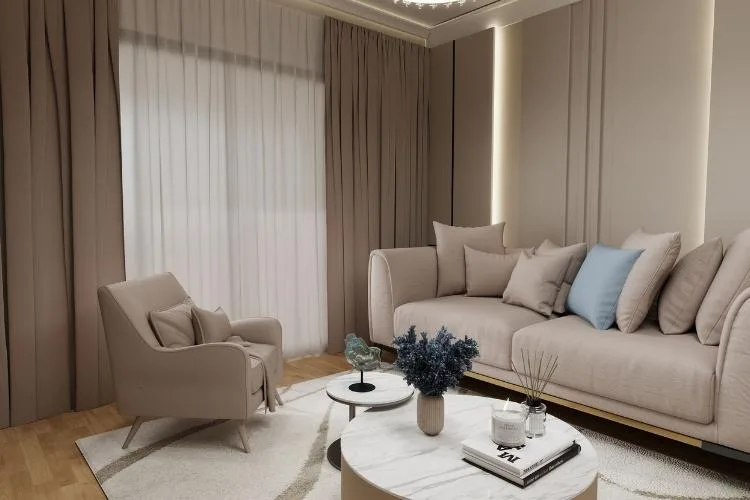
A minimalist room can look great in a photograph and still feel strangely unwelcoming in person. White walls, an empty coffee table, and one angular chair might make a striking first impression, but where do you actually want to sit?
The answer isn’t to fill every shelf. Good minimalism leaves room for everyday life. It gives furniture, lighting, and materials enough character to carry the room without piles of accessories. These minimalist home decor ideas focus on choices you’ll notice when you walk through the door: softer surfaces, warmer colors, comfortable seating and thoughtful lighting. You can have a tidy space that still invites you to put your feet up.
Start with Softness, Especially at the Windows
Windows often get overlooked when people strip a room back. Bare glass and hard frames suit a clean look, but they can make the surrounding walls feel stark, particularly after sunset. Fabric adds a gentler edge without demanding attention.
Look for curtains with a visible weave rather than a shiny finish. Linen-look fabrics, subtle slubs and small woven patterns give the eye something to notice up close, even when the color matches the walls. If you like pale interiors, choose warm ivory or oatmeal over a brilliant white that might look severe beside darker furniture. For a more grounded scheme, try mushroom, putty or muted taupe.
Think about how the fabric hangs, too. Heavy bunching can make a window look busy. Straight, even folds have a calmer rhythm, which matters in a room with few other decorative details. Terrys Fabrics offers wave-heading designs that create regular folds, an option worth considering when you want softness without elaborate drapery.
Don’t treat curtains as the only soft surface, though. A flat, hard floor under a sleek sofa can leave the space feeling unfinished. Try a low-pile wool rug that reaches beneath the front legs of your seating. Add a cotton throw with a noticeable weave, then stop before every seat gets three cushions. Varying texture works better than collecting more objects.
On a sliding door, make sure the stack of fabric won’t block the handle. A beautiful curtain becomes annoying if you’re fighting it every morning.
Before ordering any window treatment, check how much wall space the fabric will occupy when open and whether the material suits your privacy needs. Textured wave heading curtains can introduce softness into minimalist interiors while keeping the window area visually uncluttered. If you’re considering this approach, made to measure curtains by Terry Fabrics are a practical and design-led option that suits both subtle interiors and more expressive spaces.
Choose Neutrals That Have Some Warmth
Minimalism doesn’t require bright white paint. Try cream, warm gray, sand, or a pale clay shade, especially in rooms that receive little direct sunlight. Cool gray can look sharp beside polished metal, but it may feel chilly when the lamps come on.
Test paint samples on two walls and look at them in morning and evening light. A color that feels perfect at midday may turn noticeably cooler after dark. Check the undertone against your flooring, too: a beige that looks lovely next to oak might turn pink beside cool concrete tile. Keep large surfaces within a related palette, then introduce one deeper shade through a chair, rug or framed print. That small contrast gives the room shape without making it busy.
Let Natural Materials Do the Decorating
Wood grain, ceramic glaze, and woven fibers have their own patterns. That makes them useful when you want interest without extra ornament. A solid wood side table can bring more character than a plain laminate one, while a handmade-looking stoneware bowl feels purposeful on an otherwise clear shelf.
Avoid matching every finish. Pale oak looks good alongside walnut, and matte pottery can sit comfortably near brushed metal. Repeat one material in two places to connect the room, such as a wooden picture frame that echoes the coffee table. You don’t need a matching furniture set to make a room feel coherent. In a small apartment, even a wooden tray brings in this character without taking up another square foot of floor.
Make Lighting Work After Sunset
An uncluttered room can quickly resemble an office when one bright ceiling fixture does all the work. Give different activities their own light: a reading lamp near the armchair, a shaded table lamp beside the sofa and softer general lighting for evenings.
Choose warm-toned bulbs for living areas and check that fixtures don’t cast uncomfortable glare where you sit. A dimmer can make the same room useful for cleaning and relaxing. During the day, keep bulky furniture away from the windows so natural light can travel farther. Good lighting should make the materials you’ve chosen look inviting, not flatten everything into one bright surface.
Buy Furniture for the Way You Actually Live
Minimalist furniture sometimes looks better than it feels. Before choosing a low sofa or slim dining chair, sit in it long enough to notice the back support, seat depth and height. A room isn’t comfortable if everyone avoids the furniture.
Prioritize a few well-proportioned pieces over several undersized ones. A generous sofa and one useful side table may serve you better than an assortment of occasional chairs. Leave clear routes between furniture, but don’t push everything against the walls automatically. Bringing seating slightly inward can make conversation easier and give an open-plan room a more welcoming center.
Final Thoughts
A warm minimalist home isn’t empty; it’s selective. Instead of asking what else you can remove, look at what the remaining pieces contribute. Does the rug soften the floor? Can you read comfortably in the evening? Does the sofa make you want to stay awhile?
Start with one room and make a few changes before buying anything new. Move a lamp, test a warmer paint sample, or swap a stiff cushion cover for something textured. Then live with the results for a week. The best version of minimalism leaves you with fewer things to manage and more reasons to enjoy being home.