Charles Leclerc crossed the finish line fifth at the 2025 Chinese Grand Prix. Lewis Hamilton finished sixth, while Pierre Gasly completed the race in 11th. Hours later, all three were disqualified. Post-race inspections had uncovered two underweight cars and excessive wear beneath a third.
Oscar Piastri retained his victory, but the exclusions changed the positions and championship points awarded behind fourth place. The results announced after the race no longer matched the order spectators had witnessed at Shanghai International Circuit.
Why the chequered flag is not the final word
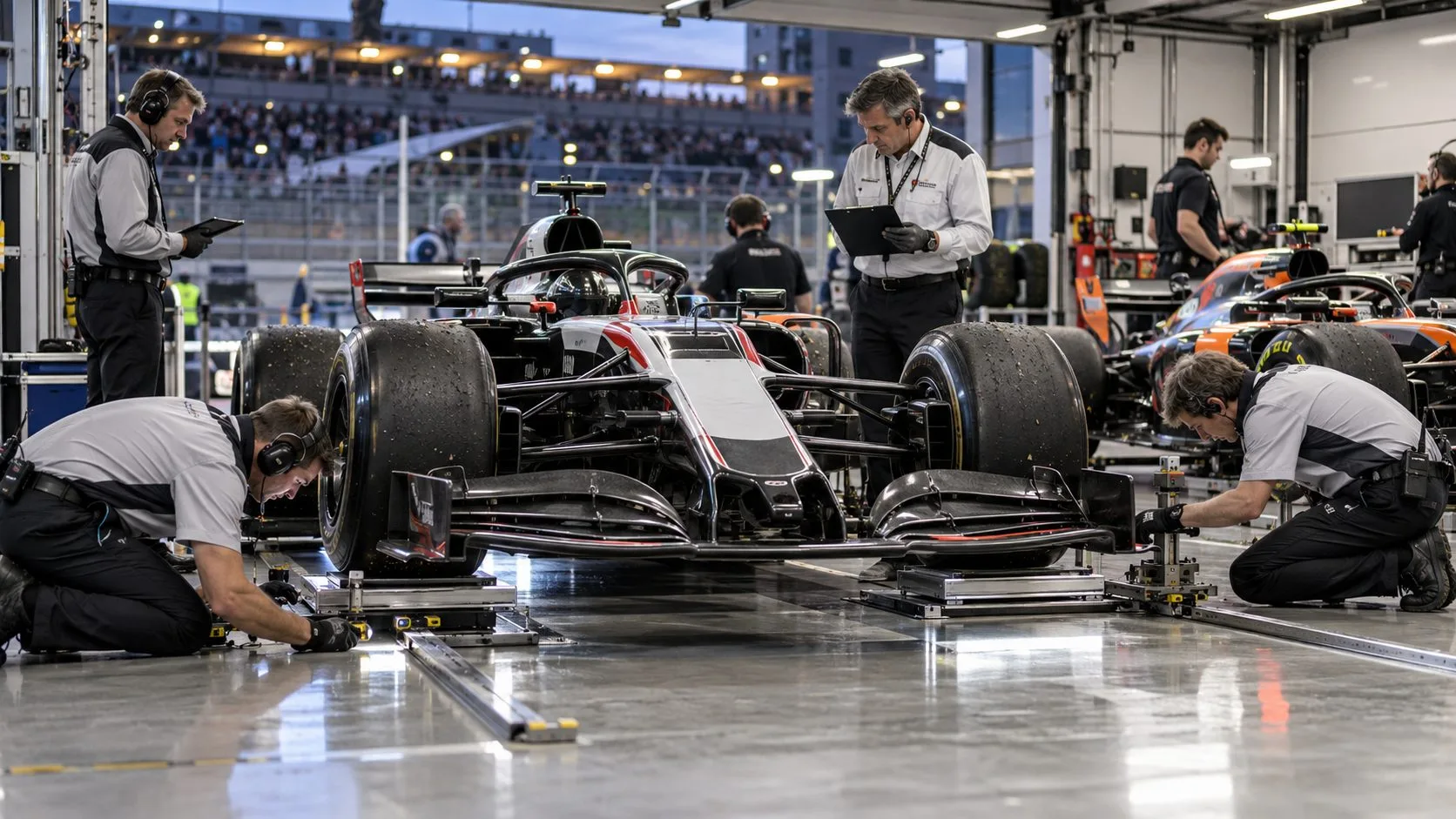
Formula One’s technical regulations remain enforceable after the cars finish racing. FIA personnel examine weight, component dimensions and wear against prescribed limits, including measurements that cannot be obtained accurately while vehicles are circulating.
Those inspections help maintain consistent technical standards across the field. They also protect the credibility of results relied upon by teams, broadcasters and regulated online betting markets.
The process involves two distinct authorities. The FIA technical delegate investigates possible breaches and reports findings to the stewards. Those officials assess the evidence, hear representations from competitors and determine whether a sanction is warranted.
In Shanghai, the inspections produced separate referrals concerning the two Ferraris and Gasly’s Alpine. None of the exclusions followed automatically from the initial measurements.
Three cars, two technical infringements
Leclerc’s Ferrari presented an unusual inspection problem. Its front wing had been damaged, requiring officials to account for missing bodywork when establishing the car’s weight.
The initial measurement was 800kg, exactly the permitted minimum. After the missing endplate was recovered and weighed with the car, officials fitted an official spare front-wing assembly. The Ferrari then registered 800.5kg.
Under the team’s submitted procedure, two litres of fuel were subsequently drained. A further measurement showed 799kg.
The replacement wing was itself 0.2kg heavier than the damaged assembly. Nevertheless, the decisive reading remained one kilogram below the minimum specified by Article 4.1 of the FIA Formula One Technical Regulations.
These details appear in the technical delegate’s report, Document 77, while the formal disqualification is recorded in Stewards’ Document 87.
Hamilton’s case concerned the plank assembly beneath his Ferrari. FIA measurements recorded thicknesses of 8.6mm on the left, 8.6mm centrally and 8.5mm on the right. Article 3.5.9 required a minimum remaining thickness of 9mm.
Gasly’s Alpine also failed the weight requirement. Following removal of 1.1kg of fuel, officials recorded 799kg.
The teams accepted the measurements and acknowledged genuine errors. The decisions did not establish deliberate misconduct, but the explanations did not remove the technical infringements.
How a technical report becomes a disqualification
In Shanghai, technical delegate Jo Bauer reported the weight irregularities, after which the stewards summoned representatives from the affected teams.
The hearings considered the measurements, inspection procedures and explanations submitted by the competitors. Written decisions then identified the breached regulation and resulting sanction.
For these particular infringements, the stewards applied disqualification. Document 84 records Hamilton’s plank-wear violation, while Document 88 addresses Gasly’s underweight Alpine.
Other breaches can produce different penalties. Jack Doohan received a 10-second time penalty for forcing another driver off the track. His race time was adjusted, but he remained eligible for classification.
Doohan also received two licence penalty points, which concerned his disciplinary record rather than his championship score.
Time penalties alter a driver’s recorded time, while disqualification excludes the result entirely.
How Shanghai’s final classification changed
The podium remained unchanged, with Piastri ahead of Lando Norris and George Russell. Max Verstappen retained fourth place.
Esteban Ocon inherited fifth, Kimi Antonelli moved to sixth and Alexander Albon took seventh. Oliver Bearman climbed to eighth, while Lance Stroll and Carlos Sainz entered the points in ninth and tenth.
Haas consequently collected 14 Grand Prix points, ten from Ocon and four from Bearman. Williams earned seven through Albon and Sainz. Ferrari scored none in Sunday’s race.
Further down, Doohan’s position had undergone two revisions. He crossed the line 14th, dropped to 16th after his time penalty and ultimately appeared 13th following the technical exclusions.
The FIA’s final race classification, published as Document 89, records the adjusted positions and identifies all three technical disqualifications.
When the revised result enters the official record
Stewards’ decisions are subject to established procedural rules. The Chinese Grand Prix documents explicitly refer to Article 15 of the FIA International Sporting Code and the relevant judicial procedures.
The teams accepted the inspection findings, and the published classification retained the exclusions.
Hamilton’s Sprint victory from the previous day was unaffected. The disqualifications applied to Sunday’s Grand Prix, not the separately classified Sprint.
Shanghai’s record therefore contains several stages of one race result: positions on the track, adjustments for sporting penalties and the final order after technical inspections. The FIA’s written decisions establish the reasons for those changes, rather than leaving the amended championship points unexplained.