Installing a high-efficiency HVAC unit without updating the supporting infrastructure is like putting a racehorse engine into a golf cart. You end up with a system that chokes on poor airflow, Trips breakers under heavy load, and burns through components years before its intended lifespan.
When you upgrade your heating and cooling, the mechanical equipment is only one part of the equation. To get the performance, comfort, and longevity you are paying for, several underlying home systems must adapt at the same time.
Electrical Panel Upgrades and Dedicated Circuits
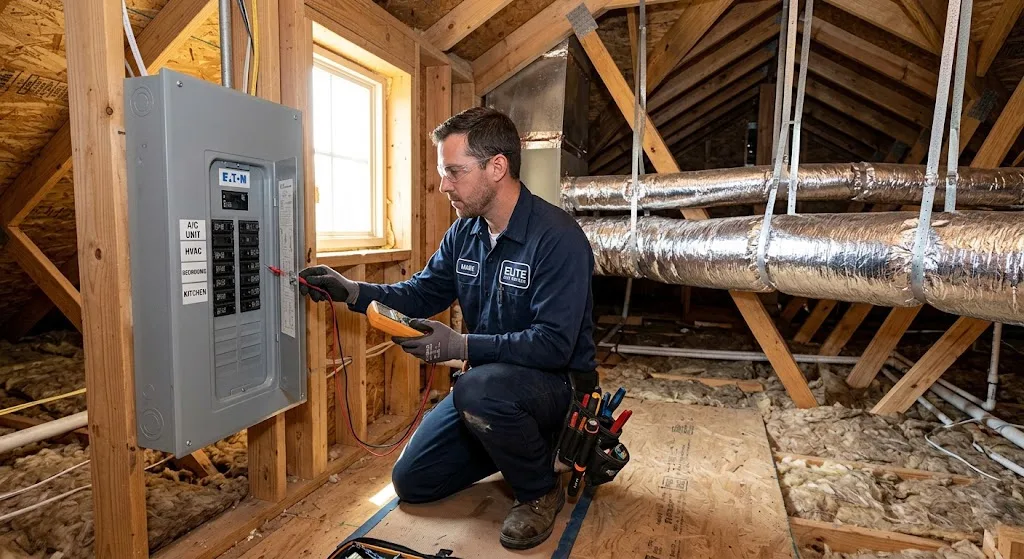
Modern heat pumps and variable-speed compressors require steady, clean power and specific circuit breaker ratings. Older 100-amp electrical panels frequently lack the bus bar capacity or physical slot space needed for new heating equipment.
Technicians perform thousands of electrical service upgrades every day across suburban homes undergoing major appliance or climate control overhauls. If your panel is outdated or overloaded, adding a high-draw heat pump strip heater can instantly trigger safety trips or create dangerous thermal hot spots at the breaker connection.
Upgrading to a 200-amp service panel or installing a dedicated disconnect box near the outdoor condenser ensures your new setup complies with local building codes. It’s also useful if you’re worried about home safety more generally and have smart tech in place to ensure this.
Ductwork Sizing and Static Pressure Overhauls
A new AC unit cannot push air through undersized, crushed, or leaking air channels. If your static duct pressure is too high, the blower motor works double-time, driving up utility bills and causing freeze-ups on the evaporator coil.
Standard flex ducting also degrades over decades, sagging at the joints and leaking conditioned air into unconditioned crawlspaces. Before spending thousands on brand-new equipment, a proper static pressure test will reveal whether your existing layout can handle the required cubic feet per minute (CFM) of airflow.
For homeowners pursuing a comprehensive climate upgrade, a professional job typically involves resizing supply trunks, adding return vents to balance house pressure, and sealing leaky joints. Working with regional specialists, such as those providing HVAC installation in Southern California, ensures all of these processes are planned and completed in a way that takes the surrounding climate into account. That’s why finding local specialists is sensible, wherever you’re based.
Attic Insulation and Thermal Envelope Improvements
Your HVAC equipment does not operate in a vacuum; it fights your home’s thermal boundary every minute it runs. If your attic lacks sufficient insulation, heat transfer through the ceiling will force your new system to run extra cycles, neutralizing any SEER2 efficiency gains.
Current energy standards dictate strict thermal resistance levels depending on your climate zone:
- R-8 flexible duct insulation in unconditioned attic spaces to prevent internal condensation
- R-38 to R-60 attic floor insulation to prevent ambient heat from radiating downward into living spaces
Upgrading insulation alongside your mechanical installation lowers the home’s overall cooling load. In many cases, tightening the thermal envelope allows you to step down half a ton in equipment size, saving upfront equipment costs.
Thermostat Wiring and Low-Voltage Control Lines
Legacy heating systems often rely on basic two-wire or four-wire thermostat setups. Modern multi-stage heat pumps and variable-speed air handlers require a dedicated common wire (C-wire) or specialized communicating control cables to transmit complex operational signals.
Running fresh low-voltage wiring from the air handler to your smart thermostat enables advanced features like humidity control, variable fan speeds, and automatic diagnostics. Leaving old wiring in place frequently leads to erratic equipment behavior, short cycling, or blown control boards.
Condensate Drainage and Structural Modifications
Modern high-efficiency condensing furnaces and cooling coils produce gallons of acidic condensate water daily. Standard gravity drain lines often fail or clog over time, causing severe water damage to ceilings or floorboards.
Secondary drain pans, float switches, and dedicated condensate pumps prevent catastrophic overflow events. Additionally, larger modern outdoor pads and heavier indoor air handlers often require reinforced mounting platforms or enlarged attic access hatches just to physically clear the space. Our site has lots more home maintenance guides to review, so stick around to learn more.