There is a moment on Independence Pass that decides what kind of vehicle you should have rented. The road narrows to a single lane carved into the rock, there is no guardrail, the drop is several hundred feet, and somewhere ahead a vehicle is coming the other way. If you are driving a 34-foot motorhome, that moment is miserable. If you are in a twenty-foot van, it is merely memorable.
Colorado punishes big rigs in a way that flatter states do not. The scenery everyone comes for — the alpine passes, the narrow canyon highways, the trailheads at the end of unpaved spurs — sits at the end of roads that were never designed for something the size of a bus. This is the single most useful thing to understand before booking a rental here, and it is the thing most first-time renters get wrong.
The length limits are real, and they are enforced
Independence Pass, the 12,095-foot crossing between Aspen and Twin Lakes, has a posted vehicle length restriction of 35 feet. That is not advisory. The road physically cannot accommodate longer vehicles through its tightest sections, and drivers who ignore the signs end up reversing downhill around blind corners with a queue behind them.
Trail Ridge Road in Rocky Mountain National Park — the highest continuous paved road in the United States, topping out above 12,000 feet — is wide enough for larger vehicles, but the parking at the overlooks is not. Arrive in a Class A at midday in July and you will drive the whole thing without stopping, which rather defeats the purpose.
Then there is the Million Dollar Highway, the stretch of US 550 between Ouray and Silverton. Narrow lanes, tight switchbacks, sheer drops, and long sections with no shoulder at all. It is one of the most beautiful drives in North America and one of the least forgiving of a vehicle you cannot place precisely.
A Class B campervan — typically nineteen to twenty-two feet, built on a van chassis — goes everywhere a passenger car goes. That is the whole argument. You are not calculating whether you will fit. You simply drive.
What you give up, and why it matters less than you think
The honest trade-off is interior space. A Class B has a wet bath rather than a separate shower, a two-burner cooktop rather than a full kitchen, and sleeping for two to four rather than six. If you are traveling as a family of five for two weeks, a bigger rig genuinely is the better tool.
But most Colorado trips are not that trip. They are four to seven nights, two people or a small family, with the van used as a basecamp for hiking rather than a place to spend the day. In that pattern the extra square footage buys very little, and it costs you access to precisely the places you came to see.
There is also a fuel and altitude argument. Colorado’s passes climb hard and long, and a smaller vehicle simply handles them better — less strain, better economy, and far less anxiety on the descents, where engine braking matters more than most flatland drivers expect.
Three routes that suit a van
Rocky Mountain National Park, two to three nights. Roughly ninety minutes from the south Denver metro to Estes Park. Trail Ridge Road is generally open from late May into October, weather permitting, and closes for the season once the snow arrives. The park operates a timed-entry permit system in peak months, so check requirements before you go rather than at the gate.
The San Juan Skyway, five to seven nights. The loop through Ouray, Silverton, Durango and Telluride is the finest week of driving in the state. This is the route where van size pays for itself most obviously, and where you will be glad you are not negotiating the Million Dollar Highway in something the length of a school bus.
Great Sand Dunes, two to four nights. Under four hours south, and genuinely strange — 750-foot dunes stacked against the Sangre de Cristo range. The main park road is paved and fine for any vehicle. Medano Pass Primitive Road, which continues over the mountains, requires four-wheel drive and high clearance, and is not a place to take a rented campervan.
What to look for when you rent
Fleet age matters more than brand. A van is a house on a chassis, and everything in it — the fridge, the water pump, the heater, the electrical system — is a component that degrades. A three-year-old van from a small operator who maintains four vehicles is usually a better bet than a seven-year-old unit from a national fleet.
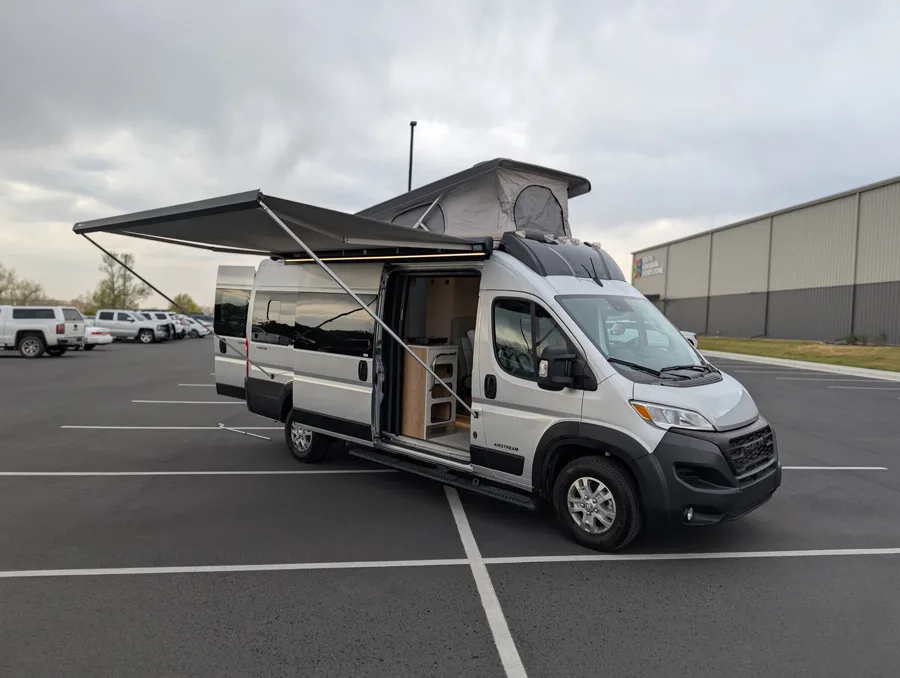
Ask what you are actually getting. “Campervan” covers everything from a converted cargo van with a mattress to a factory-built Class B with a bathroom, heater and solar. The Winnebago Solis and Thor Dazzle are both purpose-built Class B units on the Ram ProMaster chassis, with wet baths and proper heating. The Airstream Rangeline sits at the more refined end of the same category. These are meaningfully different products from a DIY conversion, and the difference shows at 11,000 feet in October.
Check the minimum-night rule before you fall in love with an itinerary. Most operators require two or three nights, which quietly rules out the single-night shakedown trip a lot of first-timers want.
Finally, think about where you collect the vehicle. Picking up on the south side of the Denver metro — Highlands Ranch, Littleton, Centennial, Lone Tree — puts you on C-470 within minutes and heading for the mountains without ever touching downtown traffic. A campervan rental in Denver based on that side of the metro is a meaningful saving on both ends of the trip if you are heading west or south. Coming from Parker or Castle Rock, it is barely a detour at all.
The 4×4 alternative nobody mentions
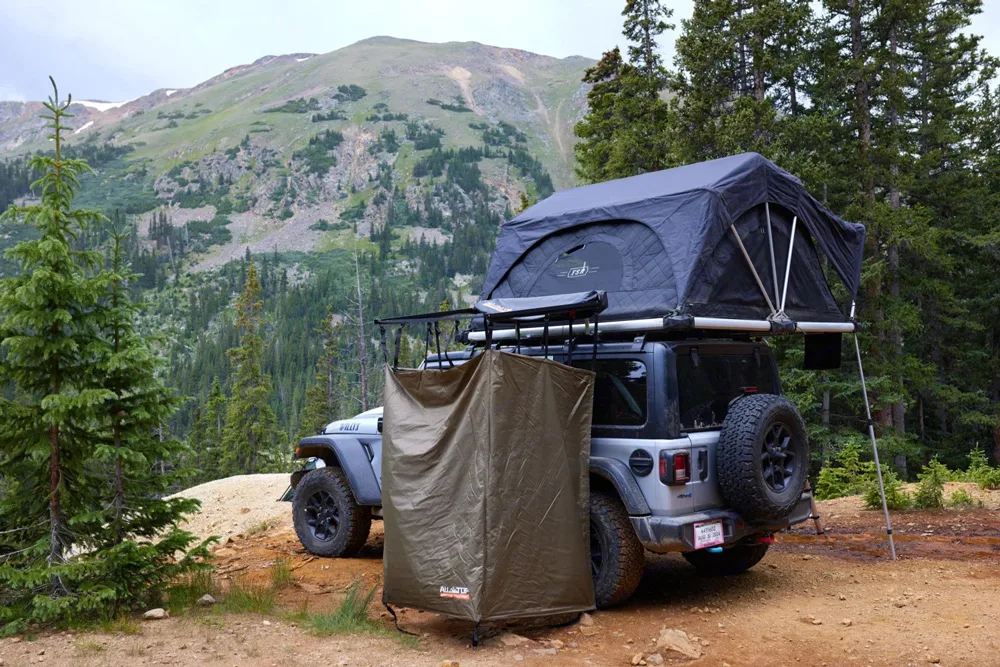
There is a category between tent camping and van life that suits Colorado unusually well: a four-wheel-drive vehicle with a rooftop tent.
You lose the indoor kitchen and the bathroom. What you gain is access. Colorado’s best dispersed camping sits at the end of forest service roads that a Class B van should not attempt — loose surface, ruts, water crossings, and the occasional shelf road. A Jeep Wrangler with a rooftop tent goes up those roads without drama, and sleeps you off the ground above the rocks and the runoff.
It also costs considerably less per night than a campervan, which matters if the driving is the point and the vehicle is somewhere to sleep rather than somewhere to live. For anyone planning to spend real time on trails around Buena Vista, Salida or the Alpine Loop, it is the more appropriate rental — and it is worth asking whether an operator offers one, because most do not.
Timing
The high country season is short. Most alpine passes open between late May and early July depending on snowpack, and close again from October. July and August are reliable and busy. September is the best month in the state — aspens turning, thin crowds, cold clear nights — and the passes are usually still open. October is a gamble that sometimes pays beautifully.
Book earlier than feels necessary. Small operators run four or five vehicles, and in a state where the good weather window is roughly twelve weeks long, the summer weekends go early.
The short version
Rent the smallest vehicle that fits the people you are traveling with. In Colorado, the roads you actually came for are the ones that punish size, and a Class B van reaches nearly all of them. If your plans lean toward trails rather than campgrounds, look at a 4×4 with a rooftop tent instead. Either way, you will spend less time worrying about whether you fit and more time at the places you drove out here to see.