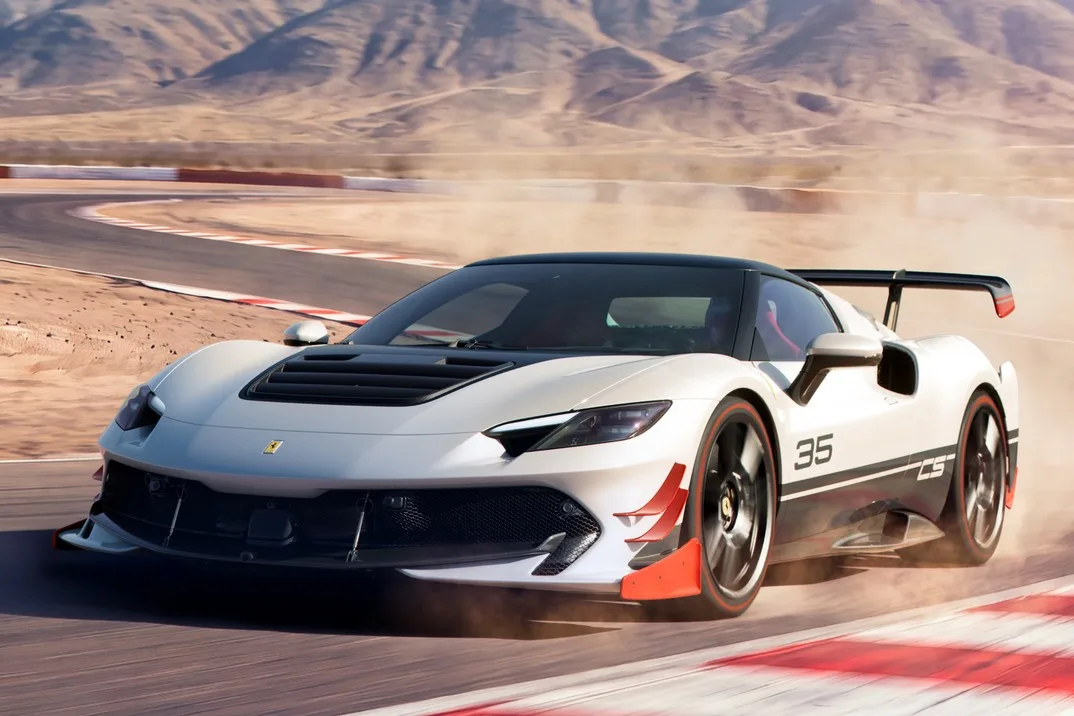
The last time Ferrari put Challenge Stradale on a road car, the 360 was still in production. That was 2003. The badge has been waiting ever since, and the car it finally landed on is the most interesting thing Ferrari has done with the 296: a road car built alongside the 296 Challenge Evo racer, with the hybrid system removed entirely. The 296 Challenge Stradale is the first road-going 296 without electric assistance, and it is quicker around Fiorano than the hybrid flagship that outguns it.
Ferrari unveiled both cars at the Finali Mondiali in Barcelona on November 21, and the Stradale is the one you can register. Its 2,992cc twin-turbo V6 makes 670 cv, or 661 horsepower, at 8,000 rpm, and it pulls to an 8,500-rpm redline through an eight-speed dual-clutch. That is the 296 Speciale’s engine running on combustion alone. Losing the motor and battery drops the dry weight to 1,330 kg, or 2,932 pounds, which is 140 kg lighter than the 296 GTB and the exact same figure as the Challenge Evo race car.
Less power, faster lap
Here is the number that sticks with me. The Stradale gives up 210 cv to the hybrid Speciale, and it still lapped Fiorano half a second quicker, at 1:18.5. The weight-to-power ratio is 1.98 kg per horsepower, and the car carries 176 fewer pounds than the Speciale while making less power. Ferrari’s own test driver Marc Gene put it plainly after running the finished car at Mugello: it feels exactly like driving an actual race car.
The lap time is not a horsepower story. It is an aero and chassis story, and the Stradale borrows both directly from the racer.
Downforce you can register
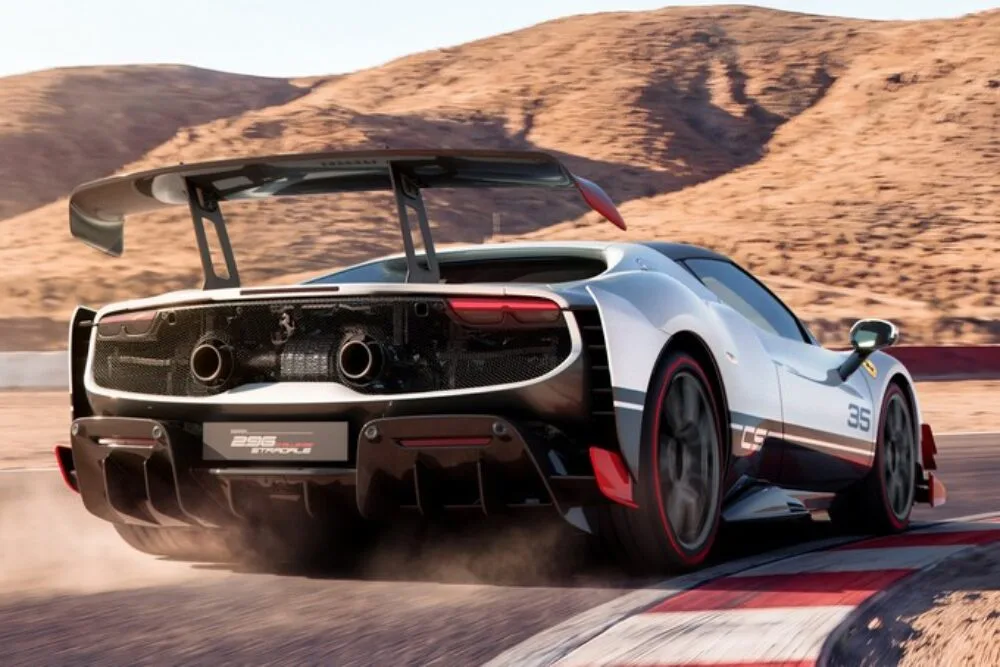
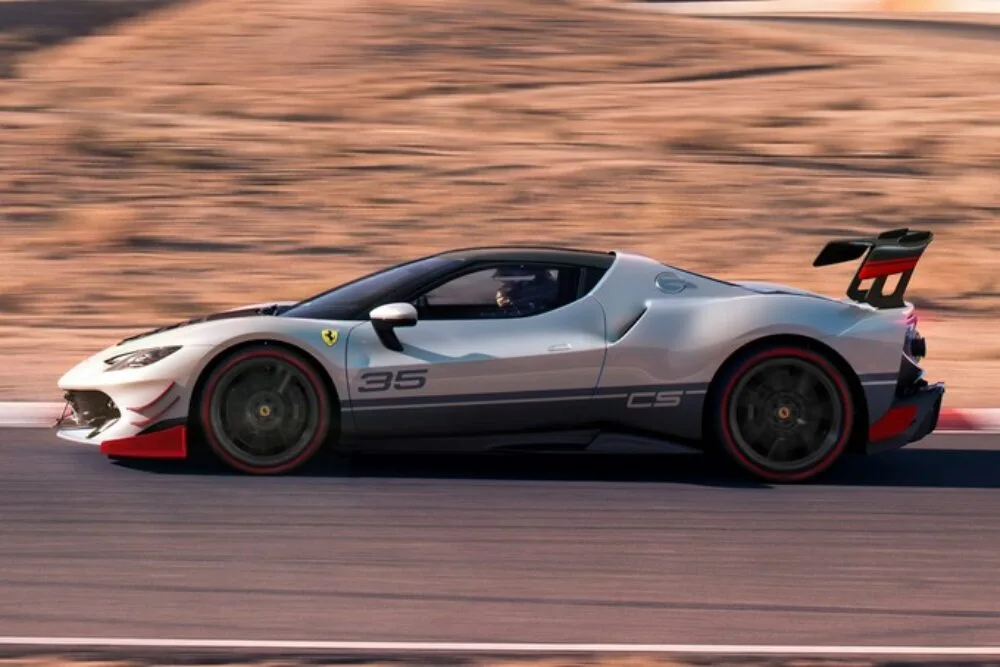
Most of the speed comes from aero lifted off the Challenge Evo. A fixed rear wing generates 595 pounds of downforce on its own. Add a new splitter, aero flicks, vortex generators, and a fully enclosed underbody, and the whole package makes 617 kg of downforce at 250 km/h, which is 72 percent more than a 296 GTB. Springs run roughly twice as stiff as before, and the carbon-ceramic brakes actually grew in size, since there is no regenerative braking left to help out. Bespoke Pirelli P Zero R or P Zero Trofeo RS tires handle the grip. Claimed performance is 0-62 mph in 2.8 seconds and 0-124 mph in 7.9, with a top speed north of 186 mph.
A race car interior with a front trunk
Inside, the Stradale commits to the bit. One-piece carbon door panels skip armrests and pockets, and buyers can option an exposed-structure trim that strips out the carpets and paneling, a first for a production Ferrari. Tubular racing seats and technical fabrics set the tone. It still keeps its front trunk and its driver-assist tech, so this is a race car you can plausibly drive to the track rather than trailer there.
The racing sibling
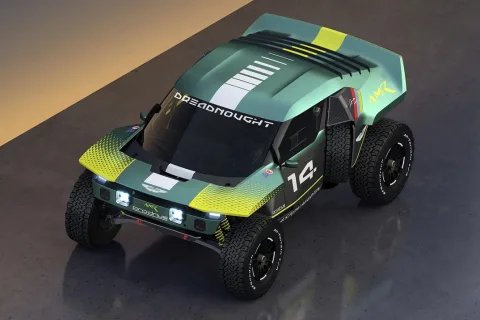
The Challenge Evo, unveiled the same weekend, is the tenth car built for Ferrari’s one-make Challenge series. Output stays at 700 cv, but 12 percent more maximum downforce and a low-drag kit made it 0.8 seconds quicker than its predecessor around Mugello in testing. It makes its racing debut in the 2027 Ferrari Challenge season, which adds three 40-minute endurance rounds starting at Mugello. The Stradale and the Evo share the same dry weight, the same engine architecture, and the same aero philosophy. One of them wears license plates. For a different take on a Dakar-inspired flagship, see the Aston Martin Dreadnought.
Who this is for
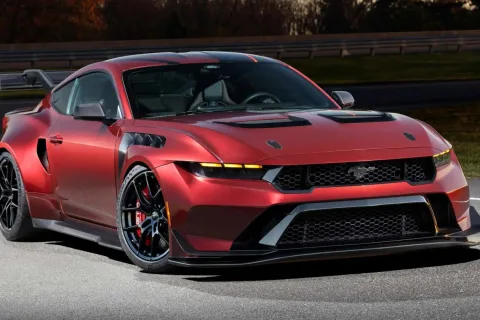
This is for the buyer who thinks the 296 GTB is brilliant but a little too civilized, and who would trade straight-line numbers for a car that feels like a race car at road speeds. It is not for anyone shopping on horsepower alone, because the Speciale still wins that argument on paper, and it is not for anyone who wants Ferrari’s hybrid tech. Ferrari has not announced pricing, and it is not a limited run, with deliveries starting in 2027. The people who want one will not be put off by either fact. Related reading: the Lamborghini Temerario Spyder and the Ford Mustang GTD 1901.
Ferrari waited 23 years to use the Challenge Stradale name again. The car it chose earns the wait: less power, less weight, more downforce, and a faster lap than the flagship it sits under. Sometimes deleting things is the whole upgrade.
Questions People Ask About the 296 Challenge Stradale
How much will the 2027 Ferrari 296 Challenge Stradale cost?
Ferrari has not announced pricing yet. The car is not a limited run, and early reports point to deliveries starting in 2027. Expect pricing to land above the 296 GTB when Ferrari confirms it.
Is the Challenge Stradale faster than the 296 Speciale?
Around Ferrari’s Fiorano test track, yes. The Stradale lapped in 1:18.5, half a second quicker than the Speciale, despite giving up 210 cv to the hybrid flagship. The advantage comes from 176 fewer pounds and far more downforce, not from power.
What is the difference between the Challenge Stradale and the Challenge Evo?
The Stradale is the road-legal version and the Evo is the race car. They share the same dry weight of 1,330 kg and the same twin-turbo V6 architecture, but the Evo makes 700 cv against the Stradale’s 670 cv and runs a seven-speed gearbox instead of the road car’s eight-speed dual-clutch.
Is the 296 Challenge Stradale a limited edition?
No. Ferrari has said it is not a limited run, which sets it apart from many of Maranello’s most collectible specials. Availability will still be tight, since demand for a non-hybrid, race-derived Ferrari will far outstrip supply.