


7 minute read
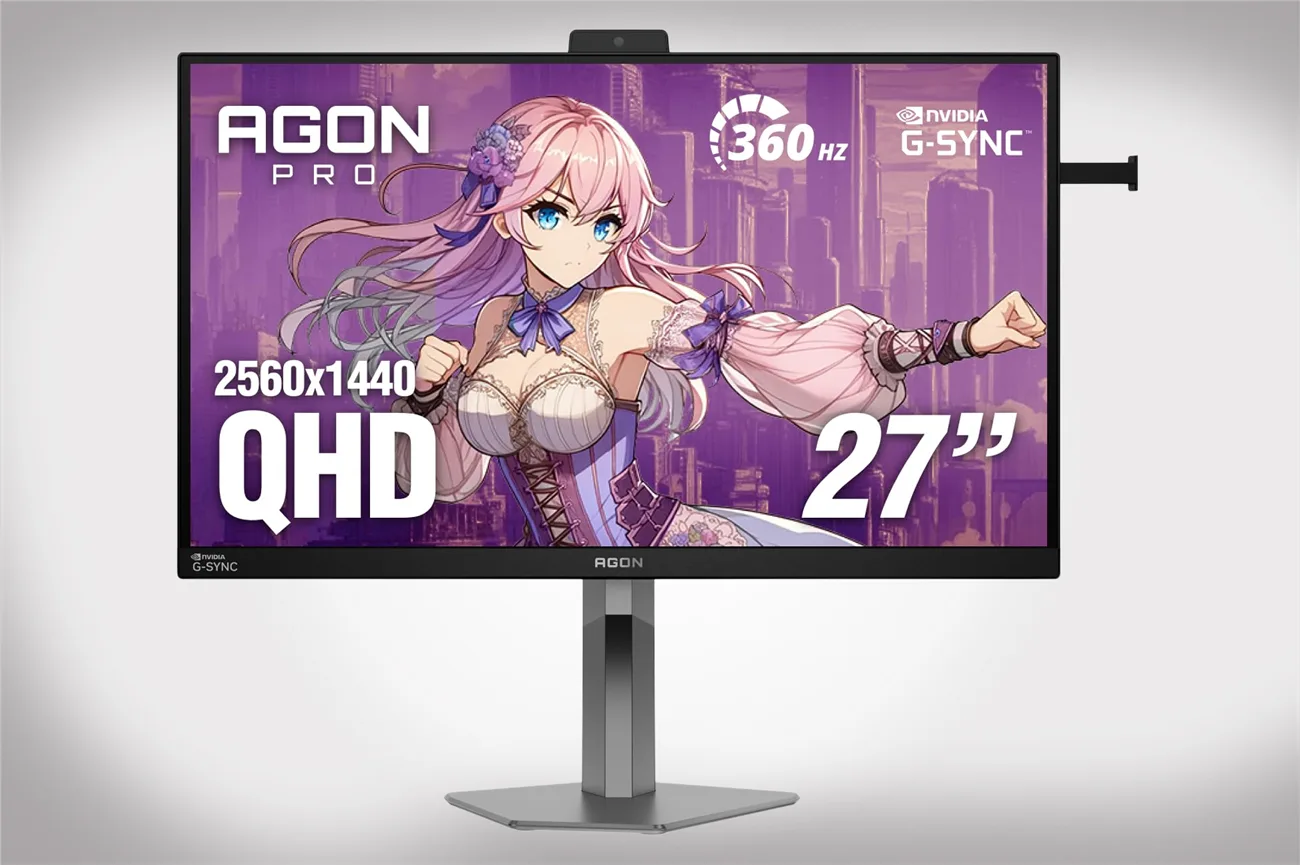
If you’re the kind of gamer who can immediately feel input latency, who notices when motion blur turns a head-glitch into a smear, and who plays shooters like your rank depends on it (because it does), the AGON PRO AG276QSG2 is built for you. This monitor isn’t trying to be a “do-it-all” display for casual gaming, office work, and Netflix nights. It’s an unapologetically high-end competitive monitor designed to give you real, tangible advantages where it counts: speed, clarity, and consistency.
Between its 360Hz Fast IPS panel, 1ms GtG response, and NVIDIA G-SYNC Pulsar tech, it delivers the kind of motion clarity and responsiveness that makes other monitors feel like they’re dragging their feet.
The Headline Feature: NVIDIA G-SYNC Pulsar Is the Real Deal
A lot of monitors throw around “motion clarity” like it’s a checkbox. This one is built around it.
G-SYNC Pulsar uses variable-frequency backlight strobing alongside G-SYNC VRR, which is a big deal because older strobing implementations usually force a compromise: you either pick the strobe for clearer motion and accept stutter/tearing issues, or you use VRR for smoothness and accept that the image gets softer in fast movement.
This monitor is positioned to give you both at the same time.
What that means in normal human terms:
- Fast strafes are easier to read
- Targets stay defined instead of turning into fuzzy silhouettes
- Tracking feels cleaner and more “locked in”
- Your eyes fatigue less because you aren’t fighting blur
In competitive shooters, that can translate to more consistent aim, better micro-corrections, and fewer moments where you lose a target in chaotic movement.
360Hz + Fast IPS: Smooth in a Way You Don’t Unsee
Let’s talk refresh rate. Plenty of people dismiss 360Hz as overkill until they sit in front of it and play something fast.
At 360Hz, the monitor feels immediate. Not just “smooth,” but responsive in a way that makes your mouse input feel directly connected to the action. It’s one of those upgrades that doesn’t show up well in a spec sheet argument, but shows up instantly in gameplay.
And because it’s a Fast IPS panel, you’re not paying for speed by sacrificing image quality into washed-out, ugly TN territory. You get:
- Better viewing angles
- Stronger color performance than typical esports-first panels
- A more modern “premium” look to the image
This is important because esports monitors have historically looked like speed demons with trash visuals. This one is clearly aiming to break that stereotype.
Response Time: Built for Fast Pixel Transitions, Not Marketing Flexing
The monitor is rated at 1ms GtG, which is what you want to hear when you’re chasing clarity at high refresh rates. The main point: it’s designed to keep transitions quick so you’re not seeing trails, ghosting, or muddy motion when frames are flying.
That’s also where the broader stack matters: a high refresh rate doesn’t mean much if the panel can’t keep up. This one is engineered specifically so the speed is usable, not theoretical.
Ambient Adaptive Tech: Underrated for Long Sessions
This is one of those features people overlook until they live with it.
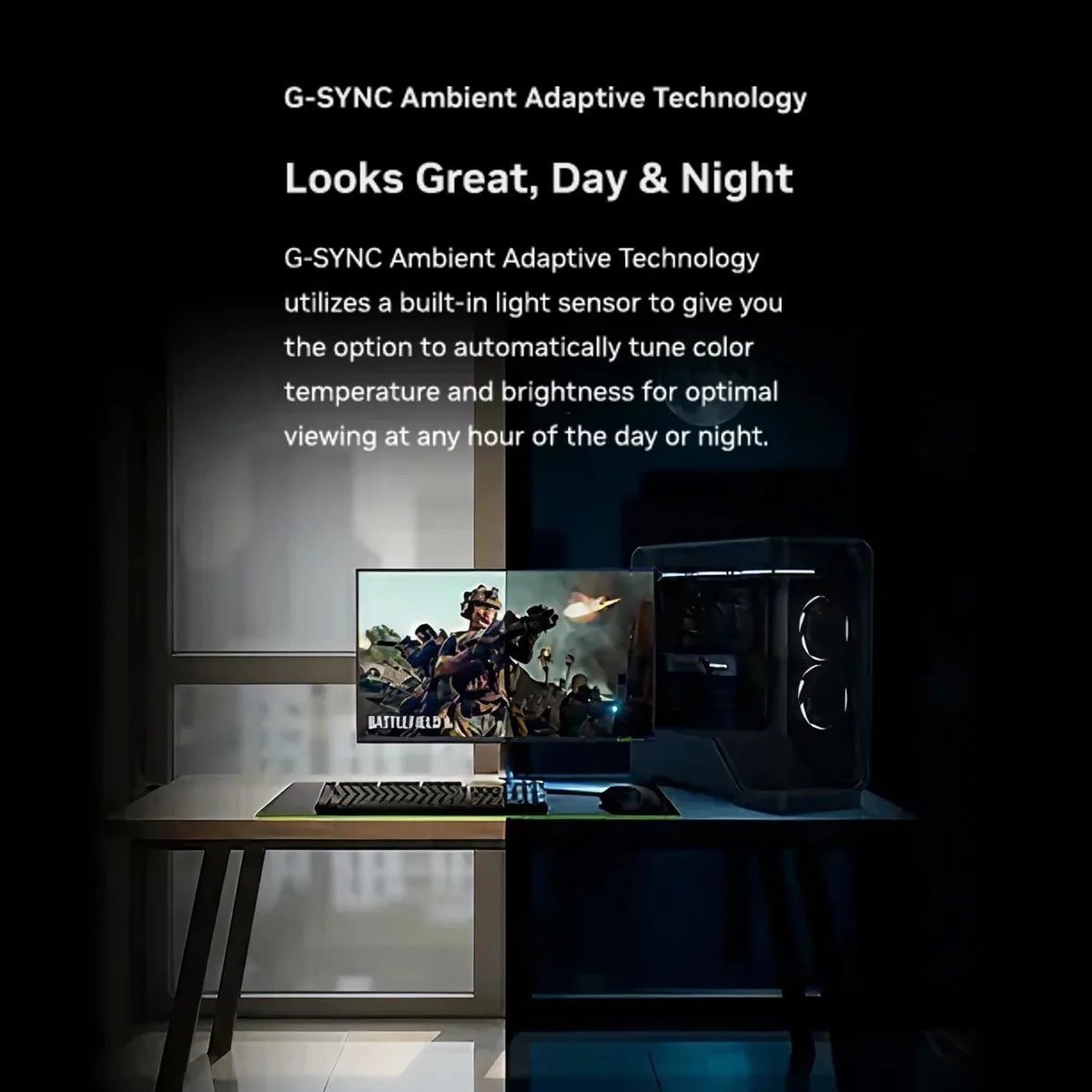
The AG276QSG2 includes Ambient Adaptive Technology using an ambient light sensor to adjust brightness and color temperature based on the room lighting. The benefit isn’t “wow factor.” It’s consistency.
If you game in different lighting conditions (daytime, night, LED lighting, streaming setup lighting), the screen stays more stable visually without you constantly tweaking settings. That’s especially nice for long sessions where eye strain sneaks up on you.
HDR: Promising, But Manage Expectations
HDR is expected to officially launch in Q1 2026, with G-SYNC HDR aiming for calibrated color accuracy and automatic ambient HDR brightness adjustment.
Here’s the honest take: HDR can be incredible when it’s done right, but it varies wildly depending on implementation and content support. What I like here is the emphasis on out-of-the-box calibration and not having to babysit settings across SDR and HDR.
So yes, it’s a strong value-add, but the core reason to buy this monitor is still competitive performance, not cinematic HDR gaming.
Design and Ergonomics: Esports-Driven, Actually Practical
This isn’t some flimsy panel on a basic stand. It’s built like a premium esports display should be:
- Fully ergonomic stand with extensive adjustment options
- A design that feels pro-oriented rather than “gamer toy”
- Light FX illumination if you like that vibe (and if you don’t, you can treat it as optional flair)
Ergonomics matter more than people admit. If you’re playing competitively, you want your screen position dialed for posture, comfort, and consistent eye alignment. This one gives you the flexibility to set it up correctly.
Connectivity: Ready for Multi-Platform Setups
AGON positions this monitor for multi-platform gaming setups, and it includes a “comprehensive range” of I/O for compatibility across PCs and gaming systems. The practical takeaway is you’re not buying something that only plays nicely in one type of setup.
If you bounce between a main PC, a streaming PC, a console, or you’re running multiple devices, this monitor is clearly designed to fit that reality.
Real-World Who This Monitor Is For
This monitor makes the most sense if you’re in one of these camps:
Competitive FPS / esports players
If you play Valorant, CS, Overwatch, Apex, Fortnite, etc. and you care about tracking, flicks, and visual clarity under pressure, this is exactly what it’s built for.
High-FPS enthusiasts
If you’ve got a rig that can actually push high frame rates (or you play esports titles that run absurdly fast), this monitor lets you see and feel the benefit.
People who are tired of compromises
You want motion clarity without sacrificing smoothness. You want speed without the old-school “esports monitors look terrible” tradeoff.
Price and Value
At $599.99, it’s not cheap, and it’s not trying to be. But for what it’s targeting, the pricing makes sense because you’re paying for:
- True high-refresh competitive performance
- A premium motion-clarity stack with G-SYNC Pulsar
- A modern IPS experience rather than the typical esports panel compromises
- Quality-of-life features that keep the image consistent over time
If you’re a casual player, you don’t need this. But if you’re even moderately serious about competitive gaming, this is the kind of monitor that can make your current one feel outdated fast.
Is the AGON PRO Worth the Price Tag?
The AGON PRO AG276QSG2 is a high-end competitive gaming monitor done the right way. It doesn’t just chase numbers. It stacks meaningful technologies around a clear purpose: help you see motion better, react faster, and stay consistent in high-intensity play.
The combination of 360Hz Fast IPS + 1ms GtG + NVIDIA G-SYNC Pulsar is exactly what you want if your priority is winning gunfights, not admiring scenery. Add in the ambient adaptive features and the pro-grade ergonomics, and it feels like a monitor designed by people who actually understand how competitive players use their setups.
If you want a monitor that makes you feel sharper the second you boot into a match, this is one of the strongest options in its class.