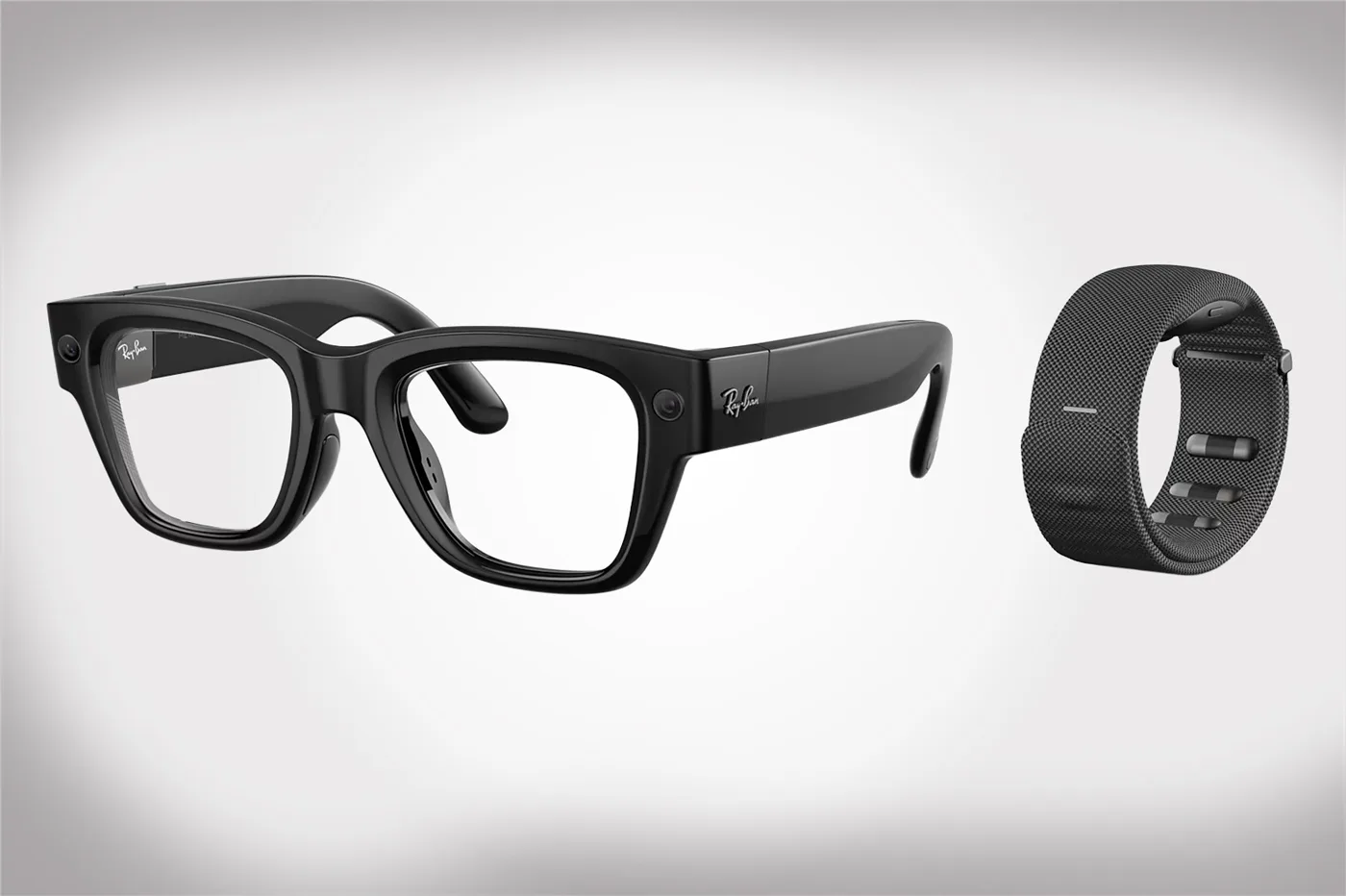
It’s been a year since Meta put a screen inside a pair of Ray-Bans, and I still haven’t worn them. Let me say that up front, because this isn’t a hands-on review. What it is: everything worth knowing about the Meta Ray-Ban Display now that the launch hype has settled, the early reviews are in, and Ray-Ban has them in stock with an October 5 delivery estimate.
I covered them at launch, when they were a $799 promise. Now they’re a $799 product. Here’s the full picture.
The right lens hides a full-color 600×600 micro-display, bright enough (up to 5,000 nits) to read in direct sunlight and, crucially, invisible to anyone looking at you. No glowing cyborg lens. The screen only appears in one eye with a 20-degree field of view, so think glanceable info, not a movie theater.
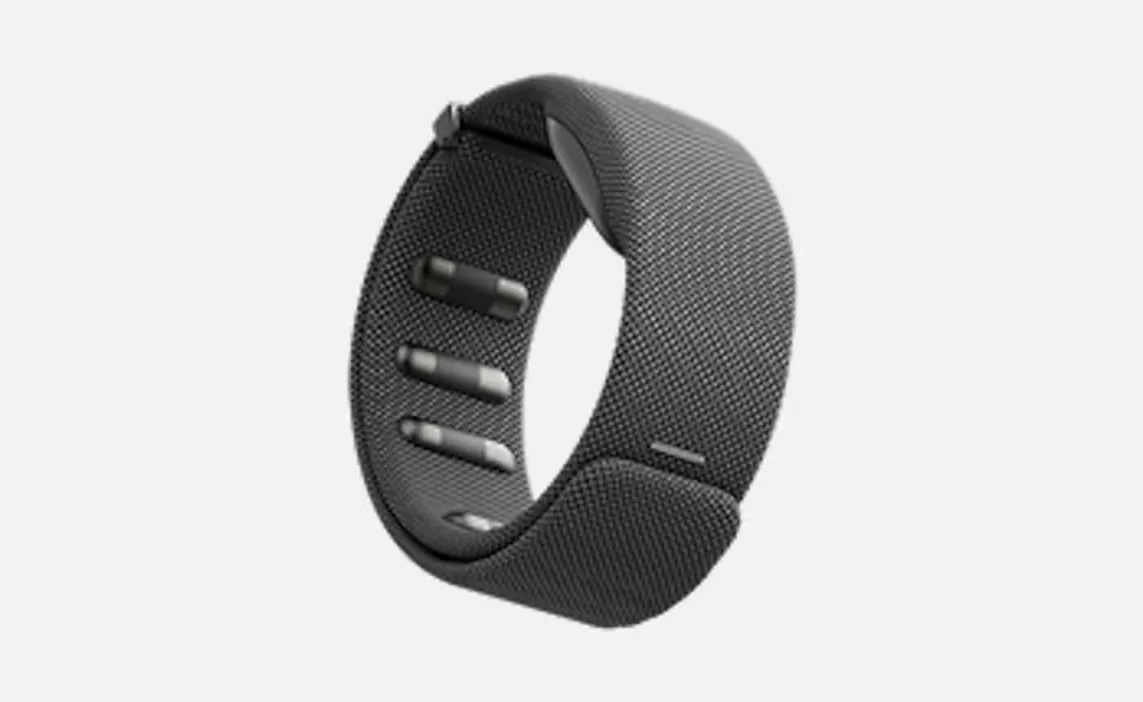
The real party trick is the Neural Band, and it comes in the box. It’s an EMG wristband that reads the electrical signals in your wrist to detect finger movements, so you pinch to select, swipe a finger to scroll, and twist your wrist like a volume knob. No talking to your glasses in a crowded airport. It lasts up to 18 hours per charge.
The camera is the same 12MP ultra-wide as the standard Meta Ray-Bans, with 3x digital zoom, and the display doubles as a viewfinder so you can frame a shot before you take it. For travel creators, that’s the feature. Point-of-view photos and video without holding up a phone, and you can actually see what you’re capturing. (This is where I’d normally tell you how the footage looks. I can’t. I haven’t shot with them.)
Lenses are Transitions that darken outdoors, in Polished Black or Sand, standard and large sizes. They’re prescription-ready from -4.00 to +4.00, though the Ray-Ban product page itself offers no prescription path at checkout, which is worth knowing before you get excited.
Battery and weight are the tradeoffs. You get up to 6 hours of mixed use, with the charging case adding several more full charges. At 69 grams they’re noticeably heavier than the 52-gram Gen 2s. Reviewers consistently call them bulkier than normal glasses, closer to chunky frames than the featherweight feel of the standard pair.
The software story, a year in: the display handles messages, walking directions, live captions, translations, music controls, and Meta AI answers you can read instead of hear. But the app ecosystem is still small, around two dozen third-party apps in beta as of last month, and video on a one-eye display feels odd. The consensus from a year of reviews is consistent: remarkable first step, still an early-adopter device.
Then there’s the $420 question. The standard Ray-Ban Meta Gen 2 costs $379, lasts 8 hours, shoots 3K video, and comes in more styles. The Display costs more than twice as much, lasts fewer hours, and is heavier. What the extra money buys is exactly two things: the in-lens screen and the Neural Band. If you don’t specifically want a private visual layer on your face, the Gen 2 is the better buy for most people, and the reviewers agree.
So who are the Display glasses for? Early adopters, gadget people, and creators who want a viewfinder on their face. For everyone else, they’re the most interesting preview of where this is all going, and a signal that the version worth buying for normal humans is probably one generation away.
They’re $799 at Ray-Ban, in stock now, with monthly payment options if you’d rather do $49 a month. I’ll be watching what Meta does next. If a pair lands on my face, you’ll get the real hands-on verdict.


