


3 minute read
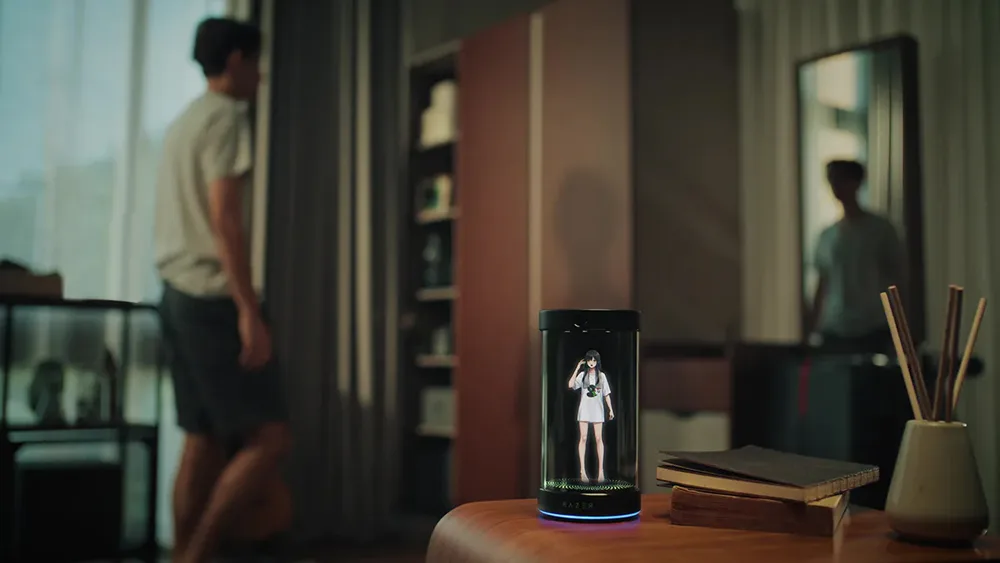
Razer just revealed one of the more ambitious AI concepts we’ve seen in a while: Project AVA, a 3D holographic AI companion designed to live on your desk and interact with you in real time. Instead of another assistant buried inside a phone or browser tab, AVA is meant to feel like a physical presence that works alongside you.
Project AVA features a 5.5-inch animated hologram that uses eye contact, facial expressions, lip-sync, and voice interaction to create something closer to a digital character than a traditional assistant. Razer’s goal is to make AI feel less like software and more like a companion you can naturally engage with while working, gaming, or creating.
What Project AVA Is Designed to Do
AVA is positioned as a multipurpose assistant that adapts to how you use your computer. It’s meant to help manage everyday tasks while also offering deeper contextual support.
Key functions include personal organization like scheduling, reminders, and daily planning. AVA can also assist with creative work by brainstorming ideas, summarizing information, and analyzing content through conversation rather than menus and prompts. Real-time translation is built in for both text and speech, making it useful for global communication. For gamers, AVA can provide strategy tips, explain mechanics, and react dynamically to gameplay moments.
Over time, the system is designed to learn your habits and preferences, adjusting how it communicates and what it prioritizes.
How the Technology Works
Project AVA connects directly to your PC via USB-C and uses an onboard camera and audio sensors to understand what’s happening on your screen and around you. This allows the assistant to respond contextually instead of waiting for explicit commands. The holographic display renders a 3D avatar that appears to exist in physical space, creating a stronger sense of presence than a flat screen ever could.
Users will be able to customize AVA’s appearance, personality traits, and avatar style. The current demo runs on an external AI model, with future flexibility planned as Razer expands its own AI ecosystem.
More Than a Gaming Gimmick
While Razer’s brand roots are firmly in gaming, Project AVA is clearly aimed beyond that audience. The concept leans toward productivity, creativity, and everyday assistance first, with gaming layered in as a natural extension rather than the sole focus. Razer has been clear that this isn’t intended to replace human interaction or become a novelty companion, but the idea of a holographic AI sharing desk space will inevitably raise questions about how personal AI fits into daily life.
Availability and What Comes Next
Project AVA is still a concept, with Razer targeting a release window in the second half of 2026. Reservations are open with a small refundable deposit, though final pricing has not been announced.