The Nile between Luxor and Aswan is one of the great river journeys on earth, and there are two very different ways to sail it. One is a Nile cruise ship, a floating hotel with a hundred or more passengers. The other is a dahabiya, a traditional wooden sailing boat with a handful of cabins. Same river, same temples, completely different holidays. Here is how they actually compare, and which one fits your trip.
What a dahabiya actually is
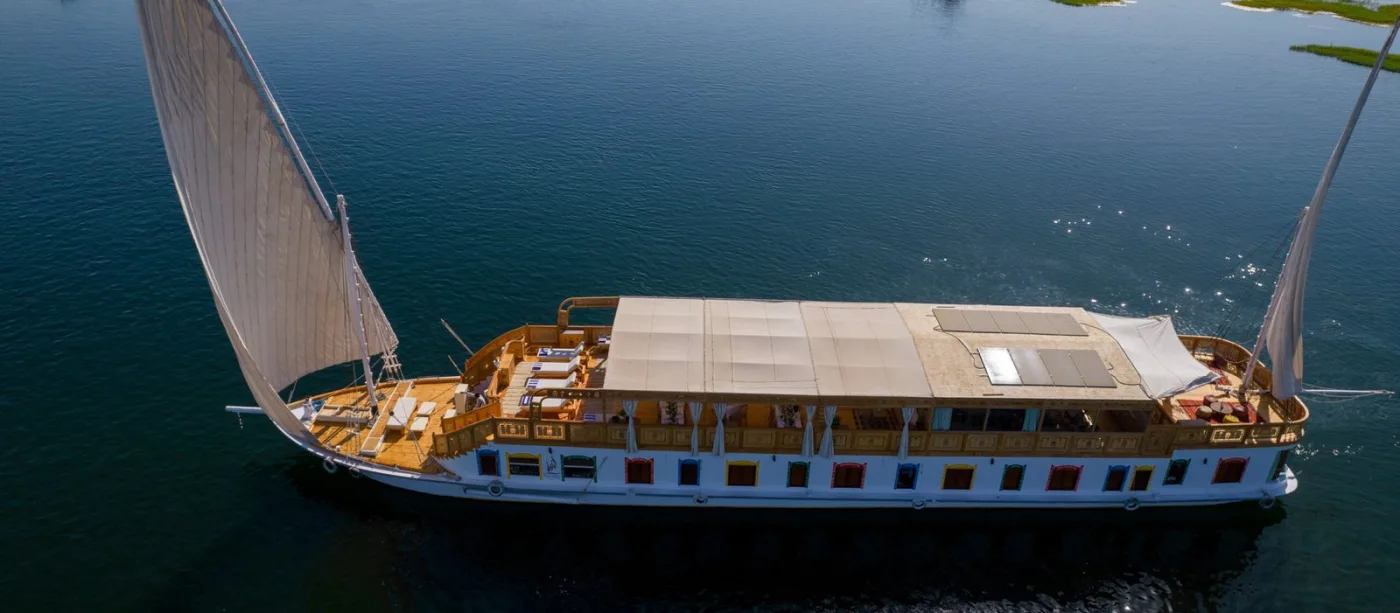
A dahabiya is a two-masted wooden sailing boat, the kind of vessel Egypt’s nineteenth-century travelers used before steamers arrived. A modern one carries roughly 8 to 20 guests across 4 to 12 cabins, all ensuite, with a small crew, a private Egyptologist guide, and a chef cooking for a dozen people instead of a dining room full of them. It sails mostly on wind power, with a small auxiliary motor or a tug when the wind drops, so the river goes quiet in a way a motorized ship never does. Many dahabiyas can be chartered whole, which makes them a natural fit for families, honeymoons, and small groups who want the boat to themselves.
What a Nile cruise ship actually is
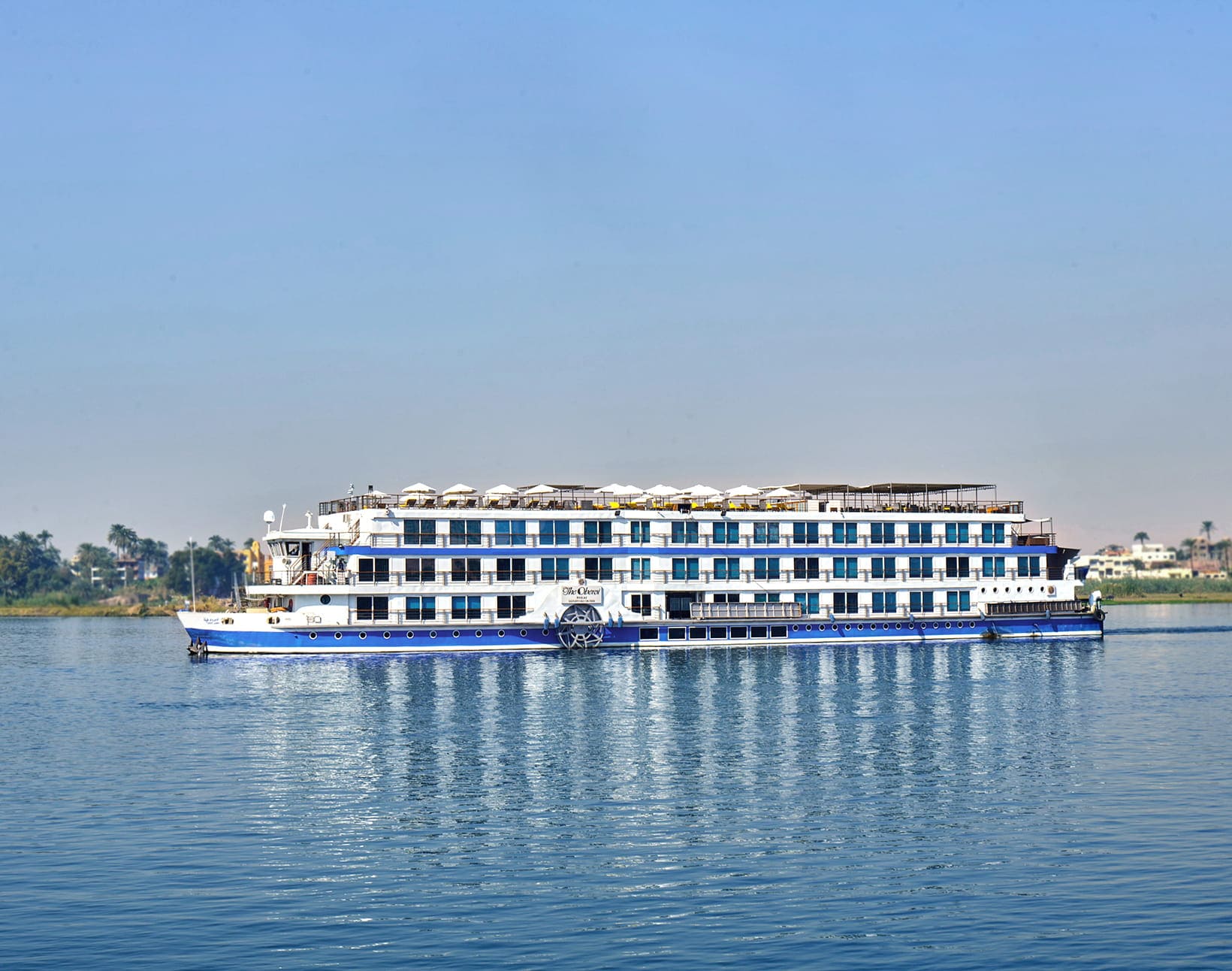
A Nile cruise ship is a floating hotel, usually with 60 to 70 cabins over four or five decks, carrying around 120 passengers, with the biggest ships taking up to 200. Expect a restaurant, a lounge bar, a sun deck with a pool, and on many ships a spa and evening entertainment. Ships sail in standard, deluxe, and luxury classes, so there is a ship for most budgets. The itinerary is fixed, the program is set, and the ship runs on engine power to a schedule.
Pace: the biggest difference
This is the difference that matters most. A dahabiya sails during the day, so you watch the Nile pass in real time: green banks, small villages, palm trees, open sky. The typical dahabiya sailing runs 5 to 8 nights between Luxor and Aswan, with long lunches on board, swims from the side, and unhurried mornings. A cruise ship often sails at night, so you wake up somewhere new each morning without seeing the river move, and the standard sailing is 3 to 4 nights. If your idea of a river trip is watching the river, the dahabiya wins. If your time is short, the ship wins.
Sightseeing: same temples, different crowds
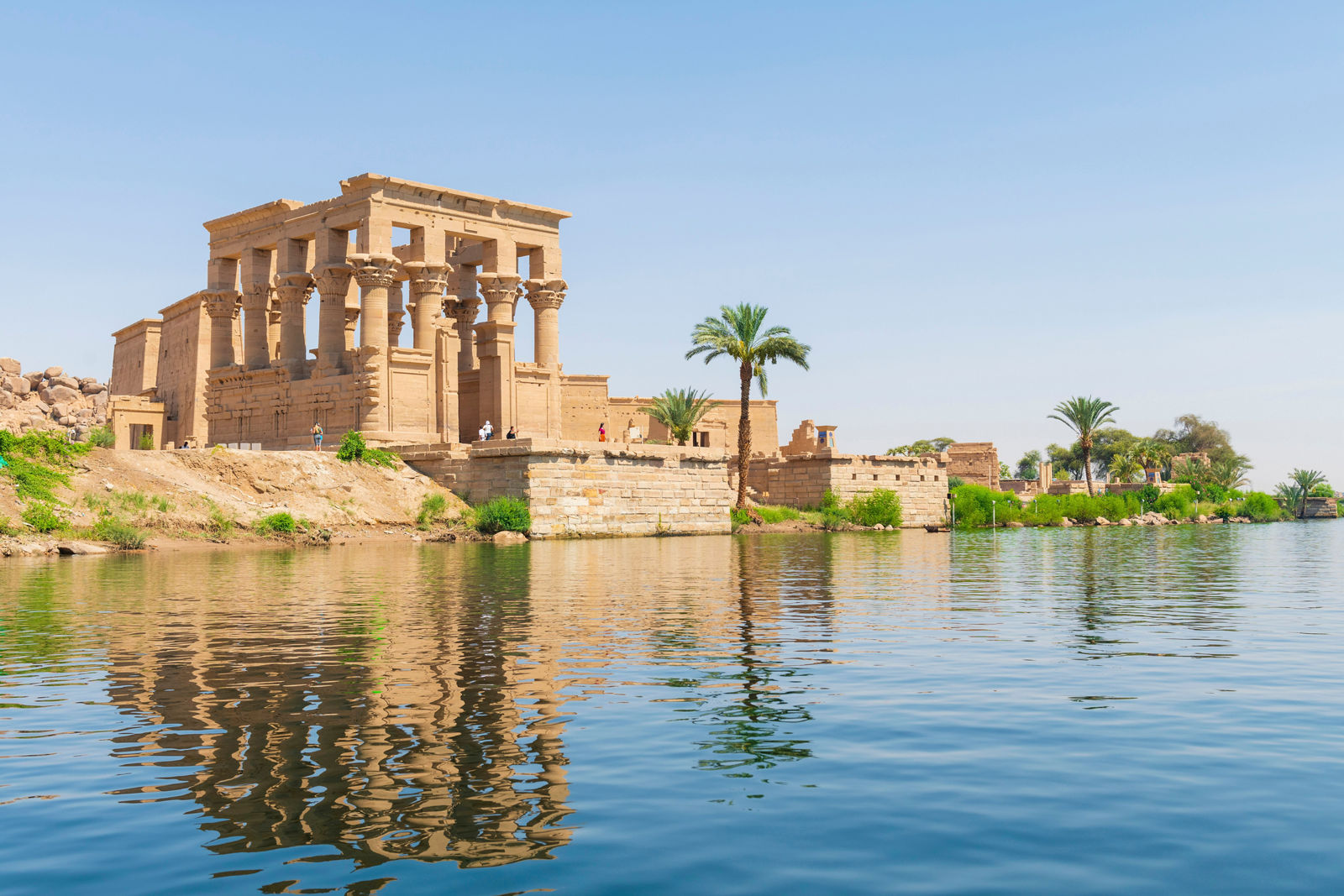
The headline sites are the same on both: Karnak and Luxor Temple, the Valley of the Kings, Edfu, Kom Ombo, and Philae Temple in Aswan, all with a licensed Egyptologist guide. The difference is the company you keep and the stops in between. On a cruise ship you disembark with dozens of passengers and visit temples alongside crowds from several ships at once. On a dahabiya your group is small and the guide’s attention is yours. The dahabiya’s shallow draft also lets it tie up where big ships cannot: quiet islands, sandbanks, Nubian villages, and smaller sites like El Kab and the sandstone quarries of Gebel el-Silsila. The ship gives you the big sites in comfort. The dahabiya gives you the big sites plus the places in between.
Privacy and atmosphere
A dahabiya is quiet and intimate by design. One dining table, one sun deck, a dozen people at most, and the option to charter the whole boat and set your own schedule, meal times, and stops. A cruise ship is social and active: more people, more facilities, more going on in the evening. Neither is better in the abstract. If you want to meet fellow travelers and have a drink in a lively lounge, the ship is your boat. If you want silence, space, and a trip shaped around your group, the dahabiya is.
Facilities: what you give up
Be honest about the trade. Most dahabiyas have no pool, no spa, and no nightly entertainment. Cabins are comfortable but more compact than a modern river ship’s, and the amenities are fewer and more focused: a shaded sun deck, good food, a good guide, and the river itself. A cruise ship gives you the pool, the spa, the bar, the shows, and a bigger cabin with more storage. If facilities matter to you, or you are traveling with kids who want a pool, the ship is the safer pick.
Price: what it costs
A cruise ship is the more economical choice, because the cost is shared across many more cabins. Standard Nile cruises typically run $650 to $1,900 per person depending on ship rating, duration, and season. A dahabiya costs more per person, roughly 40 to 60 percent more per night by most operator comparisons, with five-night dahabiya sailings commonly listed from around $1,150 to $2,800 per person sharing, full board with guide, entrance fees, and transfers included. A full private charter costs more again. You are paying for a boat carrying a tenth of the passengers, and the price reflects that.
The verdict: which one to book
Pick the dahabiya if you want quiet, a small group, sailing instead of engines, the stops nobody else makes, or a private charter for a family or celebration, and you have 5 to 8 nights to give the river. Pick the cruise ship if you want facilities, a pool, a livelier atmosphere, the best price, or a shorter 3 to 4 night sailing that fits a wider Egypt trip. The best season for either is October through April, when temperatures sit in the 20s Celsius and the Nile light is at its best. Either way, you are sailing the same legendary stretch of river. The question is only how you want to meet it.