



12 minute read
Worn tires are among the top reasons vehicles fail safety inspections across the United States. Inspectors look for specific wear patterns that signal unsafe driving conditions or underlying mechanical problems. If your tread depth falls below 2/32 of an inch or shows uneven tire wear, you’ll likely fail inspection and need replacements before getting your vehicle approved.
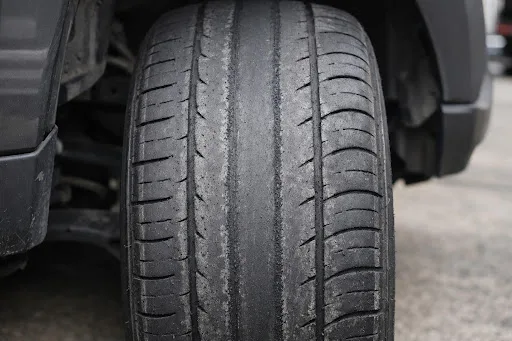
What Tire Wear Patterns Cause Inspection Failures?
Insufficient Tread Depth
The most common reason tires fail inspection is inadequate tread depth. All 50 states enforce minimum tread requirements, typically 2/32 of an inch, though some require 4/32 for better wet-weather safety.
How to Check Tread Depth:
- Insert a penny into the tread groove with Lincoln’s head upside down
- If you can see the top of Lincoln’s head, your tread is below 2/32 inches
- Use a tread depth gauge for precise measurements ($5-15 at auto parts stores)
Center Wear Pattern
When tire tread wears faster in the middle than on the edges, it indicates chronic overinflation. This pattern fails inspections because it reduces the tire’s contact patch with the road, compromising traction and braking performance.
What causes it: Running tire pressure 5-10 PSI above manufacturer recommendations consistently causes the tire to bulge in the center, concentrating wear in that area.
Fix: Check your door jamb sticker for correct PSI and adjust immediately. Replace tires if center wear has exposed cords or reduced tread below legal limits.
Edge Wear Pattern
Excessive wear on both outer edges with good tread in the center signals chronic underinflation. This is a serious safety issue that inspectors will flag immediately.
What causes it: Running 5-10 PSI below recommended pressure causes tire sidewalls to flex excessively, grinding down the outer edges. This also increases blowout risk and fuel consumption.
Fix: Inflate to proper PSI and inspect for slow leaks. If edge wear has progressed significantly, replacement is necessary before inspection.
One-Sided Wear Pattern
When one edge of the tire wears significantly faster than the other, it indicates wheel misalignment. This pattern always fails inspection because it suggests ongoing steering and suspension problems.
What causes it:
- Camber misalignment (wheel tilts in or out)
- Hitting curbs or potholes that knocked wheels out of alignment
- Worn suspension components like ball joints or control arm bushings
Fix: Get a professional wheel alignment ($75-200) and replace worn suspension parts. Tires with severe one-sided wear need replacement even after alignment correction.
Cupping or Scalloping
Cupped tires show dips or scalloped patterns around the tire circumference. You’ll often hear a rhythmic thumping noise while driving. This pattern fails inspections due to vibration risks and uneven contact with the road.
What causes it:
- Worn shock absorbers or struts
- Imbalanced wheels
- Bent wheels from impact damage
- Worn suspension bushings
Fix: Replace worn suspension components and have wheels balanced. Cupped tires typically need replacement as the damage is permanent.
Feathering
Feathering creates a sawtooth pattern where tread blocks are smooth on one side and sharp on the other. Run your hand across the tread—if it feels smooth one direction and rough the other, you have feathering.
What causes it:
- Toe misalignment (wheels point in or out)
- Aggressive driving with hard acceleration and braking
- Lack of regular tire rotation
Fix: Correct toe alignment and rotate tires every 5,000-7,000 miles. Moderately feathered tires may pass inspection if tread depth remains legal, but severe feathering requires replacement.
Flat Spots
Flat spots create a worn section on the tire circumference, usually from hard braking with locked wheels or leaving a vehicle parked for extended periods.
What causes it:
- Emergency stops without ABS
- Parking for months without moving the vehicle
- Towing with drive wheels on the ground
Fix: Minor flat spots may round out with driving, but significant flat spots that create vibration will fail inspection and require tire replacement.
Understanding Legal Tread Depth Requirements by State
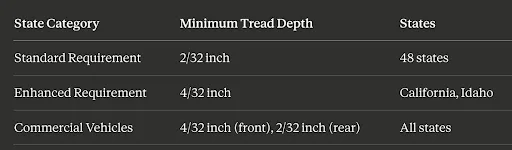
Important Note: While 2/32 inch is the legal minimum in most states, tire manufacturers and safety experts recommend replacing tires at 4/32 inch for optimal wet-weather performance. Many inspection stations will advise replacement even if you technically pass at 2/32 inch.
How Inspectors Evaluate Tire Condition
Vehicle safety inspectors follow systematic procedures when examining tires:
- Tread Depth Measurement: Using calibrated gauges in multiple grooves across the tire
- Wear Pattern Analysis: Visual inspection for uneven wear indicating mechanical issues
- Sidewall Inspection: Checking for bulges, cracks, cuts, or exposed cords
- Tire Age Verification: Reading DOT date codes (tires over 6-10 years may fail regardless of tread)
- Visible Damage Assessment: Looking for punctures, embedded objects, or repairs in sidewalls
Red Flags That Guarantee Failure:
- Any visible cords or belts
- Sidewall bulges or bubbles
- Cuts deeper than 1 inch
- Missing chunks of tread
- Repairs in the sidewall area
- Mismatched tire sizes on the same axle
Tire Wear Patterns and What They Reveal About Your Vehicle
Understanding wear patterns helps you diagnose problems before they become expensive:
Rapid Center Wear = Overinflation
- Check tire pressure weekly, especially during temperature changes
- Each 10°F temperature drop reduces tire pressure by 1-2 PSI
- Overinflated tires reduce stopping distance and increase accident risk
Both Edges Worn = Underinflation
- Underinflation by just 20% can reduce tire life by 30%
- Causes excessive heat buildup, the leading cause of blowouts
- Reduces fuel economy by up to 3%
One-Side Wear = Alignment Issues
- Misalignment can develop in just one pothole impact
- Costs $75-200 to fix but saves hundreds in premature tire replacement
- Also causes vehicle pulling and uneven steering feel
Cupping = Suspension Problems
- Often indicates worn shocks or struts ($300-700 per axle to replace)
- Ignoring this accelerates wear on other suspension components
- Creates dangerous handling characteristics in emergency maneuvers
How to Prevent Tire Wear That Fails Inspections
Follow these proven maintenance practices to extend tire life and pass inspections consistently:
Monthly Tire Pressure Checks
- Check when tires are cold (before driving or after 3+ hours parked)
- Use a quality digital gauge ($10-25)
- Add or release air to match door jamb specifications
- Don’t forget the spare tire
Regular Tire Rotations
- Rotate every 5,000-7,000 miles or with every other oil change
- Follow your vehicle manufacturer’s rotation pattern
- Costs $20-50 but extends tire life by 20-30%
- Many tire shops include free lifetime rotations with tire purchases
Annual Wheel Alignments
- Get aligned after hitting major potholes or curbs
- Annual alignment costs $75-200 but prevents $600+ in premature tire replacement
- Ask for a printout of before/after alignment specs
- Consider alignment if your vehicle pulls to one side
Shock and Suspension Maintenance
- Replace shocks/struts every 50,000-70,000 miles
- Failed shocks cause cupping that ruins tires in 10,000 miles
- Warning signs: bouncing after bumps, nose-diving when braking, swaying in turns
Proper Loading
- Never exceed vehicle weight ratings on door jamb sticker
- Overloading causes accelerated wear and potential tire failure
- Adjust tire pressure for heavy loads per manufacturer guidelines
Frequently Asked Questions About Tire Wear and Inspections
Will slightly uneven tire wear fail my inspection?
Minor uneven wear usually won’t fail inspection if your tread depth remains above the legal minimum of 2/32 inch across the entire tire. However, severe uneven wear that exposes cords, creates handling issues, or indicates dangerous mechanical problems will result in failure. Inspectors have discretion to fail tires that appear unsafe even if they technically meet minimum tread requirements.
Can I pass inspection with different tread depths on each tire?
Yes, as long as each individual tire meets the minimum 2/32 inch requirement. However, having significantly different tread depths (more than 4/32 inch difference between tires on the same axle) can cause handling problems and may prompt inspectors to recommend replacement for safety reasons, especially on all-wheel-drive vehicles.
How long before my inspection should I replace worn tires?
Replace tires at least one week before your scheduled inspection. This allows time for the new tires to be properly mounted, balanced, and the tire pressure monitoring system (TPMS) to reset if applicable. Last-minute tire replacement can lead to rushed installations and potential problems during inspection.
Do all four tires need to match to pass inspection?
Not necessarily. Inspections focus on individual tire condition, not matching sets. However, performance tires on the same axle should be the same size and have similar tread depth. Mismatched tires can fail inspection if they create safety concerns or violate manufacturer specifications, particularly on AWD vehicles.
Can repaired tires pass vehicle inspection?
Properly repaired tires can pass inspection if the repair meets industry standards. Acceptable repairs are limited to the tread area, use internal patches with plug combinations, and are no larger than 1/4 inch. Sidewall repairs, multiple repairs close together, or improper plug-only repairs will fail inspection.
What is the penny test for tire tread?
Insert a penny into the tire tread groove with Lincoln’s head pointing down. If you can see the top of Lincoln’s head, your tread is at or below 2/32 inch and will likely fail inspection. For better safety margins, use a quarter—if you can see the top of Washington’s head, you’re at 4/32 inch and should consider replacement soon.
How old is too old for tires to pass inspection?
While most states don’t have specific age limits, tire manufacturers and safety experts recommend replacing tires after 6-10 years regardless of tread depth. Check the DOT code on your tire sidewall—the last four digits indicate the week and year of manufacture (e.g., “3521” means the 35th week of 2021). Some inspectors may flag or fail tires over 10 years old due to rubber degradation.
Will winter tires with studs fail summer inspections?
This depends on your state laws. Many states prohibit studded tires during certain months (typically April-October). If your inspection falls during the prohibited period, studded tires will fail. Remove studs or switch to all-season tires before inspection during banned months.
The Cost of Ignoring Tire Wear Patterns
Failing to address abnormal tire wear creates cascading expenses:
Immediate Costs:
- Failed inspection fee: $20-50 (varies by state)
- Re-inspection fee: $10-30
- Emergency tire replacement: $100-300 per tire (vs. $80-200 with price shopping)
Secondary Costs:
- Alignment issues left uncorrected: $75-200 to fix, but $600+ in premature tire wear
- Failed suspension components: $300-1,200 depending on parts needed
- Increased fuel consumption: 3-10% decrease in MPG from improper inflation or alignment
Safety Risks:
- Blowout risk increases 3x with tires below 4/32 inch tread
- Stopping distance increases 30-40% on wet roads with worn tires
- Hydroplaning occurs at lower speeds (as low as 35 mph) with insufficient tread
When to Replace Tires Before Inspection
Don’t wait until the last minute. Replace tires when you observe:
Critical Replacement Indicators:
- Tread depth at or below 4/32 inch (use the quarter test)
- Any visible cords, belts, or inner tire material
- Sidewall cracks deeper than 1/16 inch
- Bulges or bubbles anywhere on the tire
- Age exceeding 6 years with visible cracking or 10 years regardless of condition
- Uneven wear patterns with tread depth differences exceeding 4/32 inch across the tire
Warning Signs Suggesting Replacement Soon:
- Tread depth between 4/32 and 5/32 inch
- Minor feathering or cupping patterns developing
- Frequent loss of air pressure (more than 2 PSI per month)
- Vibration that can’t be corrected with balancing
- Visible weather checking (small cracks) in tread grooves
Professional Inspection Tips: What Mechanics Look For
Understanding the inspector’s perspective helps you prepare:
Primary Evaluation Criteria:
- Minimum tread depth in the shallowest groove
- Tread wear indicators (wear bars) becoming flush with tread
- Cord or belt exposure anywhere on the tire
- Sidewall integrity and absence of structural damage
- Proper tire size matching vehicle specifications
Common Mistakes Vehicle Owners Make:
- Checking only the center of the tread (inspectors check multiple points)
- Assuming “lots of tread left” without measuring actual depth
- Ignoring the spare tire (also inspected in many states)
- Using fix-a-flat products that can damage TPMS sensors
- Mixing tire types (winter and all-season) on the same axle
Key Takeaways: Tire Wear Patterns and Inspection Success
Essential Points to Remember:
- 2/32 inch is the legal minimum tread depth in most states, but 4/32 inch is the safety-recommended replacement point
- Center wear indicates overinflation—reduce pressure to manufacturer specifications immediately
- Edge wear signals underinflation—inflate properly and check for leaks before they cause blowouts
- One-sided wear means alignment problems—get aligned promptly to save hundreds in premature tire replacement
- Cupping patterns reveal suspension issues—replace worn shocks or struts before they destroy new tires
- Monthly tire pressure checks prevent 90% of irregular wear patterns and extend tire life by years
- Tire rotation every 5,000-7,000 miles equalizes wear and maximizes your tire investment
- Plan tire replacement 1-2 weeks before inspection to avoid last-minute complications
Conclusion
Tire wear patterns tell the story of your vehicle’s health and maintenance history. By understanding what inspectors look for and addressing wear issues proactively, you’ll avoid inspection failures, extend tire life, and drive more safely. Most tire-related inspection failures are preventable through basic monthly checks and routine maintenance.
Take Action Today:
Check your tread depth using the penny test right now. If you’re at or near 4/32 inch, schedule tire replacement before your next inspection. If you notice uneven wear patterns, book an alignment check and suspension inspection this week. These small preventive steps will save you hundreds of dollars and ensure your vehicle passes inspection on the first try.
Need help determining if your tires will pass inspection? Visit a reputable tire shop for a free tire inspection and get a professional assessment of your tire condition, alignment, and overall vehicle safety. Most shops offer complimentary inspections and can provide detailed recommendations without pressure to buy.
Remember: Your tires are the only contact your vehicle has with the road. Maintaining them properly isn’t just about passing inspection—it’s about protecting yourself, your passengers, and everyone else on the road.