



6 minute read
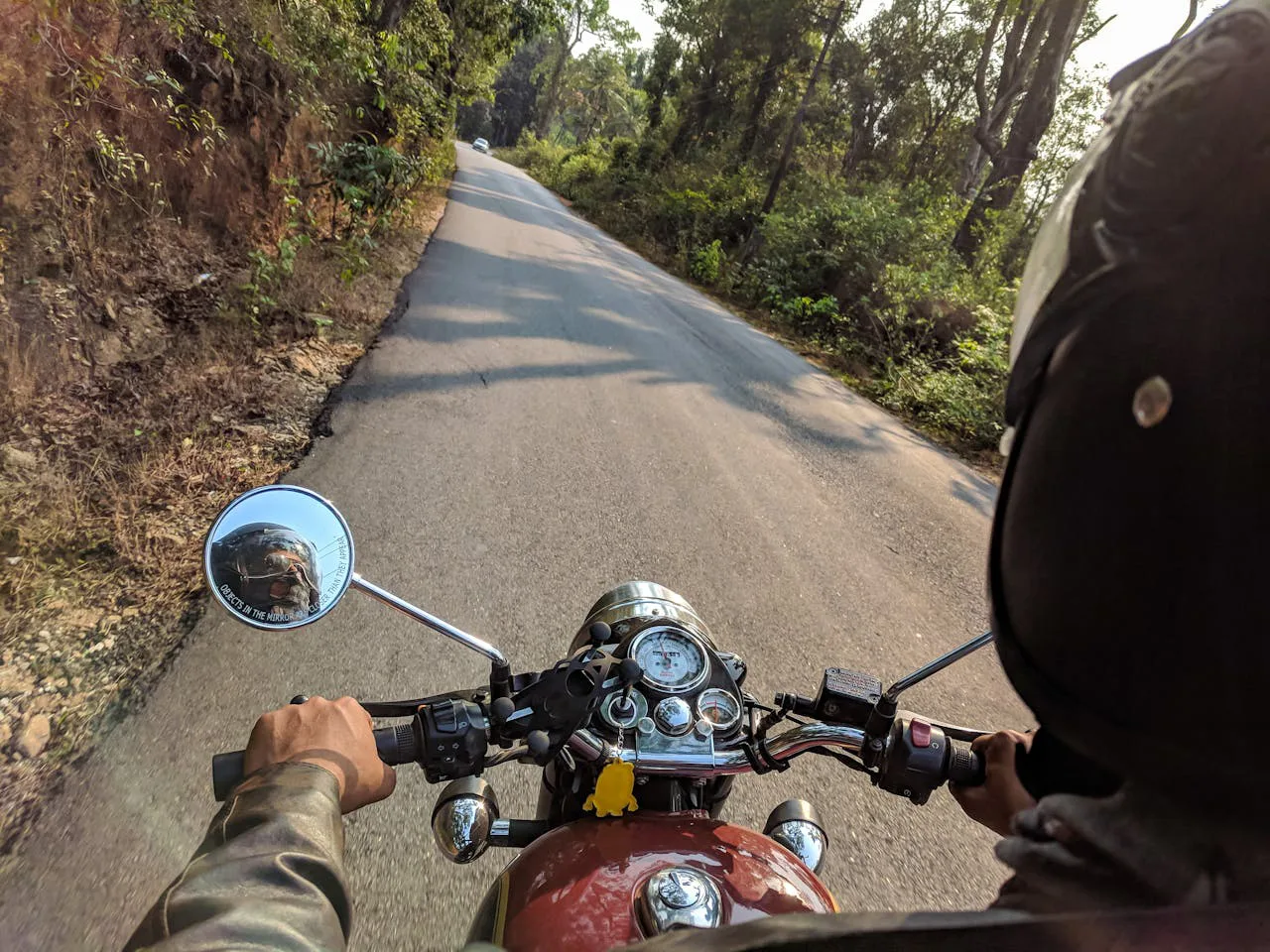
Riding sharpens your senses. You scan, listen, and feel the road in a way most drivers never do. But some threats hide in plain sight. They are boring everyday features that turn dangerous the moment a tire patch or a line choice goes wrong.
This guide breaks down the sneaky hazards that catch riders off guard and how to manage them. The goal is to help you see trouble sooner, choose better lines, and keep more traction in reserve.
Why The Margin For Error Is So Small
A motorcycle is light, narrow, and balanced on two tire patches not much bigger than a credit card. Small changes in grip have big effects. When that grip fades, the slide happens fast.
A federal safety report noted that motorcyclist fatality risk per mile is far higher than for people in cars, reminding us that every patch of pavement matters. That gap in protection is why low-traction zones, sudden bumps, or sharp-angle changes are so unforgiving.
Think of it like this. A car can skip across a slick strip and recover. A bike asks you to adjust speed, body position, throttle, and line in real time. Preparation beats luck.
Gravel, Sand, And Loose Debris
Loose material robs you of friction. It hides in driveway mouths, farm lanes, shoulder edges, and after storms. Gravel pools where tires do not roll away, like the center of a lane at slow corners.
If you spot it late, keep the bike upright, ease off the lean, and roll on a hair of throttle to settle the chassis. If a fall happens, quick help matters, and motorcycle accident lawyers can explain the next steps, but your best plan is avoiding the fall. Scan far, use a wide view, and set corner speed early so you are not braking on marbles.
Aim for the cleanest path, even if it is not the geometric apex. Smooth hands matter most here. Abrupt brake grabs or sharp steering inputs load the front tire when it has the least to give.
- Look for pale streaks or sparkles that signal grit.
- Keep the bike closer to vertical across dirty patches.
- Use a gentle throttle to stabilize the rear tire.
Weather And Seasonal Traps
Water is a shape-shifter. After a light rain, the first minutes lift oil to the top and turn the road glassy. In cold snaps, black ice hides in shade while the sun warms open stretches.
Leaves, pollen, and mud bring surprise slicks. Ride like the traction map changes every block in shoulder seasons. Assume shadowed corners are colder and slicker.
Summer has traps, too. Heat softens tar and raises tire pressures. Check pressures more often, bleed to spec before a long ride, and scan for shiny patches that do not match the rest of the pavement.
- Treat the first rain after a dry spell as extra slick.
- Expect black ice near bridges, creeks, and north-facing hillsides.
- Keep a bigger gap so you can brake on clean pavement.
Slippery Bridges And Metal Surfaces
Steel is smooth, and water makes it worse. Bridge decks, manhole covers, expansion joints, and utility plates can feel like ice under lean or brake. Paint or frost on top raises the risk.
An engineering manual from a state transportation department advises placing Slippery When Wet warnings ahead of steel deck bridges on the highway system, which signals that these surfaces are known low-grip zones. Treat the sign as a cue to reduce lean, straighten the bike, and cross with steady throttle.
Adjust your lane to avoid metal seams when possible. If you must cross a plate or joint, reduce lean and avoid mid-corner braking. The goal is to keep forces linear, not lateral.
Railroad Crossings Demand A Different Line
Rails are raised, smooth, and often angled to the lane. That angle is the trap. Hitting a shiny rail at shallow lean can wash the front or kick the rear.
National rail safety data points to thousands of grade crossing incidents each year, a reminder that these sites demand extra caution even at low speeds. The fix is technique, not luck. Approach rails as close to 90 degrees as you safely can.
Set speed before the tracks, square the bars, and cross with a light, steady throttle. If traffic or lane layout blocks a straight approach, reduce the lean to near zero as you roll the rail heads. Do not brake hard while on the metal.
Painted Lines, Sealant, And Thermoplastic
Fresh paint and thermoplastic markings are slick when wet. Wide crosswalks, stop bars, and big arrows can stretch across your whole path in the rain. Tar snakes add another twist by softening in heat and hardening in cold.
Plan to cross markings as upright as possible. A small timing shift can put your tires on bare pavement instead of paint at peak lean. If you need to use brakes, do it before or after the marking.
On hot days, expect tar to feel vague and wiggly. Keep inputs smooth and let the bike wander a hair rather than fighting it at the bars. Smooth throttle carries you through.
Edge Traps And Pavement Changes
Edge traps form where new asphalt meets old, where a lane drops to gravel, or where a patch sits proud of the surface. The raised or sunken edge can grab a narrow motorcycle tire.
Avoid running parallel to a sharp edge. If you must cross it, do so at a clear angle with minimal lean. That reduces the tire’s chance of being deflected.
Watch the shadows. Low light hides edges and ruts. If you cannot read the surface, lower the speed and widen your margin for error. A little patience is cheaper than a bent rim.
Work Zones, Cones, And Temporary Plates
Construction areas squeeze lanes, shift lines, and scatter grit. Temporary steel plates may sit proud of the surface or have beveled edges that still jar a front tire.
Read the zone from far out. Look for merge points, fresh gravel, and uneven joints. Set your speed early so you are not braking or changing lanes on loose material.
When you see a plate ahead, align for the flattest path and reduce lean. Keep your head up and eyes far down the lane. The bike follows your vision and your smooth hands.
Riding asks a lot from two small tire patches. The more you notice, the more you can prevent. Spot the subtle signs of low traction, choose cleaner lines, and keep your inputs calm.
When the road throws a surprise at you, your habits decide the outcome. Build habits that buy time and traction. Smooth choices stack up, mile after mile.