


6 minute read
A Practical Question Every Hospitality Space Faces
Walk through any well-designed hotel terrace or poolside lounge, and you’ll notice something consistent—everything looks intentional. Cushions are crisp, finishes are intact, and nothing appears worn by the weather.
That doesn’t happen by chance.
A common question among operators is: Does outdoor furniture need to be covered? Especially when investing in high-quality commercial pieces, it’s reasonable to assume they can simply be left outside year-round.
The reality is more measured. Outdoor furniture is engineered for exposure, but not for neglect. Sun, moisture, dust, and temperature shifts all take a slow but steady toll. Covering furniture isn’t always necessary—but knowing when it matters makes a clear difference in longevity and presentation.
Seasonal Use vs Seasonal Protection
There’s no universal rule that applies to every climate or property. A beachfront resort in California functions differently from a mountain lodge in Colorado or a rooftop bar in Chicago. Still, some patterns hold true.
High Season (Spring and Summer)
During peak service seasons, furniture is in constant use. Covering every chair and table each night may not be practical, especially in fast-paced environments.
That said, UV exposure is often underestimated. Prolonged sunlight gradually breaks down coatings, fabrics, and synthetic materials.
So while daily covering might not be realistic, selective protection helps:
- Cover pieces during extended downtime
- Use umbrellas or shaded layouts for the furniture
- Rotate cushions to distribute wear evenly.
Transitional Seasons (Fall)
Autumn is usually the time when small issues begin to show. Leaves collect, moisture lingers, and surfaces stay damp longer than expected.
Organic debris, if left unattended, can stain fabrics and trap moisture against frames. Over time, that leads to mildew or surface discoloration—especially in woven materials or textured finishes.
At this point, covering becomes essential. Not necessarily every night, but certainly:
- During storms or extended closures
- In areas with heavy tree coverage
- When humidity remains high
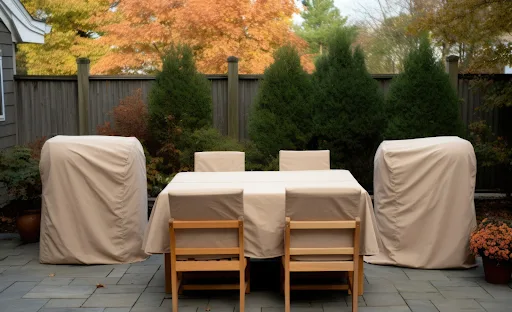
Breathable patio furniture coverings are especially important here. Non-ventilated covers can trap moisture, which creates a different problem altogether.
Cold Season (Winter)
Winter changes the entire situation. In colder regions, exposure isn’t just cosmetic—it can be structural.
Freeze-thaw cycles can cause expansion and contraction in materials. The National Association of Home Builders notes that repeated freezing is one of the main contributors to cracking in outdoor surfaces.
In practical terms:
- Wood can split
- Finishes can flake
- Metal joints can weaken over time.
This is the season when covering becomes necessary. In many cases, storage is even better—particularly for cushions and lighter pieces.
If furniture needs to be kept outdoors, high-quality covers are non-negotiable.
Material-Specific Considerations
Not all furniture responds to weather in the same way. Understanding material behavior is key when deciding how aggressively to protect it.
Teak and Natural Woods
Teak is often chosen for hospitality settings because it handles moisture well. Its natural oils make it resistant to rot and insects.
However, exposure will change its appearance. Left uncovered, teak develops a silver-gray patina. Some properties embrace this look. Others prefer to maintain the original tone.
Covering teak helps preserve color consistency—particularly important in brand-conscious environments.
Powder-Coated Aluminum
Aluminium is widely used in commercial outdoor furniture for a reason—it doesn’t rust easily and is relatively low maintenance.
Still, coatings can degrade over time, especially in coastal areas where salt accelerates wear. Small scratches can expose the underlying material.
Using covers reduces surface abrasion and keeps finishes looking uniform.
Synthetic Wicker and Resin
These materials are designed for durability, but they aren’t immune to environmental stress.
Continuous sun exposure can make fibers brittle. Dust and debris settle into the weave, which makes cleaning more labor-intensive over time.
Covers help reduce both UV exposure and dirt accumulation—two of the main contributors to early aging in wicker furniture.
Outdoor Cushions and Fabrics
Even high-performance fabrics degrade eventually. Constant exposure leads to fading, and trapped moisture can affect internal padding.
For this reason alone, covering or storing cushions is one of the simplest ways to extend furniture life.
How to Care for Outdoor Furniture Beyond Covering
Covering is only one part of a broader care strategy. Knowing how to care for outdoor furniture is important, especially in commercial settings.
Routine Cleaning
Regular cleaning prevents buildup that could lead to long-term damage.
- Use mild soap and water for most surfaces
- Avoid abrasive tools that damage finishes
- Clean more frequently in high-traffic areas.
Inspection and Preventive Maintenance
Small issues tend to escalate when ignored:
- Tighten fittings and joints periodically
- Address scratches or coating damage early
- Reapply protective treatments when needed.
Seasonal Preparation
Before major weather shifts:
- Deep clean all surfaces
- Dry thoroughly before covering
- Store or protect cushions separately
This kind of routine care is what ensures that outdoor furniture looks consistent in every season.
The Operational Perspective
For hospitality operators, the decision to cover furniture isn’t just about preservation—it’s about efficiency and presentation.
Balancing Guest Readiness
Furniture should always be ready for use. Covers should:
- Be quick to remove
- Store easily
- Not disrupt service flow
Reducing Long-Term Costs
Replacing outdoor furniture is expensive—not just financially, but operationally.
Protective measures like covers:
- Reduce cleaning time
- Extend replacement cycles
- Maintain a consistent guest experience.
Maintaining Brand Standards
Guests notice details. Faded cushions or worn finishes can subtly affect how a space is perceived.
Well-maintained furniture gives a sense of quality and attention to guests. It is something every hospitality brand relies on.
Choosing the Right Patio Furniture Coverings
Not all covers perform equally, especially in commercial environments.
The most effective patio furniture coverings share a few characteristics:
- Breathable fabric to prevent condensation
- Water resistance for rain protection
- UV resistance to limit sun damage
- Secure fastenings for windy conditions.
Why Customization Matters in Outdoor Furniture
Every property has different environmental pressures—coastal humidity, desert heat, urban pollution, or seasonal snowfall.
This is where working with a customized outdoor furniture manufacturer becomes valuable. Custom-built pieces allow for:
- Material selection based on climate
- Finishes according to exposure levels
- Design alignment with brand identity.
A reliable outdoor furniture manufacturer understands these variables and builds accordingly, ensuring both durability and visual consistency.
A Measured Answer to a Common Question
So, does outdoor furniture need to be covered year-round?
Not always—but it should never be left entirely unprotected.
The most effective ways are to cover when exposure risk is high, store when conditions are extreme and maintain consistently throughout the year.
This isn’t about overprotection—it’s about preserving investment and ensuring every guest-facing space looks as intended.
Built for Hospitality, Designed to Last
At Kingmake, outdoor furniture is created with real-world hospitality environments in mind. From sun-drenched pool decks to high-traffic restaurant terraces, each piece is designed to handle daily use while maintaining its visual appeal.
Looking to refine your outdoor space?
Partner with Kingmake and create environments that stay inviting, season after season.