



5 minute read
Buying tires online used to feel like a gamble. I get it. A tire isn’t a phone case or a pair of sunglasses you can return in a padded envelope. It’s the only thing between your car and the road, and getting the wrong one is an expensive mistake. But after going through the process myself, I can tell you the fear is mostly unfounded if you know what to look for.
Start With Your Size and Don’t Guess
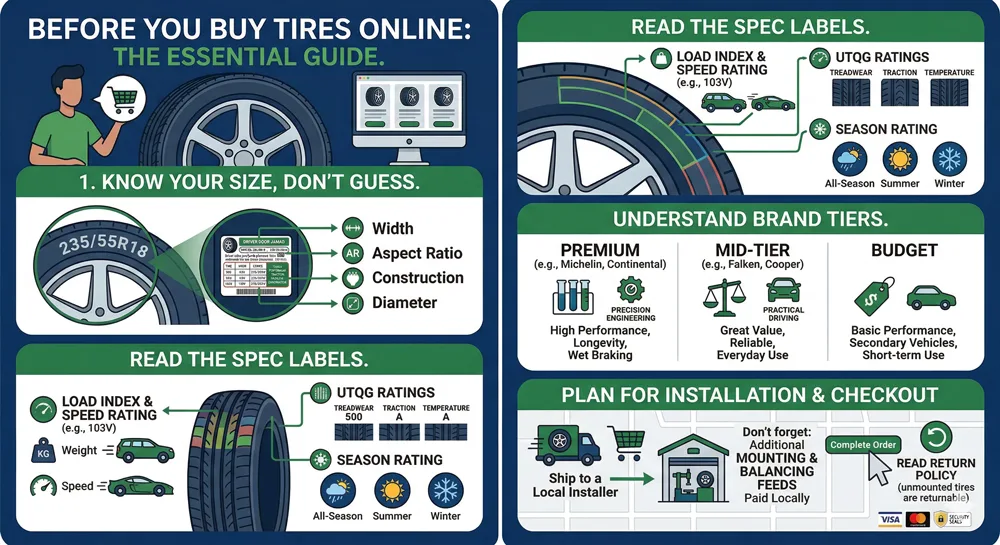
The first thing you need to nail down before shopping is your tire size. It’s printed on the sidewall of your current tires and it looks something like this: tire size 235/55r18. That sequence tells you the tire’s width in millimeters, the aspect ratio (the sidewall height as a percentage of width), the construction type (R = radial), and the wheel diameter in inches. Miss any of those numbers and you’re ordering the wrong tire, full stop.
You can also find your size in your car’s owner’s manual or on the placard inside the driver’s door jamb. If your vehicle was modified or you’ve already swapped wheels, verify off the tire itself. Don’t rely on memory.
What Online Retailers Actually Offer (And What to Watch For)
The upside of buying tires online is real: broader selection, better prices, and the ability to compare brands side by side without a salesperson steering you toward whatever’s sitting in the warehouse. Sites like Priority Tire carry a wide range of sizes and brands, so you’re not limited to what a local shop has in stock that week.
The thing to watch: make sure you understand what’s included in the price. Online tire purchases almost always require a separate installation appointment at a local shop. The tire ships to either you or the installer directly, and you pay the shop a separate mounting and balancing fee. Factor that in before you assume the online price is the full cost. It usually isn’t.
How to Read a Tire Label Without a Decoder Ring
Once you know your size, you’ll run into a few more specs that matter:
Load Index and Speed Rating — These are listed as a number and a letter after the size (like 103V). The load index tells you how much weight each tire can carry. The speed rating tells you the maximum sustained speed the tire is rated for. If you drive a larger SUV or truck, pay attention to the load index. Getting it wrong can affect handling and safety.
UTQG Rating — This stands for Uniform Tire Quality Grading and it appears on most passenger tires. It breaks down into three numbers/letters covering treadwear, traction, and temperature resistance. A treadwear rating of 500 will typically outlast a tire rated at 300, all else being equal. Use it as a rough comparison tool, not gospel.
Season Rating — All-season, summer, and winter tires are genuinely different products. All-season tires are the practical choice for most drivers in most climates. If you live somewhere with real winters, a dedicated winter tire on a separate set of wheels will outperform any all-season when temperatures consistently drop below 45°F.
Brand Tiers: What You’re Actually Paying For
There’s a wide price range in the tire market, and it’s worth understanding what separates a $90 tire from a $200 one.
Premium brands like Michelin, Continental, and Bridgestone invest heavily in compound development and tread design. You’re paying for proven performance in wet braking, noise levels, and longevity. If you put a lot of highway miles on your car or drive in variable weather, the premium is often worth it over the life of the tire.
Mid-tier brands like Cooper, Falken, and Hankook offer solid performance at a step down in price. For most everyday drivers, these represent the practical sweet spot.
Budget tires from lesser-known brands are fine for low-mileage drivers, secondary vehicles, or situations where you just need to get through a season. They’re not dangerous by default, but don’t expect the same wet-weather grip or tread life.
Priority Tire stocks all three tiers, which makes it easy to filter by budget and see what’s actually available in your size without chasing multiple tabs.
Installation: Don’t Skip This Step
You cannot safely drive on a tire you mounted yourself in most cases. Proper mounting requires a tire machine to seat the bead, and balancing requires a spin balancer to prevent vibration at highway speeds. Some shops charge a flat fee per tire (usually $15–$25) for mounting and balancing. Call ahead, confirm they accept tires purchased elsewhere (most do), and schedule the appointment before your tires arrive.
If you’re replacing all four, ask about a free rotation on your next oil change. Many shops bundle that in when you’re a new customer.
The Return Policy Question
Read it before you buy. Most online tire retailers won’t accept returns on mounted tires, which is fair. But unmounted tires in original condition are usually returnable within a set window. Priority Tire’s return policy is worth checking directly on their site before you commit, especially if you’re ordering for a less common vehicle where fitment questions might come up.
One Last Thing Before You Click Buy
Cross-reference the fitment. Most online tire sites have a search-by-vehicle tool that lets you enter your year, make, and model. Use it even if you already know your tire size. It’s a quick sanity check that confirms the size you found on the sidewall is actually the factory spec for your vehicle. If you have a modified lift or aftermarket wheels, you’ll need to go by the tire size directly rather than the vehicle lookup.
Buying tires online is genuinely straightforward once you understand the process. Know your size, check the specs that actually matter, factor in installation costs, and pick a retailer with clear policies. The savings are real and the selection is usually better than what you’ll find walking into a local chain store on a Saturday afternoon.