


5 minute read
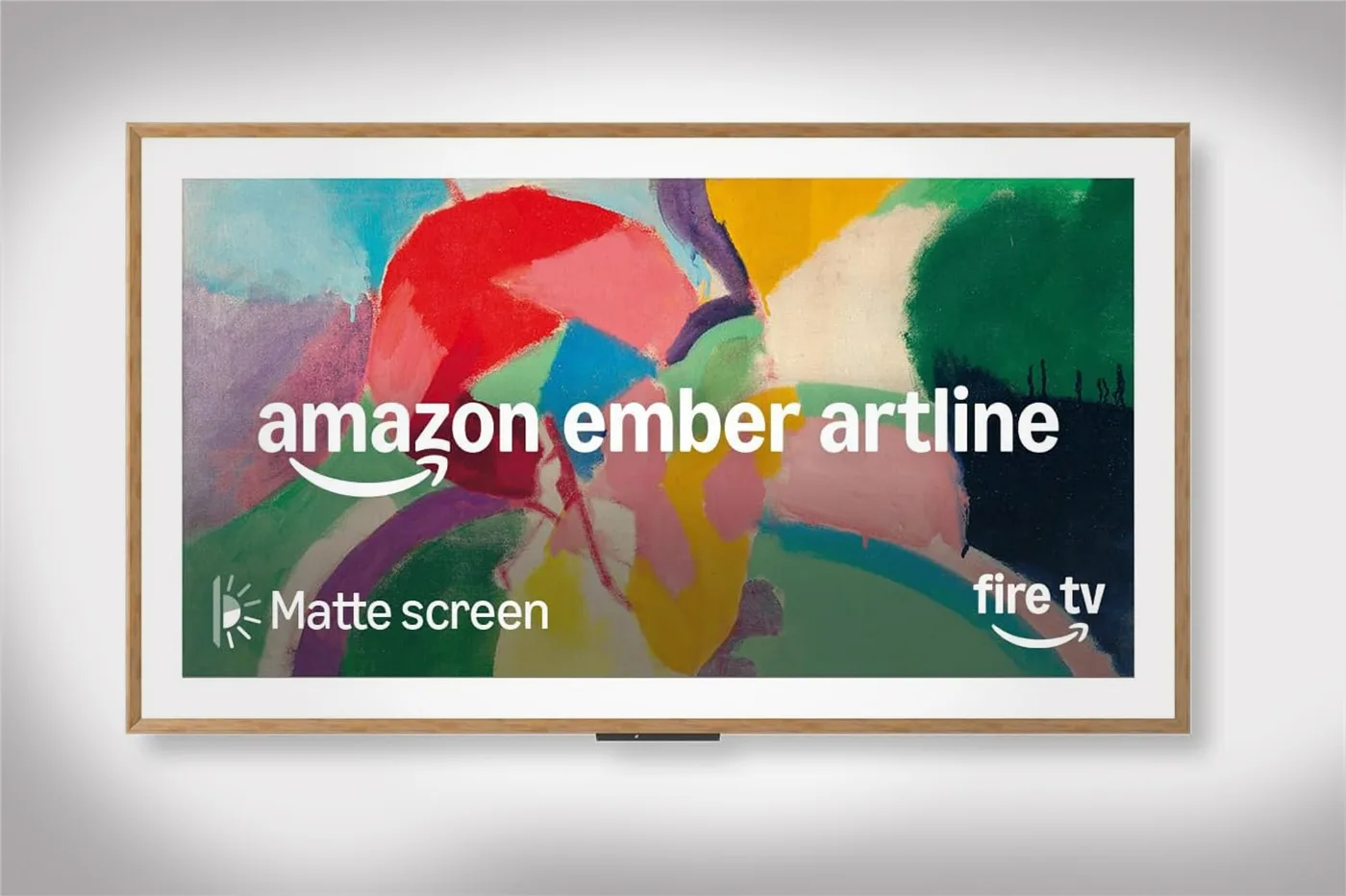
The Frame TV has had the lifestyle TV category mostly to itself for years, and Amazon’s decided it wants in. The Amazon Ember Artline starts shipping today in the U.S. and Canada, with a 55-inch model at $899 and a 65-inch version sitting above it. For context, Samsung’s 65-inch Frame starts around $1,300. That’s a $400 gap, which is enough to make anyone who’s been circling an art TV sit up.
I’ve been tracking this one since Amazon teased it at CES 2026, and the short version is that it’s a credible first swing. Whether it’s a better TV than The Frame is a different question, and one I can’t answer from press photos and show-floor demos. But on spec and on strategy, Amazon clearly knew what it was walking into.
What You’re Actually Getting
The Ember Artline is a 4K QLED panel with a matte finish, support for Dolby Vision and HDR10+, Wi-Fi 6, and a 1.5-inch depth that’s genuinely wall-friendly. The matte screen is the whole point of an art TV. It’s what keeps a Monet from looking like a lit-up phone screenshot when it’s hanging over your console. Amazon quotes 800 nits of brightness, which puts it in the same ballpark as most mid-range QLEDs.
You get more than 2,000 pieces of art included at no extra cost. The library ranges from Impressionist work by Monet, Degas, and Renoir to contemporary photography, street art, and mixed media. That’s meaningful because Samsung’s art store charges a subscription to access most of its catalog. No subscription here, which I think will be the single biggest reason shoppers cross-shop this against the Frame.
Frames are magnetic and swappable, with ten colors to choose from: Walnut, Ash, Teak, Black Oak, Matte White, Midnight Blue, Fig, Pale Gold, Graphite, and Silver. Your first frame is included. Swapping one shouldn’t require an engineering degree, and the magnetic mount means you can change the look of a room without pulling the TV off the wall.
The AI Bits That Actually Sound Useful
The feature I keep coming back to is Match the Room. You take up to four photos of the space where the TV lives, and Alexa+ pulls recommendations from the art library based on the room’s colors, style, and what’s already on your walls. Reviewers who tried it at CES said the suggestions landed better than expected, with a solid mix of landscapes, geometric pieces, and modern work showing up per scan.
Amazon Photos integration is the other standout. Connect your account and you can ask Alexa+ to pull up a slideshow of a specific trip or event. “Alexa, show photos from our wedding” or “play a slideshow from Colorado” is the kind of pitch that sounds gimmicky until you actually want to show your in-laws vacation shots without dragging out a laptop.
Omnisense handles the on/off behavior for the ambient display, turning the art view on when someone walks into the room and shutting it down when the space empties out. That’s a minor-sounding detail with a real-world payoff: it’s the difference between an art TV that’s charming and one that quietly burns power all day.
Where The Frame Still Has an Edge
I don’t want to pretend this is a slam dunk. Samsung’s Frame has been iterating for close to a decade, and the 2025 model has a stronger anti-reflective coating and a broader size lineup. The Frame goes down to a 32-inch option for bedrooms or kitchens, and Amazon currently offers only 55 and 65. On the other end, the Frame scales up to 85 inches for anyone trying to fill a big wall.
Picture quality is where reviewers will earn their paychecks over the next few weeks. QLED is good enough for still art in most lighting, but for movies and Dolby Vision content, the bar is set by OLED sets that neither the Frame nor the Ember Artline can match, because of static-image burn-in risk with OLED panels. That’s a category limitation, not an Amazon problem.
Who the Amazon Ember Artline Makes Sense For
If you’re already deep in the Amazon ecosystem with Alexa, Ring, Amazon Photos, and Prime, the Artline is an easy recommendation. The Alexa+ integration looks strong for voice search and scene-jumping in movies, and the redesigned Fire TV UI that ships with this set is noticeably faster than the old Android-based version in every demo I’ve seen.
If you’re a Samsung household with a SmartThings setup, The Frame is probably still the safer pick. And if you want the biggest possible art TV, Samsung is the only game in town at 85 inches.
But for the first time, the category has a real second option. $899 for a 55-inch art TV with Dolby Vision, a free art library, and AI features that actually sound useful is a very different proposition than $1,300 for the same concept. Amazon went after the weak spot in Samsung’s pricing and did it with a TV that at minimum looks like it can hold its own.
I’ll be watching for full reviews once these are in homes, and I’d want to hear from anyone who gets the 65-inch about real-world matte performance in a bright, west-facing room. That’s the make-or-break number for this category. Pre-orders are live, units are shipping today in the U.S. and Canada, and the UK and Germany follow on May 7.