


4 minute read
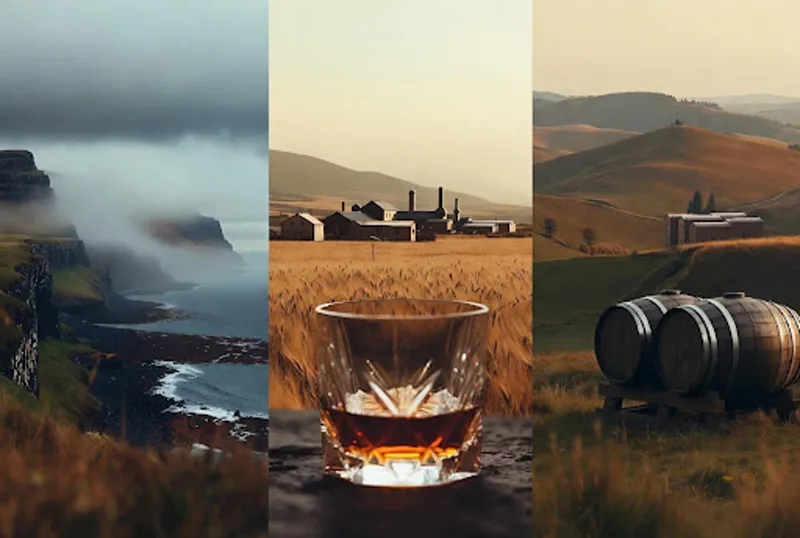
Whisky ain’t some neutral plonk like vodka or gin that tries to hide where it came from. Nah, this spirit wears its postcode like a badge of honour. The weather, the water, the local barley, and generations of stubborn tradition all slap their mark on every drop. From the smoky peat bogs of Scotland to the charred oak barrels baking in Kentucky heat, every region’s got its own yarn to tell.
Scotland — The True Home of Single Malt
Fair dinkum, Scotland’s the birthplace of the good stuff and still the undisputed king. They split their whisky into five main regions, each with its own personality:
| Region | Feature |
| Islay | Proper smoky beasts here – heavy peat, sea salt, brine, and that campfire kick. Tastes like the ocean’s having a barbie. |
| Speyside | Over half of Scotland’s distilleries are crammed in here. Think sweet, fruity, grassy drams – elegant and easy-drinking. |
| Highlands | The biggest region, chucking out everything from light and delicate to rich and weighty numbers. |
| Lowlands | Gentle, floral, citrusy whiskies – the polite ones that won’t knock your socks off straight away. |
| Campbeltown | Used to be the whisky capital of the world. Now it’s a smaller crew pumping out robust, salty, character-packed drams that punch well above their weight. |
Peat is the secret weapon in Scotland. Those coastal and island distilleries dry their barley over peat fires, giving that unmistakable earthy, smoky wallop. And remember – if it ain’t distilled and matured in Scotland, it ain’t Scotch. Minimum three years in oak casks, no shortcuts.
Ireland — Triple Distilled and Smooth as Silk
The Irish reckon they’ve been at it even longer than the Scots. Their whiskey (with an ‘e’) uses a mix of malted and unmalted barley, and they kiln-dry it without peat, so you get a cleaner, lighter spirit.
The big difference? Most Irish whiskey gets triple-distilled instead of the Scottish double. That extra run makes it ridiculously smooth. After a rough patch, Ireland’s having a proper renaissance with heaps of new distilleries popping up. If you want something easy-going that goes down dangerously well, reach for the Irish.
America — Bourbon, Rye & Tennessee Fire
The Yanks are massive players, especially with bourbon and rye. Kentucky might be the heartland, but bourbon can legally be made anywhere in the States.
- Bourbon: At least 51% corn in the mash, aged in brand-new charred oak barrels (used only once). That’s where all those mad vanilla, caramel, toffee and coconut notes come from.
- Rye: High rye content gives it that spicy, peppery kick – bold and assertive. It’s making a huge comeback for punters wanting something with attitude.
- Tennessee Whiskey: Basically bourbon but made in Tennessee and usually filtered through charcoal (the Lincoln County Process).
Those hot Kentucky summers and freezing winters push the whisky in and out of the wood like a piston, creating massive flavour.
The Spirit of the Game
Whisky’s always been a casino staple. Back in the old brick-and-mortar joints, you could spot the high rollers a mile away – glass of single malt parked next to their chips, quiet confidence, steady hand on the felt. These days in the online casino Australia scene you can’t see who’s sipping a proper dram and who’s on lemon squash, but the noble drop is still going strong.
Platforms like best free no deposit bonus casino australia get it. The online casino space has changed, but some things never do. Online casino for Australian players knows their crowd includes plenty of whisky lovers who want that same thrill from the comfort of their own couch. Whether you’re smashing the pokies or trying your luck at the tables, a good dram and a good game is a winning combo.
What Makes Each Region Special
The beauty of whisky is how different it all tastes depending on where it’s from. Even within the same region, every distillery has its own fingerprint.
The main things that shape the character:
- Local water and its mineral profile
- Climate – how fast or slow the whisky matures
- Local grains and peat availability
- Traditional methods handed down through the generations
- Cask types and how they’re managed
Scotland’s coastal drams taste like the bloody sea – briny, seaweed, ozone. Speyside’s gentle climate lets the whisky mature nice and slow for elegant, refined flavours. Kentucky’s wild temperature swings hammer those rich caramel and vanilla notes deep into the spirit. Japan’s four proper seasons create massive temperature swings that speed things up and add beautiful complexity.
So next time you crack a bottle, raise a glass to the place it came from. Because whisky isn’t just a drink – it’s a bloody postcard from somewhere else. Cheers, legend!