



9 minute read
Few areas of the criminal justice system carry higher stakes — or generate more public misunderstanding — than sex crime investigations. According to the Bureau of Justice Statistics’ 2023 National Crime Victimization Survey, sexual violence remains one of the most underreported categories of violent crime in the United States, with a substantial portion of incidents never reaching law enforcement at all. That reality creates a paradox: cases that do get reported often face intense scrutiny from multiple directions, with victims doubting whether the system will believe them and accused individuals confronting allegations that can reshape their lives before any verdict is reached.
The tension at the heart of these cases isn’t new, but it’s becoming harder to ignore. Legal reforms, shifting evidentiary standards, and growing public awareness have all changed how investigators, prosecutors, and defense attorneys approach sex crime allegations. Understanding that process — not just in the abstract, but in terms of what actually happens step by step — matters whether you’re a survivor seeking justice, someone facing accusations, a policy researcher, or simply a citizen trying to make sense of a system that affects everyone.
This article walks through the investigative and legal process, from the moment a report is filed through the complexities of trial and beyond, with attention to the roles forensic evidence, legal challenges, and support systems play throughout.
Why Understanding Sex Crime Investigations Matters
Sex crime cases occupy a uniquely charged space in the criminal justice system. Unlike many violent crimes, they often involve no independent witnesses, physical evidence that deteriorates quickly, and a dynamic where credibility becomes the central battleground. The accused faces potential lifetime consequences — incarceration, sex offender registration, social stigma — while victims navigate a process that can feel retraumatizing even when it goes well.
Consider a realistic scenario: a college student reports a sexual assault two days after the incident. She didn’t go to the hospital immediately. She knows her alleged attacker. She continued texting him afterward — not because nothing happened, but because she was processing shock and wasn’t sure what to do. By the time investigators interview her, the physical evidence window has largely closed. Her case will likely turn almost entirely on accounts, context, and whatever digital evidence exists. This isn’t an edge case — it’s representative of how a significant portion of reported cases actually unfold.
The stakes extend beyond individual cases. How investigators handle these reports shapes whether survivors come forward at all. Missteps in evidence collection can compromise prosecutions. Overly aggressive pursuit of weak cases can result in wrongful convictions. And public perception — shaped heavily by high-profile media coverage — often bears little resemblance to how the system actually operates, which leaves both victims and accused individuals unprepared for what they’re about to face.
Getting this process right requires balancing two legitimate goals that are sometimes in tension: protecting individuals who’ve experienced real harm and ensuring that the constitutional rights of the accused aren’t sacrificed in the pursuit of justice. Neither goal is negotiable in a functioning legal system.
How Investigations Process Sex Crime Allegations
When a sex crime is reported, investigators follow a structured protocol that differs meaningfully from how other violent crimes are handled — and for good reason. The nature of sexual violence means that evidence is often biological, time-sensitive, and deeply personal.
The process typically begins with an initial interview conducted by a specially trained detective or forensic interviewer. These professionals use non-leading questioning techniques designed to elicit detailed accounts without contaminating memory or suggesting specific details. The goal is to document what happened as precisely as possible while minimizing additional trauma to the reporting party.
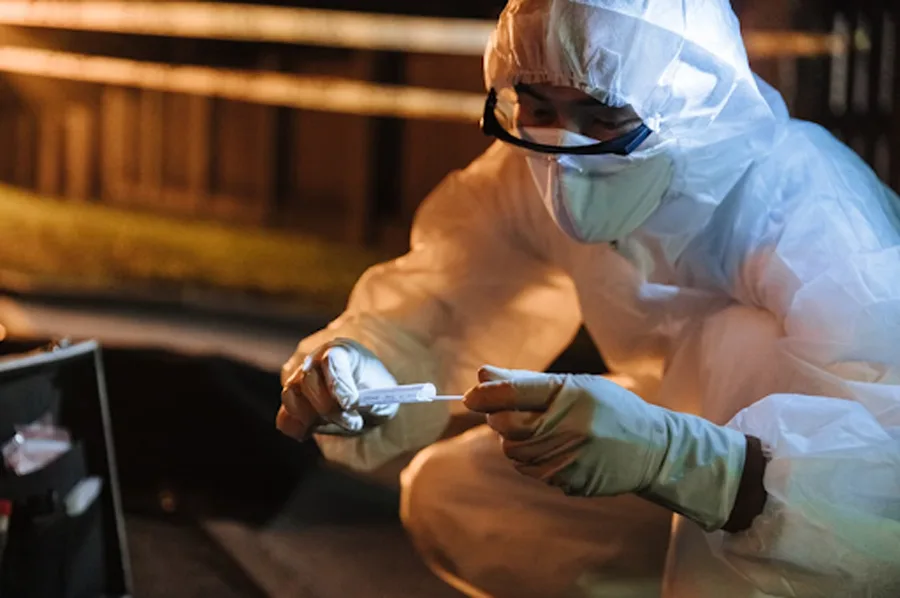
Simultaneously — and urgently — investigators encourage medical examination. Sexual assault nurse examiners (SANEs) play a critical role here. These are registered nurses with specialized training in forensic evidence collection who conduct examinations that serve both medical and investigative purposes. A SANE exam can document injuries, collect DNA samples, and preserve biological evidence that may be pivotal in determining what occurred. Critically, this window is narrow: DNA evidence can degrade within 72–96 hours, and some biological markers fade even faster.
From there, investigation expands outward. Detectives gather digital communications — texts, emails, social media messages — which have become increasingly central to modern sex crime cases. They interview witnesses, review surveillance footage if available, and work with prosecutors to assess whether the evidence supports charges. Forensic specialists may analyze devices for deleted communications or location data.
What distinguishes sex crime investigations from other violent crime inquiries is the particular weight given to pattern evidence. Prior conduct by an alleged perpetrator — sometimes admissible through specific-purpose exceptions in evidentiary rules — can be introduced to establish a behavioral pattern rather than a single incident. This makes the investigative scope broader than in many other criminal contexts, and it’s one reason these investigations can take weeks or months before charges are filed.
What Legal Challenges Shape Sex Crime Trials
The investigation concludes with a charging decision, but that’s where a different kind of complexity begins. Prosecuting sex crime allegations at trial is among the most demanding tasks in criminal litigation, and the challenges cut in multiple directions.
For prosecutors, the central difficulty is often corroboration. Many sex crime cases rest substantially on the testimony of the victim, and while corroboration is not legally required in most jurisdictions, juries frequently expect it. A case built on one person’s account — no matter how credible — faces a higher burden of persuasion in practice than the legal standard technically requires. Prosecutors spend significant effort preparing survivors to testify clearly and withstanding cross-examination without undermining their credibility.
Expert witnesses have become increasingly important to both sides. The prosecution may call a forensic psychologist to explain trauma responses — including why a survivor might delay reporting, return to an abuser, or exhibit behaviors that seem counterintuitive to jurors who lack that context. The defense may counter with its own experts challenging the reliability of recovered memories or raising questions about the integrity of forensic procedures.
For the defense, the stakes are equally severe. Individuals facing sex crime charges risk some of the harshest sentences in the criminal code, along with post-release consequences that can follow them for life. Effective legal representation in these cases requires challenging not just the factual account, but also the procedures used to collect and preserve evidence. If investigators failed to follow protocols during collection, or if chain of custody for physical evidence was compromised, that becomes a significant avenue for the defense. Attorneys providing defense against sex crime charges must navigate both the technical evidentiary landscape and the emotionally charged courtroom environment that these cases inevitably produce.
Verdicts in sex crime trials remain difficult to predict. Juror attitudes, the credibility dynamics between witnesses, and the quality of expert testimony all play substantial roles — often more than the physical evidence itself.
How False Accusations Affect Sex Crime Cases
Reasons Behind False Allegations
False sex crime allegations do occur, though research consistently shows they represent a small fraction of total reports. A peer-reviewed study published in the *Journal of Forensic Psychology* found that false reports account for between 2% and 10% of filed sex crime allegations — a range that reflects variation in methodology and definition across studies rather than ambiguity about the overall pattern.
When false allegations do occur, the motivations are varied and context-dependent. Some arise from misidentification rather than intentional deception. Others emerge from interpersonal conflicts where one party weaponizes the legal system against another. Mental health crises, custody disputes, and coercion by third parties have all appeared in documented false allegation cases. The consequences are severe in every direction: wrongful charges damage the accused’s reputation, career, and relationships, while false reports consume investigative resources and, critically, erode credibility for genuine survivors trying to come forward.
The Role of Innocence Projects
The Innocence Project, founded in 1992, has used post-conviction DNA testing to exonerate more than 375 wrongfully convicted individuals in the United States — a significant proportion of whom were serving sentences for sexual assault convictions. These cases often share common features: eyewitness misidentification, inadequate legal representation at trial, or forensic science that has since been discredited or revised.
Innocence organizations now operate across multiple states and internationally, applying both DNA-based and non-DNA evidence reviews to identify wrongful convictions. Their work has also driven systemic reforms, including improved interrogation protocols, updated forensic standards, and heightened scrutiny of eyewitness testimony procedures. The existence and track record of these organizations underscores why procedural integrity during investigation — long before charges are filed — matters as much as it does.
What Victims’ Rights and Support Look Like
The legal rights afforded to crime victims have expanded considerably over the past two decades. Most states now incorporate crime victims’ rights provisions either in statute or state constitution, guaranteeing rights such as notification of proceedings, the opportunity to be heard at sentencing, and protection from intimidation or harassment.
In sex crime cases specifically, survivors have additional protections. Rape shield laws, now in effect in all 50 states at the federal level, generally prohibit introducing a victim’s prior sexual history as evidence — a reform that addressed a historically significant barrier to reporting. Victims also have the right to be accompanied by a support person during forensic exams and legal proceedings in many jurisdictions.
Beyond legal protections, a network of support services exists to help survivors navigate the process. Rape crisis centers offer confidential counseling, medical advocacy, and assistance with legal navigation — often free of charge. The National Sexual Assault Hotline, operated by RAINN (Rape, Abuse & Incest National Network), connects survivors to local resources 24 hours a day.
For anyone moving through the aftermath of a sex crime — whether as a survivor seeking support or a person navigating allegations — understanding that formal rights and professional resources exist is the first step toward exercising them. The question worth asking isn’t just what happened, but what protections and resources are already in place to make sure what comes next is as fair, informed, and humane as the system can make it.