Most people picture a shipping container as a big steel box sitting in a port or on a building site. That picture is accurate, but it is only part of the story. The same structure that moves cargo across oceans has ended up being used as a surgery suite, a hydroponic farm, a festival stage, and an off-grid holiday retreat.
Some of these uses are now fairly well known. Others still catch people off guard. What they share is a practical logic: containers are strong, modular, weatherproof, and relatively easy to modify. Once you stop thinking of them as transport equipment and start thinking of them as adaptable structures, the list of applications gets surprisingly long.
Some of these ideas are easier to deliver than others, especially when you start with Universal Containers specialised containers built around more specific requirements such as refrigeration, chemical storage, or easier side access, rather than adapting a standard unit from scratch.
What makes shipping containers so adaptable?
Before the list, it is worth understanding why this versatility is real rather than marketing spin. A standard ISO shipping container is designed to stack six high fully loaded, survive ocean voyages, and take repeated handling by cranes and forklifts. That baseline structural strength makes it very hard to damage accidentally and easy to modify deliberately.
Add windows, cut doors, insulate the walls, run electrics through the frame, bolt two together, stack them, clad them in timber. The steel structure tolerates all of it. That is why the same starting point can end up as a café in a car park or a controlled-environment growing unit on a rooftop.
10 surprising uses for shipping containers
| 1. Pop-up retail shops
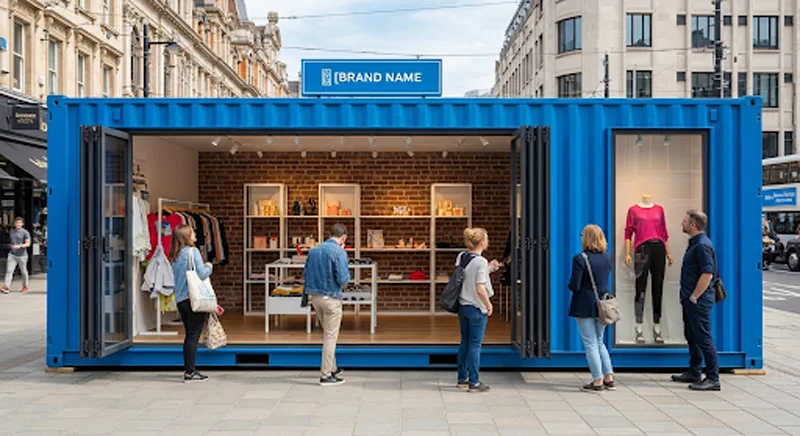
Container retail has grown from a quirky experiment into a proper business format. For seasonal trading, brand activations, and market-style retail, a container gives you a secure, lockable unit that can be placed almost anywhere with the right permissions. The practical advantages are real. The unit arrives fitted out, it can be branded on the exterior, and at the end of the trading period it moves on. For businesses testing a new location or launching a product line without committing to a long lease, that flexibility has genuine commercial value. |
| 2. Container cafés, bars, and street food units
The food and drink industry has taken to container builds quickly, and it is easy to see why. A converted container gives a hospitality operator a compact, self-contained space that can be fitted with a service counter, refrigeration, ventilation, and customer-facing signage, all within a footprint smaller than most commercial kitchens. Side-opening containers work particularly well here, folding out to create a covered counter area without any additional construction. Events, markets, and permanent roadside pitches all use this format. |
| 3. Home gyms and private fitness studios
Garden gyms built inside shipping containers have become a serious market. A 20ft container gives enough floor space for a functional training setup, a squat rack, or a yoga studio without planning permission headaches that often come with permanent garden buildings. Insulation, rubber flooring, ventilation, and mirrored walls are all standard modifications. The end result is a dedicated space that is separate from the house, secure, and available year-round regardless of weather. |
| 4. Garden rooms, art studios, and music spaces
The container-as-garden-room has moved beyond the architecture press and into mainstream residential use. Painters, musicians, ceramicists, and woodworkers all use them for the same reason: a soundproofed, secure space at the end of the garden that is genuinely separate from the house. High-cube containers add extra headroom that makes a difference in a studio setting, especially if the space will include standing work, large canvases, or acoustic panels. The steel shell handles external noise well with minimal treatment. |
| 5. Emergency shelters and rapid-deployment clinics
This is one of the less obvious but more impactful uses. Containers have been deployed as field hospitals, vaccination centres, emergency accommodation, and disaster-relief storage in various parts of the world. Their structural strength means they can be airlifted or shipped to remote locations and put into use quickly. In the UK, the same principle applies at a smaller scale: temporary welfare facilities on construction sites, emergency overflow accommodation, and basic medical screening units have all used container structures. The build time is short and the result is usable from day one. |
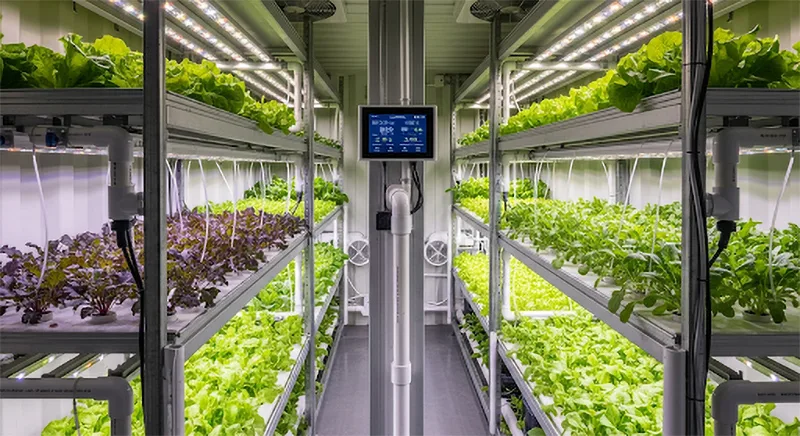
Container farms use LED lighting and climate control to grow crops year-round in a completely controlled environment. The growing conditions are independent of the weather outside.
| 6. Hydroponic and vertical farms
Controlled-environment agriculture inside shipping containers is no longer experimental. Companies and smallholders alike use them to grow salads, herbs, and other crops year-round without soil, in spaces where traditional farming is not viable. The enclosed steel shell is well suited to this application. Climate, humidity, CO2 levels, and lighting are all controllable. The container itself becomes the growing environment. Urban rooftops, car parks, and industrial estates have all hosted container farms where field-based growing would be impossible. |
| 7. Event spaces, festival stages, and ticketing units
At festivals, exhibitions, and large outdoor events, containers serve multiple roles at once. Stacked units become stages, bars, and viewing platforms. Ground-level units become box offices, production offices, artist green rooms, and medical posts. The visual impact is part of the appeal for events. A stacked container structure looks distinctive and reads as intentional design. It also packs down and moves between venues, which makes it practical for touring events and travelling exhibitions. |
| 8. Specialist chemical and hazardous material storage
This is less about creative conversion and more about fit-for-purpose design. Sites that store hazardous substances need storage that a standard container cannot provide: bunded floors for spill containment, ventilation to manage fumes, lockable access, and clear hazard identification. Purpose-built COSHH stores, refrigerated containers for temperature-sensitive goods, and side-opening units for easy forklift access are all examples of specialist variants that start from a container base but are engineered for a specific need rather than adapted after the fact. For this kind of application, starting with the right specialist unit saves time, money, and compliance headaches. |
| 9. Mobile classrooms, training rooms, and site briefing spaces
On large construction sites, industrial facilities, and temporary campuses, a converted container provides a proper indoor space for inductions, training sessions, and team briefings without requiring a permanent building. Fitted with insulation, lighting, heating, a projector, and seating for 10 to 15 people, a container classroom delivers a functional learning environment that can be relocated when the project moves on. Schools and colleges have used the same format for temporary classroom expansion during building works. |
Container accommodation has found a natural home in the glamping market. An off-grid pod with a deck and large windows sits well in most rural landscapes and can be placed without the groundworks a permanent building would need.
| 10. Compact holiday accommodation and glamping pods
Container-based holiday accommodation has carved out a genuine niche, particularly in the glamping market. A well-finished container pod with a deck, full-height glazing, and off-grid power feels far removed from a steel shipping unit, and that contrast is part of the appeal for guests. For landowners considering holiday accommodation without major construction, a container unit is worth understanding. It typically requires less groundwork than a permanent building, can be installed and operational quickly, and can be removed or relocated if plans change. Planning requirements vary by use and location, so checking with the local authority is still the right first step. |
Why specialist containers make some of these ideas easier
Several of the uses above are more practical when the starting point is a container already designed for that application. A refrigerated container for cold-chain storage, a COSHH-compliant chemical store with a bunded floor, or a side-opening unit for event hospitality all reduce the amount of custom modification needed.
The alternative is adapting a standard container, which works but takes more time and often costs more than buyers expect once all the modifications are costed in. For uses where the application is well defined before purchase, exploring purpose-built options is usually worth the comparison.
The range of Universal Containers specialised containers shows how many of these categories already have purpose-built variants, from high-cube units for extra headroom to refrigerated stores and ventilated COSHH containers.
What should you think about before repurposing a shipping container?
The idea is usually the easy part. A few practical questions are worth working through before committing:
- Intended use: what the container needs to do determines its specification from the start
- Site access: delivery requires space for a lorry or crane, check clearances first
- Insulation and ventilation: essential for any occupied or temperature-sensitive use
- Utilities: electrical, plumbing, and drainage all need planning before the container arrives
- Standard or specialist: some uses are better served by a purpose-built variant than a modified standard unit
- Permissions: permanent structures or residential use may require planning approval depending on location and use
More useful than most people expect
The steel box that ships goods across the world turns out to be a surprisingly good starting point for a long list of other applications. The structural strength that makes containers reliable in transit also makes them durable as buildings, studios, farms, and event spaces.
The best use always depends on the goal. A business looking for a pop-up retail format needs something different from a farmer setting up a hydroponic growing unit, and both need something different from a site manager looking for compliant chemical storage. In each case, matching the container type to the application first, before thinking about modifications, is the approach most likely to save time and money.
FAQs
What are the most common uses for shipping containers?
Storage and transport remain by far the most common uses globally. In the UK market, secure on-site storage, site offices, and workshop spaces account for the majority of container sales outside standard shipping applications.
Can shipping containers be used for businesses?
Yes, and increasingly so. Pop-up retail, food and drink units, gyms, studios, and event spaces all use containers as their base structure. The combination of security, portability, and ease of customisation suits short-term and semi-permanent commercial formats particularly well.
What is the most unusual use for a shipping container?
Submarine simulators, data centres, and portable recording studios all exist as container conversions. For practical UK applications, hydroponic farms and rapid-deployment medical facilities are probably the least expected but most genuinely useful.
Do you need a specialist container for some applications?
For certain uses, yes. Hazardous substance storage, refrigerated goods, and applications requiring easy forklift access all benefit from starting with a purpose-built specialist unit rather than modifying a standard container. The upfront specification is usually easier and cheaper than retrofitting.
Can a standard shipping container be converted for almost any use?
Most uses are achievable from a standard base with the right modifications. The exceptions are applications with specific engineering or compliance requirements, where a purpose-built unit delivers better results faster. For everything else, a standard container with the right modifications covers a wide range of needs.