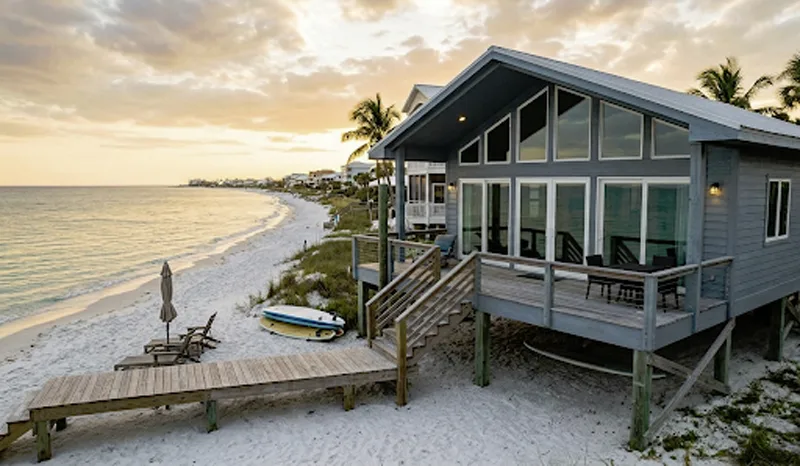
Over 740,000 vacation homes are dotted along the Florida coastline, and securing the right coverage for a property of this kind requires navigating a complex market, especially when balancing personal use with short-term rentals. Standard homeowners’ policies explicitly exclude commercial activities, meaning property owners who rent out their spaces face significant coverage gaps without specialized protection.
Florida beach house rentals require tailored insurance solutions that address both severe coastal weather risks and the unique liabilities of hosting transient guests. Property owners must secure comprehensive policies to safeguard their real estate investments and maintain uninterrupted business operations during peak vacation seasons.
Understanding the Florida Short-Term Rental Insurance Landscape
The coastal property market in the Sunshine State features a distinct risk profile that dictates specialized underwriting requirements. Traditional HO3 policies do not cover business activities, making it essential to transition to a policy that explicitly permits commercial guest stays.
Property owners frequently face substantial financial exposure from property damage and guest injuries if they rely on standard residential coverage. A dedicated Florida vacation rental home insurance policy bridges this gap by merging commercial property protections with specialized liability coverage. There’s no point leaving anything to chance, and the right policy will absorb all sorts of risks.
Operating a beachfront rental property also means complying with an evolving regulatory environment. Municipalities across the state are tightening oversight on vacation properties to ensure safety and community stability.
For instance, popular coastal cities like Hollywood and Marco Island frequently mandate at least $1 million in liability insurance for short-term rentals to maintain an active operating license. Failing to carry these limits can result in steep municipal fines or the immediate suspension of advertising listings.
Essential Coverage Components for Coastal Properties
Beachfront homes face elevated environmental hazards alongside standard rental risks. A comprehensive insurance portfolio must account for both high-velocity wind events and liability issues associated with frequent guest turnover.
To protect against these distinct hazards, owners should evaluate specific policy structures. Consider these three essential coverage pillars for coastal rental properties:
- Comprehensive liability protection safeguards the owner against slip and fall accidents on boardwalks or pool decks
- Specialized windstorm coverage handles structural damage caused by named tropical storms and hurricanes
- Loss of use protection replaces lost booking revenue when covered property damage renders the home uninhabitable
Navigating these options requires an understanding of how deductibles operate in coastal zones. Unlike standard flat-fee deductibles, hurricane coverage is typically structured as a percentage of the home’s total insured value. Investors commonly encounter wind and hurricane deductibles ranging from 2% to 5% of the structural policy limit, which demands significant cash reserves if a major storm hits the coastline.
Mitigating the Financial Impact of Coastal Risk Profiles
The regional property market has experienced notable shifts in pricing and availability over recent years. Rising reinsurance costs and historic storm patterns have fundamentally altered how underwriters evaluate proximity to the water.
Data highlights the scale of this shifting landscape for property owners. Thousands of new vacation rental listings are added to coastal communities every day, intensifying the need for robust risk management.
This surge in market volume coincides with a challenging insurance environment, as the average annual premium for Florida short-term rentals nears $11,000 in high-risk zones. This premium level reflects the complex risk profiles of properties sitting directly on the shoreline.
Managing these overhead costs requires proactive property maintenance and smart safety upgrades. Installing impact-resistant windows, securing wind mitigation certificates, and utilizing smart water shutoff valves can help lower risk profiles.
Taking these steps makes the property more attractive to top-tier admitted carriers, ultimately helping to stabilize operational costs over the long term. It’s also wise for property owners nationwide to take home maintenance seriously, whether or not you live in a coastal region.
Exploring Tailored Coverage Through Local Insurance Specialists
Securing a profitable future for a beach house investment relies on finding a policy that handles both commercial liability and coastal weather events. Working with specialized professionals ensures that your policy aligns with current state regulations and specific regional risks. For more coverage of many interesting topics, including lifestyle and travel content as well as advice for homeowners and investors, check out our other posts.