Allergic rhinitis and migraine attacks share a chaotic neurological connection that goes far beyond simple coincidence. For decades, millions of people have written off their throbbing skull pain as mere seasonal congestion, when in reality, your immune system and your brain’s pain centers communicate constantly. When your body reacts to airborne allergens, it does not just stay in your nose.
Recent clinical data reveals a staggering relationship between these two conditions. A comprehensive systematic review of over 4.8 million participants, published in Frontiers in Medicine, found that allergic rhinitis significantly increases the risk of migraines by roughly 2- to 3-fold.
So, if you are tracking the local pollen count like a hawk because you think it dictates your headache schedule, you are likely dealing with an allergy-induced migraine. Understanding how these systems interact can help you find actual relief instead of just treating the wrong symptoms.
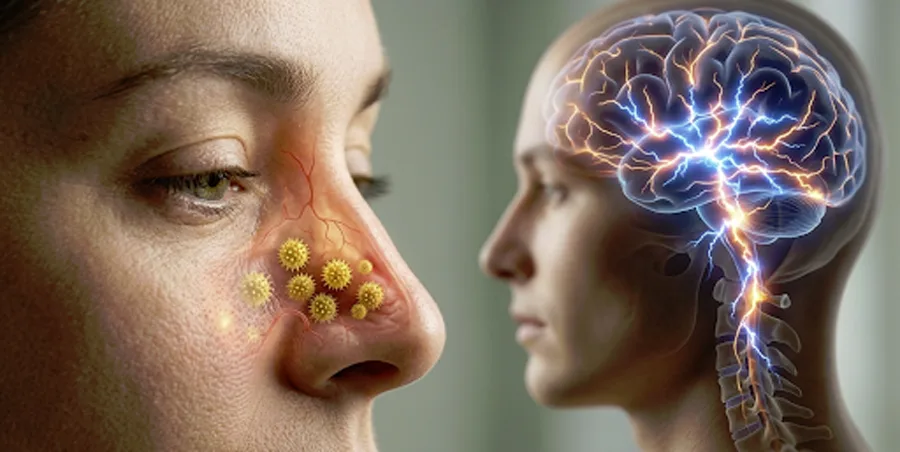
The Neurological Link Between Histamine and Migraines
When you breathe in pollen or dander, your immune system releases a flood of inflammatory chemicals. Chief among these is histamine, a compound infamous for causing watery eyes and endless sneezing fits. However, medical reviews demonstrate that mast cells release histamine and activate H1 receptors to trigger migraine attacks directly.
This cellular reaction causes blood vessels in the brain to swell, irritating the trigeminal nerve. The trigeminal nerve is the primary pain pathway involved in major headache disorders. When allergies inflame your nasal passages, they essentially lower the threshold required for a full-scale migraine to break through.
Adding to this physical stress is the fact that nasal passage inflammation and disrupted sleep function are direct triggers that increase migraine frequency. A congested airway prevents deep, restorative sleep, which is one of the most reliable shields your brain has against neurological pain.
Distinguishing Migraine From Sinus Pain
The overlap in symptoms causes widespread confusion for patients and general practitioners alike. Because a migraine can cause facial pressure, nasal congestion, and runny eyes, people routinely buy over-the-counter sinus decongestants that do nothing to stop a true neurological attack.
Learning the art of distinguishing migraine from sinus pain is the critical first step toward getting the right treatment. True sinus headaches are actually incredibly rare unless you are suffering from a verifiable, fever-inducing bacterial or viral sinus infection. If your headache includes sensitivity to light, nausea, or a throbbing sensation that gets worse when you move, you are looking at a migraine.
A pooled meta-analysis confirmed that individuals with allergic rhinitis are nearly three times more likely to experience comorbid migraine headaches. If you find yourself reaching for allergy pills but your head keeps pounding, it is time to reassess your management plan.
Strategic Steps To Calm the Neuroimmune Storm
Managing this dual threat requires a strategy that addresses both environmental triggers and neurological sensitivity simultaneously. You cannot just treat the nose and ignore the brain, nor can you treat the brain while breathing in constant environmental triggers.
The most effective treatment plans incorporate a few specific adjustments:
- Use a high-quality HEPA air purifier in your bedroom to dramatically reduce the overnight allergen load on your respiratory system
- Track your personal headache patterns alongside daily pollen forecasts to identify your exact environmental breaking points
- Speak with a physician about utilizing targeted preventative therapies rather than relying solely on rescue medications
Mastering Environmental and Neurological Triggers
Taking control of your health requires looking at the complete picture of how your body reacts to the environment. When you stop treating these episodes as isolated sinus issues, you open the door to therapies that actually work. Our site is crammed with content covering all sorts of topics, from other medical pieces to tech, food, and so much more, so keep reading if you’re hungry for more knowledge.