Florence impresses with its history and art, but the real life of the city is often lost behind its main attractions. The Brunelleschi Dome, David, the Uffizi Gallery, and the Ponte Vecchio are mandatory points of the route, but to feel the city, you need to look for it in quiet courtyards, narrow alleys, and ordinary coffee shops.
The city to live in
The main rule is not to try to “catch everything”, but to slow down and notice the details. Florence is compact: facades of houses, niches with madonnas, doors polished by centuries open step by step. In the morning, the city seems completely different: the streets are empty, small bakeries are opening, baristas are greeting regular customers, and the light aroma of freshly baked bread awakens a sense of belonging to local life.
The standard Florence tour introduces you to the main points, but it is after them that you should turn off the route. It is enough to walk a couple of streets from the Duomo, and the crowds disappear. Workshops are being opened here, where shoes are being repaired, books are being bound, or picture frames are being cut. It is these small spaces that make Florence alive.
Morning secrets of the city
Early morning is the best time for a walk. At seven o’clock, the city is almost empty, and you can see the real rhythm of Florence. Even the squares that are crowded with tourists during the day look different – like real public spaces through which locals rush to work.
Here are some ways to see the city without the crowds:
- come for a walk before 8 a.m. or after 6 p.m.;
- turn into narrow alleys and quiet courtyards;
- visit small shops and craft workshops;
- stop for coffee or a glass of wine while watching people;
- look not only in front of you, but up and around – facades and details are just as important here as museums.
Art in everyday life
In Florence, art is everywhere, not just in museums. Reliefs on the corners of houses, old doors, and tiny statues are all part of the urban landscape. To feel the Renaissance era, you don’t need to stand in a long queue at the galleries: it’s enough to walk along the streets, paying attention to the details.
For those who want to dive deeper, there are more chamber walking formats. Services like GetExperience help you find excursions where attention is paid not to the crowd, but to history: craft districts, gastronomic routes, or meetings with locals who tell the city as their home.
Oltrarno – the other Florence
The Oltrarno area is located on the other side of the Arno and immediately changes the impression of the city. There are fewer tourists and more life here. Workshops, old bars with wooden tables, evening conversations of neighbors – all this creates a feeling of real Florence.
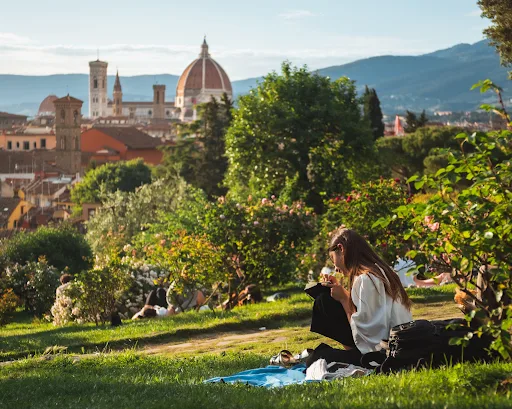
Another alternative to seeing the city without the noise is climbing Michelangelo Square during sunset. The pink and orange of the terracotta roofs, and the light of the last sun as it is reflected in the Arno. Such events are remembered much longer than the photographs in the galleries.
The art of stopping
The most important ability to travel around Florence is to be able to stop. Sit on the steps of the church, take a glass of wine, and watch the light change on the facades. The city makes you learn to live here and now. No use in running about here, and striking out the sights on the list.
Florence opens up to those who stop “consuming” it and begin to be in it. This is the only way the Renaissance capital transforms from a tourist destination into a personal experience – quiet, deep, and lively.