I’ll be honest—aging mobility is one of those topics people don’t really think about until something starts creaking. A knee, a hip, maybe that weird stiffness in the morning that wasn’t there five years ago. And suddenly you’re Googling things at 2 a.m., half curious, half worried, maybe even typing something slightly reckless like buy Orthovisc injections online just to see what comes up. (We’ve all had those impulsive health-search moments… or maybe I’m projecting a bit.)
But underneath all that noise, the real question is simpler: how do you stay active enough that your body still feels like it belongs to you?
Not in a “fitness influencer” way. More like… can you walk comfortably, sleep deeply, and wake up without negotiating with your joints?
Let’s talk about that.
The strange link between movement and sleep
There’s this idea that rest equals doing nothing. But the body doesn’t really work like that. It’s more like a machine that needs gentle use to stay smooth.
Harvard Health Publishing notes that regular physical activity improves sleep quality by helping regulate circadian rhythm and reducing nighttime restlessness. Not intense workouts necessarily—just consistent movement.
And I remember reading something from the National Institute on Aging (NIH) that stuck with me:
“Older adults who engage in regular physical activity report deeper, more restorative sleep and fewer nighttime awakenings.”
Simple. Almost too simple. But also… kind of powerful.
Because it flips the whole idea. You don’t “earn” rest by being inactive. You build better rest by moving throughout the day.
Mobility as we age: it’s less about strength, more about continuity
People think mobility decline is sudden. It’s not. It’s slow. Quiet. Like a door hinge rusting because no one noticed it needed oil.
And then one day you feel it during something small—getting up from a chair, bending to pick something up, or just standing still too long.
The Arthritis Foundation points out:
“Maintaining joint movement through low-impact exercise helps reduce stiffness and preserve function in aging adults.”
That “low-impact” part is key. Not punishment workouts. Not extremes. Just consistency.
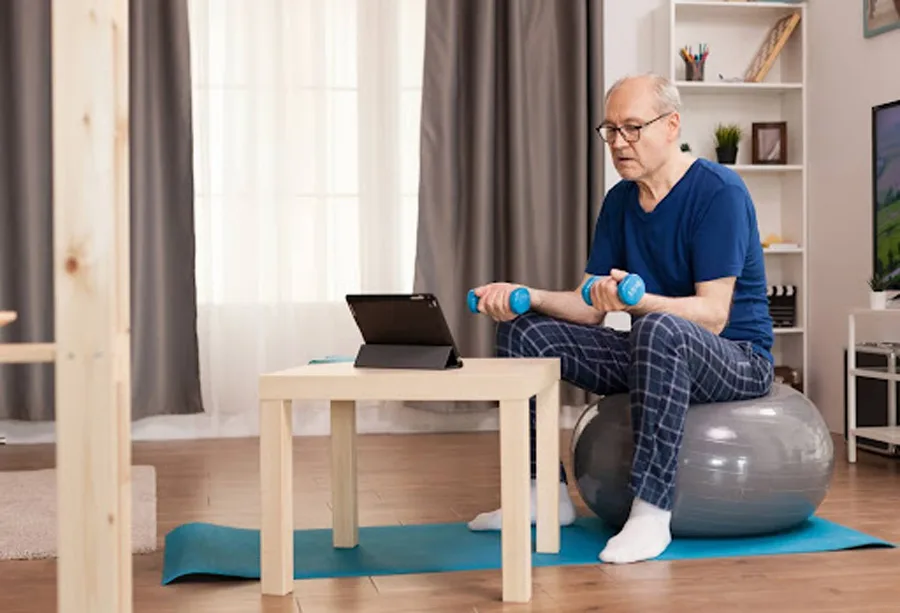
Walking. Stretching. Light resistance bands. Even gardening counts, honestly.
And yet… most people wait until pain forces action. That’s the trap.
The Orthovisc question
Let’s not ignore it. Joint discomfort pushes people into searching things like buy Orthovisc injections online, usually late at night, usually after a day where stairs felt like betrayal.
Orthovisc (a hyaluronic acid injection used for knee osteoarthritis) is typically prescribed, not casually purchased. But the search itself tells you something deeper: people are trying to regain movement fast. Not months later. Now.
The American Academy of Orthopaedic Surgeons explains that viscosupplementation may help some patients reduce pain and improve joint lubrication, though results vary and it’s not a universal solution.
And maybe that’s the real point: there is no single fix. Not even close.
What actually helps mobility
This is where expectations usually crash a bit. Because it’s not dramatic.
It’s… repetition.
Daily mobility basics:
- 10–20 minute walks (yes, even slow ones count)
- Gentle stretching after waking up
- Light strength training 2–3x a week
- Balance work (standing on one leg while brushing teeth, for example)
- Staying hydrated (underestimated, weirdly important)
A quick table, just to ground it:
| Habit | Why it matters | Real-world effect |
| Walking daily | Joint lubrication | Less morning stiffness |
| Stretching | Muscle elasticity | Easier movement transitions |
| Strength work | Muscle support | Less joint pressure |
| Balance drills | Neuromuscular control | Fewer falls, more confidence |
Nothing fancy. Honestly, almost too simple to believe it works… but it does.
Pro Tip #1
If you move before stiffness fully sets in, your whole day changes.
Not “work out.” Just move.
Even 5 minutes of gentle joint circles in the morning can reduce that “rusty hinge” feeling. I tried it once skeptically—thought it was placebo. It wasn’t. Or if it was, I’ll take it.
Sleep improves when movement becomes predictable
This is the part people underestimate.
Sleep isn’t just about nighttime habits. It’s about what your body feels like it did during the day.
The CDC has noted in multiple physical activity guidelines that:
“Regular physical activity is associated with improved sleep quality and reduced symptoms of insomnia.”
But here’s the messy truth: it’s not instant.
You don’t go for one walk and suddenly sleep like a baby. It’s more like your body slowly remembers its rhythm.
And some nights still feel off. That’s normal too.
Aging mobility isn’t decline—it’s negotiation
I don’t love the word “decline.” It feels too final. Too dramatic.
Mobility in aging is more like negotiation. Your body starts asking for terms:
- less impact
- more consistency
- slower transitions
- better recovery
And if you listen… it responds. Ignore it, and it gets louder. Simple as that.
Pro Tip #2
Stop sitting for long uninterrupted blocks.
Set a timer. Every 30–45 minutes, just stand up. Walk to the window. Stretch your back slightly. Nothing heroic.
It feels pointless until it doesn’t.
Then one day you realize your joints aren’t screaming at you by evening anymore.
The emotional part no one talks about
There’s a weird frustration that comes with reduced mobility. It’s not just physical—it’s identity-related.
You remember when movement was automatic. No planning. No hesitation.
Now there’s calculation involved. “Can I make that trip? Will this chair be too low? Should I bring support?”
And yeah… that can feel quietly annoying. Sometimes even unfair.
But there’s also something grounding in realizing:
your body is still adjustable. Still responsive. Still trainable.
Even if slower than before.
A small personal-style reflection
I once watched someone in their late 60s take what looked like a painfully slow walk around a park. At first I thought, “That must be frustrating.”
But then I noticed something odd—they weren’t rushing at all. They were present. Pausing. Looking around. Moving without panic.
And I remember thinking… maybe that’s a different kind of fitness.
Not speed. Not intensity. Just continuity.
Final Thoughts
This is the part that took me a while to accept. Better sleep doesn’t come from doing less. It comes from moving enough that your body trusts the stillness when it arrives.
And aging mobility isn’t about reversing time or chasing old capacity. It’s about staying in conversation with your body instead of ignoring it.
Some days that conversation is smooth. Some days it’s stubborn.
But it’s still yours. And maybe that’s the real win—not perfect movement, not pain-free days, but the ability to keep going without shutting down completely.
Even if slowly. Even if imperfectly. Even if it takes longer than it used to…