The start of the toughest period for cars begins when November reaches the Greater Toronto Area (GTA) because salt trucks become visible on the roads. The time requires owners of “winter beaters” which are their older vehicles to perform an essential evaluation of their financial situation. The combination of sub-zero temperatures, freeze-thaw cycles and heavy road salting creates conditions which speed up the growth of mechanical defects.
Drivers need to determine if the expenses required to maintain their old sedan or SUV during the next four months will provide sufficient value from the vehicle. The process of car ownership maintenance becomes more understandable through mathematical analysis which shows how depreciation and repair expenses affect vehicle value. Selling your car through TopCashForCars before winter snow begins will provide you with enough money to purchase a dependable winter vehicle which protects you from experiencing a 401 highway breakdown during the middle of winter. This article examines the economic and safety frameworks necessary to make that decision.
Weighing the Options: Preservation vs. Liquidation
People choose to maintain their “beater” vehicles because they want to prevent paying for cars and they need to safeguard their main vehicle from salt-related harm. The solution demands a secondary vehicle which must have no mechanical issues while requiring only small financial outlays. The worth of a vehicle becomes more important when it needs major repairs to pass safety checks or when it fails to start properly in temperatures below -20°C.
There are generally three paths available to the Ontario consumer:
- Investment: The vehicle needs essential maintenance work to survive until springtime arrives.
- Private Sale: The owner plans to sell the vehicle to another driver through a private sale which needs both a Used Vehicle Information Package (UVIP) and complete disclosure about existing vehicle defects.
- Liquidation: The process of vehicle liquidation involves selling your vehicle to an automotive recycler or buying service which removes the need for certification while allowing you to obtain metal or parts value from the vehicle.
The decision between repair and replacement depends on how much it costs to fix the vehicle compared to its present market worth. The worth of investment returns loses its value when a $1,500 car needs $1,000 worth of brake line and suspension work to become safe.
Suitability: When Corrosion Compromises Safety
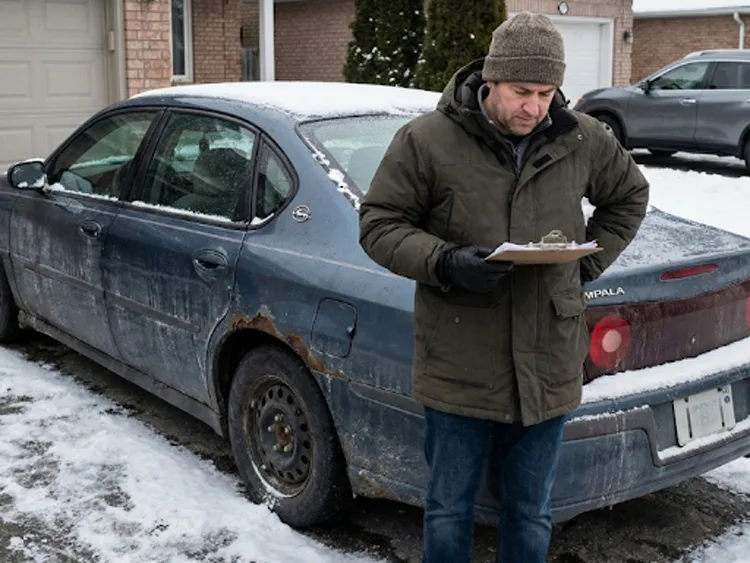
The province of Ontario views rust as a problem which affects more than visual appearance because it threatens to damage the fundamental structure of buildings. The brines used on highways to melt ice are highly corrosive to steel. For older cars that have already seen a decade or more of Canadian winters, the undercarriage is often the primary point of failure.
When assessing whether a car is suitable for another season, owners should have a mechanic inspect the subframe, suspension mounting points, and brake lines. The appearance of surface rust on body panels remains safe but it creates an unattractive condition; exhaust fumes can dangerous enter the cabin through perforations in rocker panels or floorboards which become hazardous when winter windows remain closed. The stress from hitting a snow-covered pothole causes suspension components to break which results in vehicle control failure. The vehicle becomes unfit for winter operation when its frame starts to show signs of damage even though the engine remains in working condition.
The Cost Analysis of Winter Preparation
Vehicle owners must evaluate both vehicle maintenance costs and winterization expenses when deciding between keeping their vehicle and selling it. A vehicle becomes winter-ready only after it receives proper equipment because running a vehicle does not make it safe for GTA roads during winter conditions.
Tires: Winter tires have become essential for safe Ontario travel because they affect insurance expenses and they improve driving stability. The price range for budget winter tires which need replacement stands between $600 and $1,000. For a car worth only slightly more than that, this is a substantial expenditure that will not be recouped upon resale.
Battery and Charging System: The battery and charging system experience a major decrease in their cranking ability when temperatures become cold. The battery which operated properly during July will stop working when January arrives. The process of battery replacement together with alternator verification will increase the total cost by $200 to $400.
Fluids and Anti-Corrosion: The engine block requires coolant with low temperature ratings because it protects the engine from freezing and crack formation. additionally, many drivers opt for oil-based anti-corrosion treatments (like Krown or Rust Check) to slow down rot. While effective, this is an annual maintenance cost of approximately $130–$150.
The total cost of prevention amounts to $1,500 which owners must spend to ready their $2,000 vehicles for seasonal use. The maintenance expenses surpass the vehicle’s useful value which results in negative equity.
Practical Steps for Seasonality Decisions
A decision-making process should be followed by undecided individuals to achieve better understanding of their choice. First you need to get an unbiassed statement about the situation from a reliable mechanic. The system needs a safety check instead of performing a full certification inspection to determine which safety systems have become nonoperational.
The following step requires researchers to search online marketplaces for similar vehicles which match the vehicle’s condition to establish current market values across the GTA region. The analysis should focus on “sold” listings because “asking” prices tend to be artificially high.
The “tow truck factor” represents the last factor which needs evaluation. The breakdown of a vehicle on a major highway requires emergency towing services which cost money while forcing drivers to face dangerous freezing temperatures. If the probability of a breakdown is high, the peace of mind offered by a newer vehicle or a distinct lack of ownership responsibilities via a quick sale may outweigh the savings of keeping the old car.
Final Considerations for Owners
The “winter beater” strategy is only economically sound when the vehicle requires minimal input to remain safe. The vehicle turns into a financial burden when it needs monthly maintenance and when its essential safety elements including brakes and tires need to be replaced at the same time.
The point at which Ontario vehicle owners need to stop driving their cars occurs when winter tire expenses together with maintenance costs amount to half of their vehicle’s market worth. The asset needs to be transferred at this point because either a trade-in or a sale to a car buying service will eliminate the risks associated with driving during winter months. The system eliminates repair costs which become scheduled payments that provide customers with monetary benefits instead of requiring them to handle their vehicle maintenance expenses. The program terminates vehicle ownership when salt damage reaches its maximum point.