The Cummins ISX15 is no longer the newest heavy-duty diesel, but it remains common in North American Class 8 service bays. Engineers supporting fleets, truck upfitters, and repair operations often help decide whether an engine should be rebuilt in frame, replaced with a long block, or retired with the vehicle. Because emissions requirements and controls vary by build, configuration matching and documentation are as important as the mechanical work.
ISX15 at a Glance
- Inline six-cylinder engine with 14.9 liters of displacement.
- Advertised ratings of 400 to 600 hp and torque up to 2,050 lb-ft for the EPA 2010 ISX15. These legacy figures do not describe every build.
- XPI common-rail fuel injection with a single overhead cam.
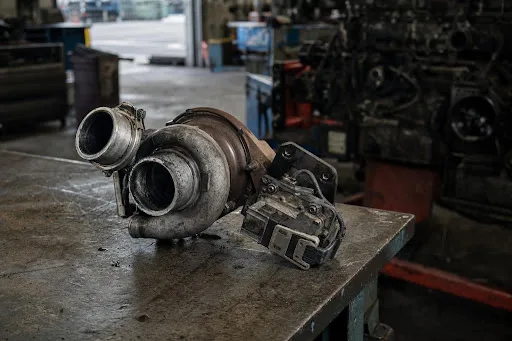
- Holset variable-geometry turbocharger with cooled exhaust gas recirculation (EGR).
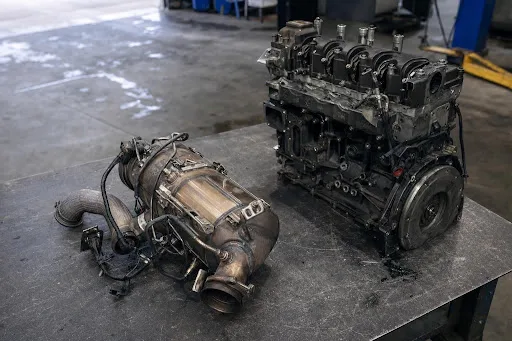
- Aftertreatment system with a diesel particulate filter (DPF) and selective catalytic reduction (SCR).
- Clutch engagement torque listed at 1,000 lb-ft in EPA 2010 specifications, an important figure when matching driveline components.
Do not apply these figures to a specific truck without confirming the engine serial number (ESN) and control parts list (CPL) in Cummins QuickServe. Ratings, calibrations, and hardware vary by build.
Where the ISX15 Sits Today
The ISX15 is a legacy platform, and newer trucks use engines from the X15 family. Fleets still rebuild or replace ISX15 units when the chassis has useful service life, technicians know the platform, and parts remain available. The practical question is whether keeping a specific engine in service presents less cost and risk than replacing the asset. Emissions accounting is starting to enter that calculation too, since the embodied carbon avoided by second-hand auto parts and reused assemblies is measurable rather than theoretical.
Core Systems Worth Understanding
The EPA 2010 ISX15 combines XPI common-rail injection, a single overhead cam, a Holset variable-geometry turbocharger, cooled EGR, and DPF and SCR aftertreatment. On EPA 2013 builds using the ECM 2350, the engine control module also manages diesel exhaust fluid (DEF) dosing. Fuel, air, and aftertreatment systems are closely connected, so a fault in one subsystem can appear as a symptom in another.
Model-Year Evolution and Compatibility
The safest practice is to verify every order by ESN and CPL in QuickServe. When installing calibrations, the ESN stored in the engine control module must match the engine data plate. ECM codes should not be changed without authorized instructions, such as a technical service bulletin. A replacement ECM with mismatched identification can prevent calibration after the engine has already been installed.
Common Failure Patterns and Mitigation
Shops and rebuilders often report EGR cooler leaks, variable-geometry turbocharger actuator problems, and fuel-system wear on high-hour ISX15 engines. These are field observations, not published failure rates; risk depends on duty cycle, idle time, coolant maintenance, and filtration. Prevention includes maintaining coolant chemistry, inspecting charge-air connections, following fuel-filter intervals, and checking QuickServe bulletins against the fleet’s ESN records.
Replacement Options and What to Verify Before Ordering
The main options are an in-frame overhaul, an out-of-frame overhaul, a remanufactured long block, or a new engine if a suitable configuration is available. In-frame work can make sense when the block, crankshaft, and bores remain within service limits. A long block may be more practical when machining is likely or predictable bay time matters more than reusing the original block.
For a vendor-side overview of ISX15 specifications, model-year differences, and what a remanufactured assembly may contain, the Cummins ISX engine page from Big Bear Engine Company is one commercial reference to review alongside OEM checklists and QuickServe data. Big Bear Engine Company describes its ISX15 remanufactured long block as including the block, loaded cylinder head, crankshaft, camshaft, followers, pistons and liners, connecting rods, timed front gear group, and gasket sets. Confirm the exact scope, warranty coverage, and configuration against the ESN and CPL because package contents can vary.
Before ordering, confirm the ESN and CPL; map the EGR, diesel oxidation catalyst, DPF, SCR, and DEF-sensor configuration; check harness and actuator compatibility; review clutch engagement torque; and identify required ECM calibration approvals. Resolve discrepancies before the unit ships, not during installation.
Compliance Essentials
EPA policy prohibits tampering with emissions controls and selling defeat devices for heavy-duty engines throughout their service life. Deletes and calibrations that disable aftertreatment are not legitimate replacement strategies and can expose both the shop and fleet to enforcement risk.
Before approving a repair or repower plan, verify the rules applying to the engine’s model year and intended use. Keep records showing that installed hardware, sensors, and calibration match the approved configuration.
When Repowering With Another Platform Makes Sense
A repower may be reasonable when the chassis and application justify the engineering and certification work. Compare the Detroit DD15, Volvo D13, and PACCAR MX-13 by gross combination weight, grade profile, gearing, cooling demand, service access, warranty terms, and local parts support. Horsepower and torque alone do not establish compatibility. Engine mounts, cooling, electronics, aftertreatment packaging, transmission controls, and emissions certification can make a conversion costlier than an overhaul or matched long block. Before classifying a power-loss complaint as a repower trigger, review diesel fuel pump symptoms and the vehicle’s fault history.
FAQ
Is an ISX15 long block a drop-in replacement?
Not automatically. A long block covers the core assembly, not the full emissions and accessory configuration. The fuel system, turbocharger, EGR hardware, sensors, harnesses, and aftertreatment interfaces still need to match the original build.
How do I confirm CPL and ECM compatibility?
Read the ESN from the engine data plate and verify the CPL and applicable bulletins in QuickServe. The ESN stored in the ECM must match the data plate. Do not change ECM codes without authorized instructions.
How do DPF and SCR systems affect swap planning?
Aftertreatment layout, DEF dosing controls, and sensor sets differ across ECM families. Document the existing configuration so the replacement engine’s emissions interfaces match the truck.
Closing Thought
The mechanical procedures for an ISX15 are well documented, but replacement decisions require judgment about downtime, emissions compliance, and calibration control. Commercial references from suppliers such as Big Bear Engine Company can help define options, while the ESN, CPL, OEM documentation, and current regulations remain the final authorities. This knowledge is also relevant to the engineering and fleet roles supported by Apollo Technical.