When a car needs a replacement part, most drivers think first about cost. That instinct is understandable. But in 2026, there is a second calculation that deserves equal attention – and it is one that plays out not in the wallet, but in the atmosphere.
Choosing a second-hand auto part over a newly manufactured one is, in measurable terms, a meaningful act of emissions reduction. Not symbolically, but quantifiably – in kilograms of CO2, in kilowatt-hours of energy, and in raw materials that never had to be extracted, smelted, or shipped.
Why Manufacturing New Parts Has a Hidden Carbon Cost
Most conversations about automotive emissions focus on tailpipes. But the carbon footprint of a car extends well beyond what comes out of the exhaust. Producing the parts themselves – the steel, aluminum, copper, rubber, glass, and plastics that make up any vehicle component – requires a manufacturing chain that begins with mining and ends with energy-intensive industrial processing.
Producing one tonne of steel emits approximately 1.85 tonnes of CO2, according to carbon reporting specialists in the automotive supply chain. Aluminum is more dramatic still. The carbon footprint of primary aluminum production from raw ore runs at 15.1 tonnes of CO2-equivalent per tonne, according to data from the International Aluminium Institute. Recycled aluminum, by contrast, produces just 0.52 tonnes of CO2-equivalent per tonne – a reduction of over 96%. The Aluminum Association confirms this figure from another angle: making recycled aluminum requires only around 5% of the energy needed to produce new aluminum from raw bauxite.
These are not edge cases or theoretical figures. They reflect the material reality of how metal is produced at an industrial scale, and the automotive parts sector is one of the largest consumers of both steel and aluminum in the world.
Recycling steel reduces CO2 emissions by 58% compared to virgin steel production, while the process of reclaiming plastics from end-of-life vehicles can cut carbon output by around 90% compared to manufacturing new plastic materials. Each tonne of recycled steel prevents the emission of around 1.5 tonnes of CO2. At the scale at which vehicles are manufactured and repaired each year globally, these percentages translate into enormous absolute figures.
What the Research Actually Shows
The environmental case for second-hand auto parts is not built on general principles alone. It is increasingly supported by specific, independently conducted research.
A study from Worcester Polytechnic Institute – commissioned by the Automotive Recyclers Association and presented at a major materials science conference in 2025 – used the Argonne National Laboratory’s GREET2 model and EPA guidelines to measure the carbon footprint of manufacturing new parts versus reusing existing ones. The findings are concrete. Reusing a single Toyota Camry engine can save more than 1,600 kilowatt-hours of energy and prevent the emission of up to 1,760 kilograms of CO2 – and that figure does not include the emissions from transport logistics or end-of-life processing.
A separate UK study, commissioned by VRA Certification in collaboration with salvage specialist SYNETIQ and environmental consultants, examined four specific body components – a front bumper, bonnet, headlight, and front door. It found that replacing a damaged part with a salvaged green part rather than a new manufactured equivalent can reduce carbon emissions by up to 177 kg CO2-equivalent per repair. The research also estimated that implementing sustainable repair practices across UK vehicle bodyshops – combining greater use of green parts with renewable energy adoption – could deliver emissions savings exceeding one billion kilograms of CO2-equivalent per year across that market alone.
Both studies arrive at the same structural conclusion: replacing a damaged component with a newly manufactured one is, in emissions terms, the least favorable option available.
Drivers who browse used Mazda Miata parts online should only look for reliable suppliers that thoroughly inspect and verify component condition before listing. Choosing quality pre-owned components helps reduce manufacturing demand while keeping classic vehicles operating efficiently on the road.
The Invisible Emissions of the Repair Decision
One reason this carbon story remains underappreciated is that the emissions from manufacturing are invisible to the person making the repair decision. When a driver chooses a second-hand headlight assembly, they are bypassing a production process that involved smelting metal, molding plastic, assembling components under industrial heat, and shipping the finished product across supply chains spanning multiple continents. None of that activity registers visibly at the point of purchase – but it happened, or rather, by choosing used, it did not.
This is what sustainability researchers refer to as “embodied carbon” – the emissions locked into a product before it is ever used. For cars, embodied energy from manufacturing can account for a substantial share of total lifecycle environmental impact. For individual parts, the manufacturing stage is where almost all of the carbon impact sits, since a spare part generates almost no use-phase emissions once installed.
The practical implication is that repair decisions – not just driving decisions – are a meaningful lever for reducing a vehicle’s total environmental footprint. And unlike switching to an electric vehicle, choosing a second-hand part requires no additional investment, no behavioral change, and no new infrastructure. It is, in terms of carbon reduction per unit of effort, one of the most accessible actions available to an ordinary driver.
Scale and the Collective Dimension
Individual repairs matter, but the argument becomes more powerful when viewed at scale. Platforms that aggregate used parts from verified dealers across large markets – such as OVOKO in Europe – are enabling this kind of choice for hundreds of thousands of drivers who might otherwise default to new parts simply because used alternatives were harder to find. Better access does not just change individual decisions; it shifts aggregate patterns of demand, and therefore aggregate patterns of industrial production.
EU automotive remanufacturing and parts reuse already saved an estimated 800,000 tonnes of CO2 in 2020 alone – equivalent to the annual emissions of 120,000 European citizens. That figure represents only the activity that was formally tracked, from a market that was smaller and less digitally enabled than it is today. As online platforms broaden access to used parts and as the new EU End-of-Life Vehicles Regulation pushes the automotive sector toward formal circularity targets, the scale of avoided emissions from parts reuse is set to grow considerably.
A Measurable Choice
The decision to buy a second-hand auto part does not feel like a climate action. It feels like a repair. But the two are not mutually exclusive – and in 2026, the evidence makes clear that they are, in fact, the same thing.
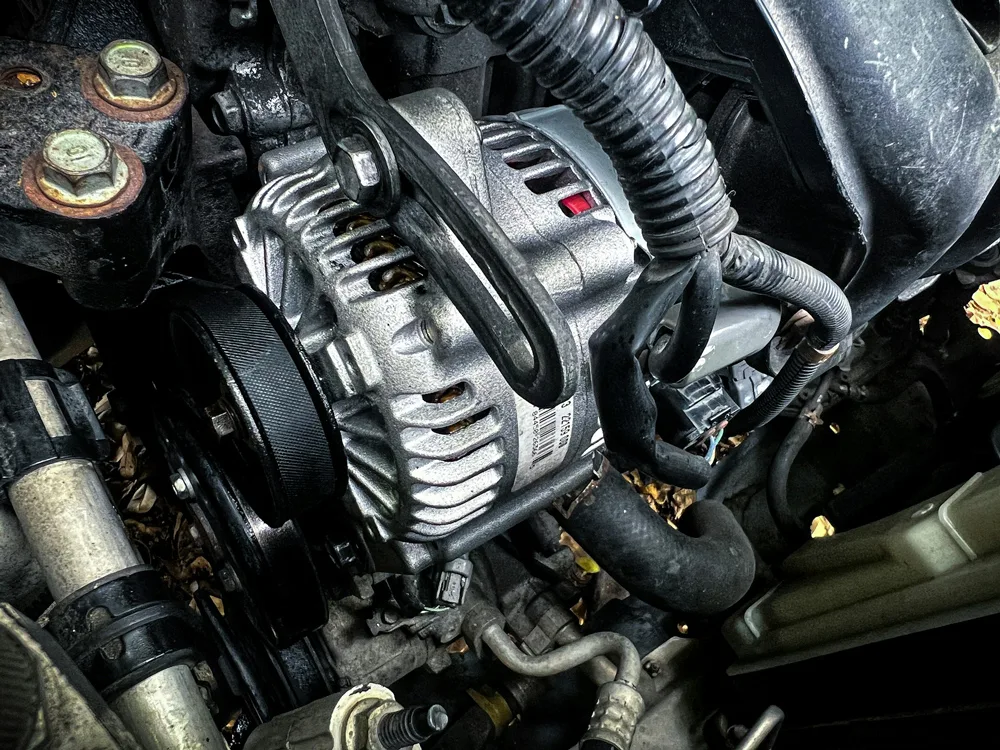
Every reused engine avoids the equivalent of a small car’s annual emissions in CO2. Every salvaged body panel skips a production chain that involves mining, smelting, and high-temperature manufacturing. Every second-hand sensor or alternator sourced from a verified used parts supplier is a kilogram of embodied carbon that was never added to the atmosphere.
The carbon footprint of a car is not only written in fuel consumption. It is written in every part that was made when one could have been reused instead.


