The integration of artificial intelligence into the team training process has become a natural stage in the evolution of the competitive environment. We live in an era where pure player talent no longer guarantees victory without powerful analytical support. In my view, AI in training is not just a trend, but the only way to cope with the colossal amount of data generated by every modern game. Today, the winner is the one who finds patterns in the chaos faster and corrects microscopic errors more effectively. This transforms the training process into a high-tech laboratory where every movement is digitized and analyzed.
Deep Analysis of Patterns and Strategies
The use of neural networks allows coaches to see the game from an angle that is often inaccessible to the human eye due to limited attention and speed of perception. Instead of manually reviewing hundreds of hours of demo recordings, analysts entrust this routine to algorithms capable of identifying systemic errors in positioning or timing within seconds. AI does not just record events; it finds hidden dependencies between the actions of different players, helping to understand why a particular strategy fails at crucial moments.
In my view, such automation becomes a decisive factor when preparing for major events, such as upcoming CS2 tournaments this year, where the cost of any mistake is incredibly high. Teams use AI to model the behavior of specific opponents on certain maps, taking into account their favorite routes, grenade-throwing habits, and reactions to economic difficulties. This provides an opportunity to develop effective counter-strategies in advance and minimize the element of surprise, turning the uncertainty of a match into a controlled action plan.
This approach fundamentally changes the level of competition on the modern scene, forcing teams to become more flexible and inventive. When an opponent knows almost everything about your patterns, you have to constantly evolve to avoid becoming predictable. Ultimately, the training process turns into an endless game of intellectual “cat and mouse,” where the winner is the one who best utilizes technology for self-improvement and the deconstruction of the opponent’s game.
Instant Feedback and Skill Correction
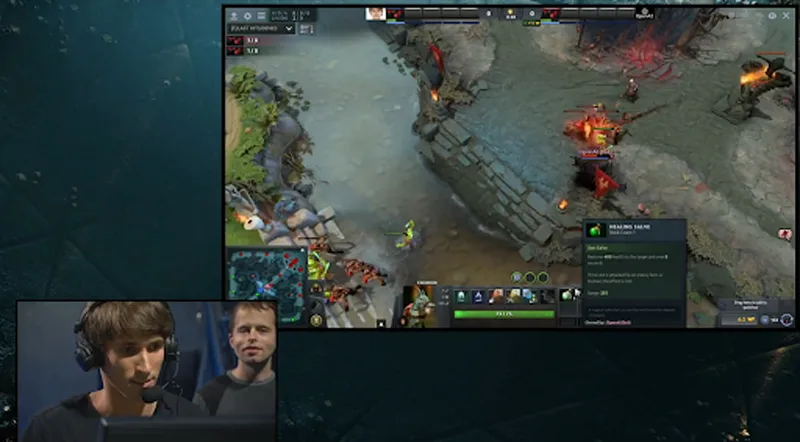
The second crucial aspect is the personalization of training for each individual player within the framework of team interaction. Modern training platforms and specialized modules for Dota 2 track reaction times, click accuracy, and even cognitive load during stressful situations. In my view, this transforms an intuitive “feel for the game” into a set of clear metrics. When every miss or delay in decision-making is recorded by the system, the player stops guessing about the causes of their failures and receives a clear plan for correcting specific technical flaws.
The process of working on mistakes becomes much deeper when data processing algorithms come into play. In moments when the team meticulously analyzes its past live CS2 match results, artificial intelligence highlights critical points where communication broke down or which player deviated from the intended movement vector. This allows the team to do more than just acknowledge a defeat as the result of “bad play”; they can know exactly which micro-mechanic or tactical maneuver requires intensive work before the next match.
Such pinpoint work saves a colossal amount of time that was previously spent on endless arguments and intuitive guesses. Instead of relearning all aspects of the game at once, the team can focus on eliminating the 20% of errors that cause 80% of the problems. In the tight schedule of the professional scene, where only a few days remain between tournaments, such efficiency in skill correction becomes a key competitive advantage.
Opponent Simulation and Adaptive Learning
Modern AI bots, such as those used in the OpenAI Five project, have clearly proven that a machine can surpass the best of the best due to flawless logic and a total lack of emotion. In my view, the most valuable part here is not the algorithm’s victory over humans, but the opportunity to learn from its unconventional decisions. Professional teams are now actively implementing such technologies to create “ideal sparring partners” capable of accurately mimicking the playstyles of the world’s top rosters, accounting for their unique timings and aggression.
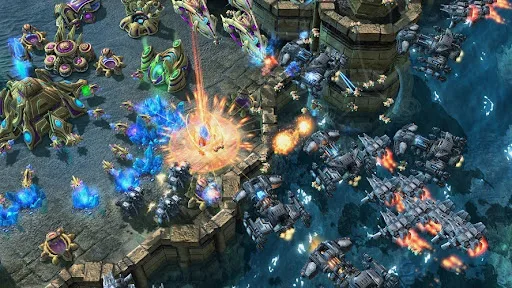
In projects like League of Legends or StarCraft II, the use of adaptive bots allows teams to practice defense against specific strategies without the need to find a real opponent or reveal their own tactics in training matches (scrims). The AI acts as a tireless simulator that can repeat the same situation an infinite number of times until the team finds the perfect counter-algorithm. This creates conditions for safe experimentation, where the cost of a mistake is merely a session restart rather than tournament elimination.
The main advantage of this system is that the AI dynamically adjusts to the level of the player or the entire team, gradually increasing the difficulty and finding new vulnerabilities in their defense. This forces the roster to constantly step out of their comfort zone and evolve in real-time. As a result, training turns into a process of constant breakthrough, where the mastery bar is raised automatically as soon as the previous height has been successfully cleared.
Burnout Prevention and State Monitoring
AI integration today extends beyond game mechanics to the physical condition of esports athletes, which I consider critical for a long career. Modern monitoring systems can analyze biometric data in real-time: from heart rate and cortisol levels to micro-movements of the chair and blinking frequency. Based on these parameters, algorithms identify early signs of oncoming fatigue or loss of concentration even before the person realizes there is a problem.
In disciplines with the highest cost of error, such as Valorant or Counter-Strike 2, where round outcomes are decided in milliseconds, knowing when a player critically needs a break can save a team’s entire tournament run. Artificial intelligence helps managers create optimal training and rest schedules based on objective body metrics rather than a subjective “I’m fine.” This scientific approach helps avoid “overtraining,” which often causes performance dips in top-tier rosters.
Ultimately, using AI in this direction transforms esports into a more professional and healthy environment. It allows players to stay at their peak longer while helping organizations protect their most valuable assets from emotional and physical burnout. When an impartial machine monitors your state, the risk of breaking down at a crucial moment due to accumulated stress is minimized, making the game more stable and high-quality.
Conclusion
To sum up, artificial intelligence has become a true “sixth player” and an indispensable assistant to the coach. It does not replace human intuition and creativity, but it provides the database and analytical precision without which professional success is practically impossible today. It is a tool that makes the competitive process fairer, more transparent, and higher in quality for all participants.