I have always liked the Wagoneer for one simple reason. It looks like a family wagon. It acts like a truck. And it carries itself like something far more expensive than it ever was. The Vigilante 1979 Jeep Wagoneer The Blacked-Out takes that idea and pushes it all the way to black.
Vigilante understands that mix. The Texas shop takes classic Jeeps and rebuilds them for modern roads. Its latest Wagoneer is called The Blacked-Out. It is a 1979 build. It is also a clear break from the usual Wagoneer formula.
I have not driven this build. I am writing about it as a feature. What caught my eye was the restraint. Vigilante did not strip the Wagoneer of its identity. It pushed that identity in a darker, sharper direction.
It joins a run of bold restomods I have covered lately, from the twin-turbo 240Z restomod built for SEMA to the copper one-off GFG Style Peralta D. This one feels different. It is quieter. It is also harder to ignore.
Vigilante 1979 Jeep Wagoneer The Blacked-Out: Black on Black, Done Right
The original Wagoneer made its name with warm tones and woodgrain. This one goes the other way. Vigilante started with a clean Texas donor body. Then it laid down deep black paint. The brightwork went matte black. The glass was smoked out.
The wood panels are the clever part. Vigilante did not delete them. That would have felt wrong. Instead, the shop reworked them in grey and black tones. The look takes its cue from Yakisugi. That is the Japanese practice of preserving cedar by charring it.
The result still reads as a Wagoneer. It just reads as one after dark. The stance helps too. Black wheels and chunky tires fill the arches. Nothing looks fussy. Nothing looks added for show alone.
A Whiskey Cabin Changes Everything
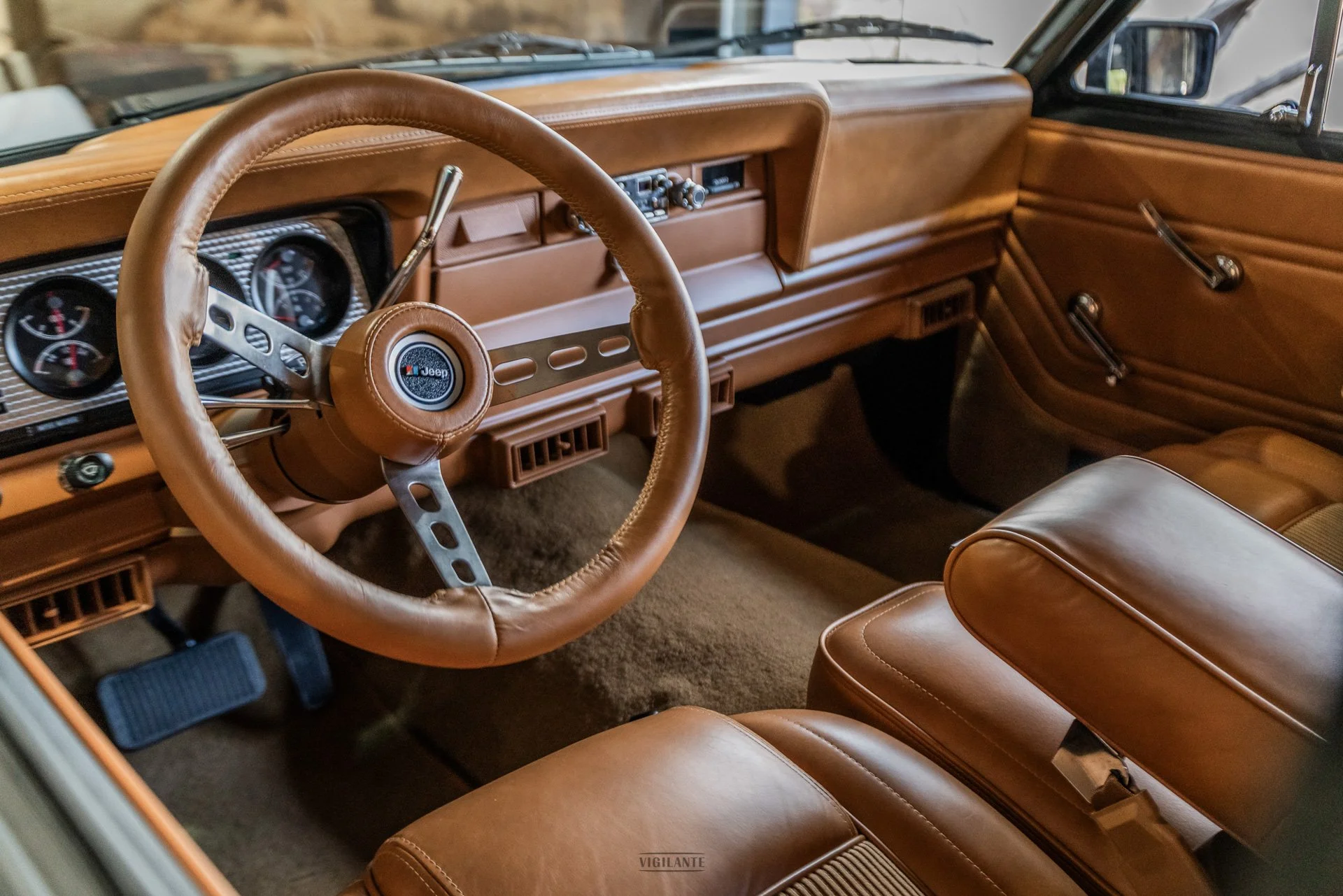
Open a door and the mood changes fast. The cabin is warm where the outside is cold. Whiskey-toned leather covers the seats and much of the trim. Corduroy adds texture in the right places. It feels like a room you want to sit in.
Vigilante also hides the modern tech well. The window cranks look old. They are fakes. They operate electric windows. The gauges keep a vintage face. Behind that glass, they feed modern data.
That mix matters to me. I like old cars for how they feel. I also like cars that start, stop, and cool the cabin without a fight. This build tries to give you both. It keeps the period look. It skips the period headaches where it can.
The HEMI Under the Hood
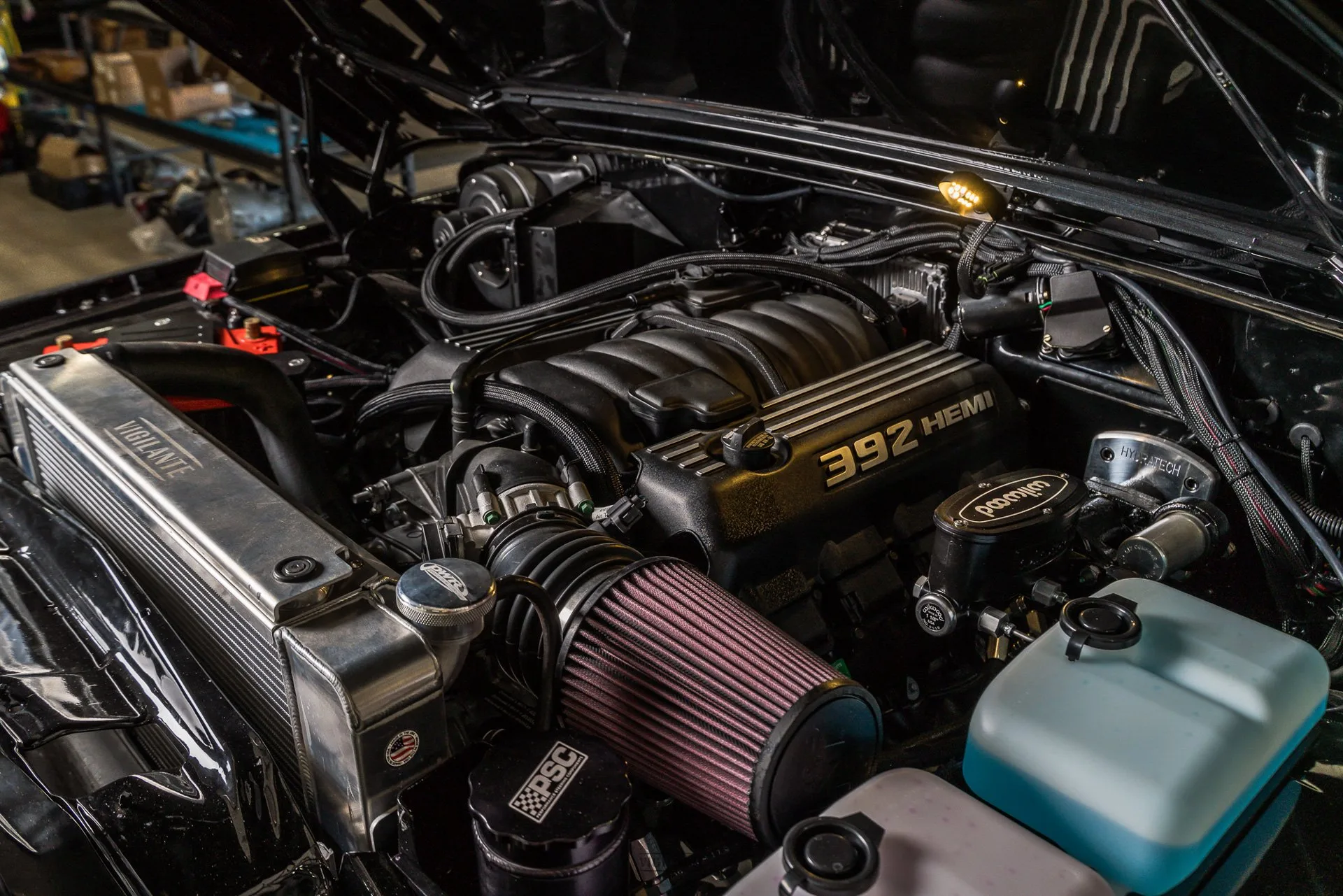
Under the hood sits a 6.4-liter Mopar 392 HEMI. It is naturally aspirated. It makes 485 horsepower and 475 lb-ft of torque. That is a big step up from the smog-era AMC V8 this truck was born with.
A four-speed automatic backs it up. An Atlas-II transfer case sends power to all four wheels. Currie Dana 44 and Dana 60 axles handle the load. Eibach coils and adjustable Fox Racing 2.0 shocks replace the old leaf springs. Baer six-piston calipers and 14-inch discs handle braking.
On paper, that is a serious setup. It is also the kind of setup that makes a classic usable. You get power. You get brakes that match the speed. For a truck this size, that balance counts.
What It Costs to Commission One
Here is the part that needs care. This exact Wagoneer has already found a home. Vigilante will build you a twin to your spec. HiConsumption reported commissions from $295,000 for a build like this.
Vigilante’s own Wagoneer page now lists the model from $355,000. I am using the official figure as the current starting point. Prices can move with spec and time. If you want one, check the official page first.
That is a lot of money. It also buys a full rebuild. Vigilante lists a 24-month build time for the Wagoneer. That tells you how deep the work goes.
If you love the old Wagoneer shape but want modern power and comfort, this is a strong place to look. It is a different kind of thrill from the Aston Martin Valhalla Spider, but the same idea applies. The best cars make you stop and look. This one keeps the soul of the original. It just wears black, warms up inside, and runs a HEMI. I like that trade.