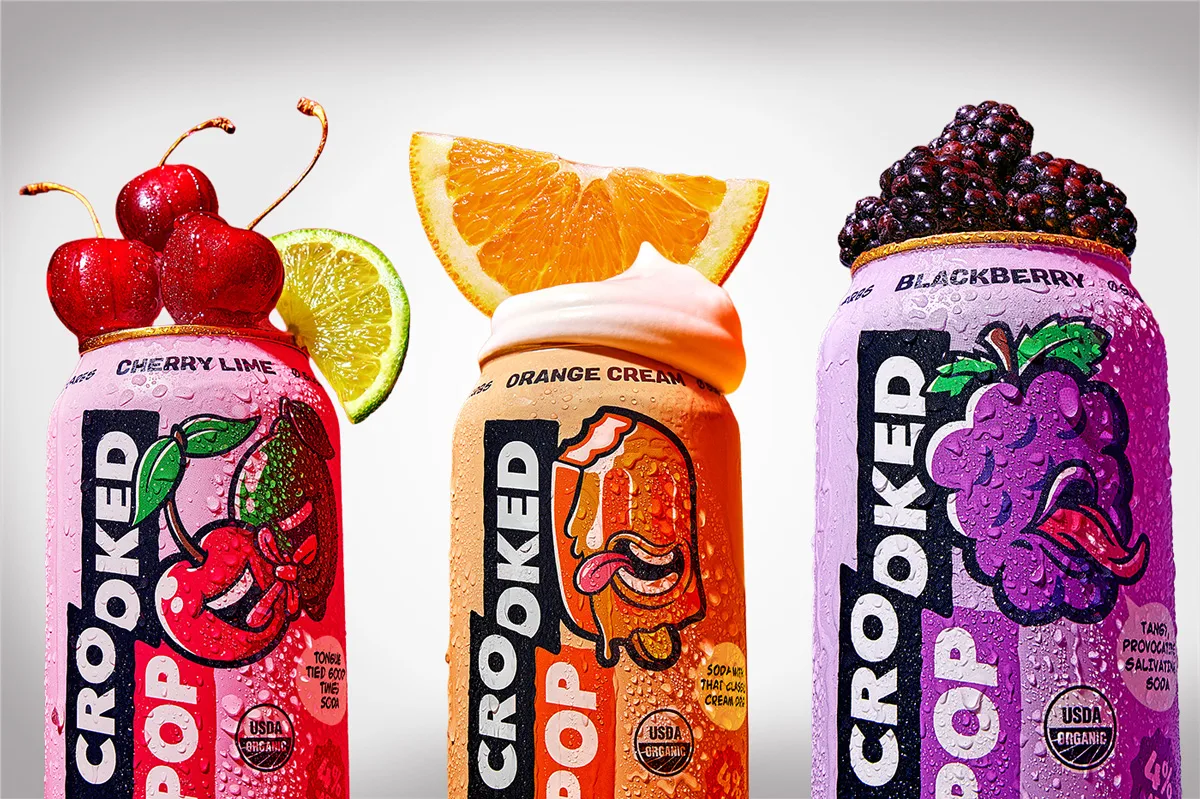
Crooked Pop showed up at my door in a box with three flavors and a lot of pressure to live up to. This is the guy who built Bai and sold it to Dr Pepper Snapple for $1.7 billion, now telling everyone the hard soda aisle has the same problem soft drinks used to have. That’s a big claim to put on a can. Crooked Pop sent me all three flavors to try, and I drank through them over a few days before writing this, so what follows is what actually happened in my mouth, not what’s in the press release.
If you’re buying High Noon or White Claw mostly because that’s what’s on the shelf, Crooked Pop wants to be the next thing you reach for. Whether it earns that depends on the parts nobody puts in a press release: how it actually tastes, and what it actually costs you per can.
Who’s behind it, and what’s actually new
Ben Weiss built Bai around the idea that clean ingredients beat artificial ones, then sold it for $1.7 billion. Crooked Pop is him running the same play on alcohol: an organic, zero-sugar hard soda meant to replace the vodka RTDs and malt-based hard sodas he says have taken over the category.
The tech he’s leading with is Organic Super Dry Alcohol, or OSA: a base fermented from quinoa, amaranth, millet, and cassava root instead of distilled spirits or malted grain. Crooked Pop frames OSA as four years in the making. Worth knowing before you buy in: this isn’t Weiss’s first time building an alcohol base from ancient grains. He did something similar with Crook & Marker’s original spiked seltzer line back in 2019, and Crook & Marker LLC is the same company listed as Crooked Pop’s manufacturer. OSA reads more like an evolution of that earlier base than an invention out of nowhere. That doesn’t make it a bad product. It does mean “four years of R&D” is doing more marketing work than the timeline alone suggests.
What’s in the can
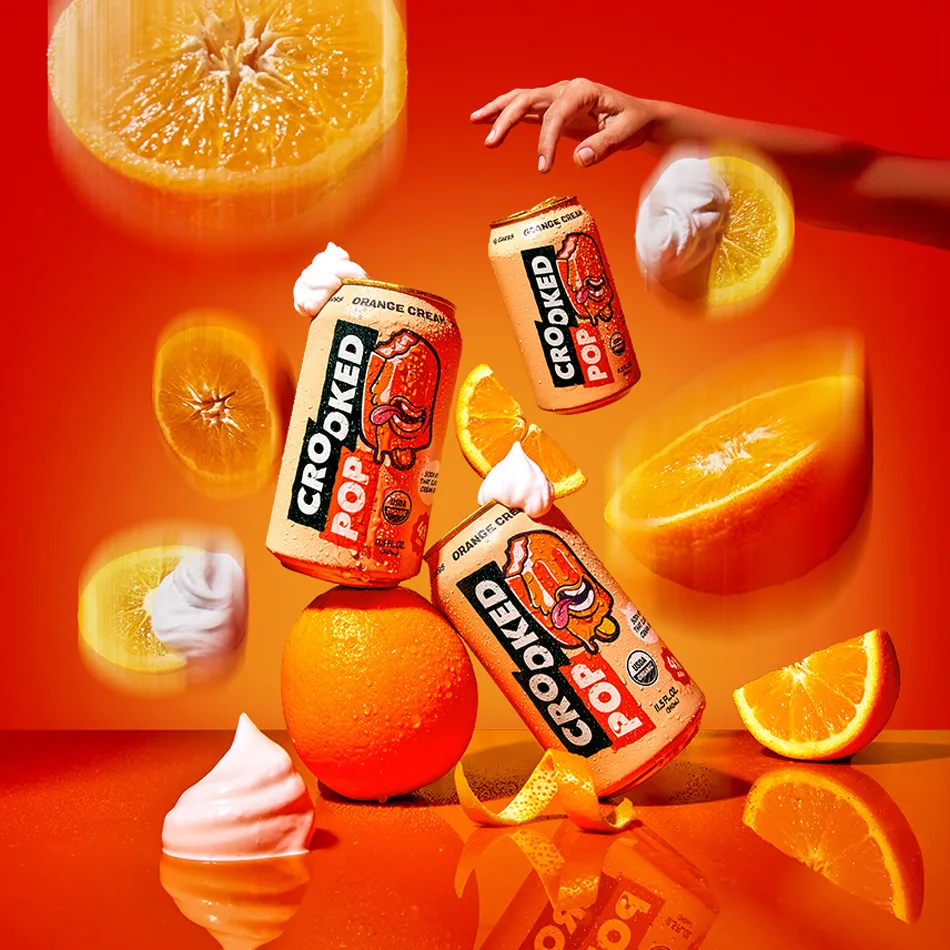
Three flavors: Orange Cream, Blackberry, and Cherry Lime. Each 12-ounce can is 4% ABV, 80 calories, under 1 gram of carbs, and zero sugar. It’s USDA Organic certified, gluten-free, and vegan, with no artificial sweeteners, colors, or flavors. An 8-pack runs $15.99 to $17.99, so figure roughly $2 a can.
The taste test
Orange Cream was my favorite of the three, with Cherry Lime close behind. Both come in crisp instead of syrupy, and neither leans as sweet as the flavor names suggest, which is the opposite of how most flavored RTDs go wrong. Blackberry was the one that didn’t land for me. I couldn’t tell you exactly why it missed where the other two hit, and that might just be a taste preference thing rather than a flaw in the can. If someone handed me a Blackberry at a cookout, I’d drink it without complaint. I just wouldn’t reach for it first.
Does OSA actually change anything
Weiss’s specific claim is that vodka-based RTDs are thin, and OSA gives Crooked Pop a mouthfeel vodka can’t touch. Having had both, I’ll go along with him on this one. There’s a texture here a straight vodka seltzer doesn’t have. Whether that’s OSA specifically or just the broader difference between a fermented base and a distilled one, three cans of one brand won’t tell you. But the sensation he’s describing is real, not just pitch-deck language.
How it stacks up against High Noon
High Noon is the fairest comparison I’ve got, since it’s what’s actually in my fridge most weeks. High Noon runs vodka and real fruit juice, sits around 4.5% ABV, and typically costs less per can than Crooked Pop. On price alone, High Noon wins. On mouthfeel, and on the zero-sugar, USDA-organic angle, Crooked Pop is doing something High Noon isn’t trying to do.
The steep price is real. $2 a can is a jump from what you’d pay for a comparable RTD at a grocery store. It stops looking steep the moment you compare it to what one drink costs at a bar, which is usually $8 to $12 for something with a lot less thought put into the ingredients. That’s the actual value argument: not “cheap,” but “cheaper than going out,” which is a different pitch than the one printed on the can.
Should you buy it
If you’re in Georgia or Florida, where Crooked Pop is currently at Total Wine, Harris Teeter, and stadiums around Atlanta and Tampa, or you’re ordering from drinkcrookedpop.com, start with Orange Cream. It made the best case for the brand’s whole pitch, and it’s the one I’d buy again with my own money. Cherry Lime is a close second. Blackberry is the one I’d let someone else finish.
Whether Crooked Pop becomes the next Bai is a longer bet than three cans can settle. What I can tell you is that two out of three flavors backed up the claim on the label, which is a better hit rate than most new RTD brands manage on launch.
FAQ
What does Crooked Pop hard soda taste like?
Closer to a crisp, lightly carbonated soda than a boozy seltzer. Orange Cream and Cherry Lime come through clean and not overly sweet, with more body than a vodka-based RTD. Blackberry is the outlier, drinkable but less distinct than the other two flavors.
Is Crooked Pop actually healthier than other hard sodas?
By the numbers, yes: 80 calories, under 1 gram of carbs, zero sugar, and USDA Organic certification per can, plus gluten-free and vegan. Whether that matters to you depends on how much you weigh nutrition specs against taste and price.
How does Crooked Pop compare to High Noon?
High Noon is vodka-based, runs around 4.5% ABV, and typically costs less per can. Crooked Pop trades that price edge for a fuller mouthfeel and a USDA Organic, zero-sugar profile High Noon isn’t built around.
Where can you buy Crooked Pop?
Currently limited to Georgia and Florida, sold at Total Wine, Harris Teeter, and select stadiums in Atlanta and Tampa. It’s also available directly through drinkcrookedpop.com for wider shipping.