A useful tote gets a few basics right: it holds your essentials, sits comfortably on your shoulder, and keeps belongings accessible without leaving them exposed. If you fly with it, it also needs to meet your airline’s personal-item limits. Style matters, but fit and function determine whether a bag earns regular use.
Start with your use case
One tote can serve several purposes, but start with the job it will do most often. A daily laptop commute places different demands on a bag than occasional errands.
Work and commute: what actually helps
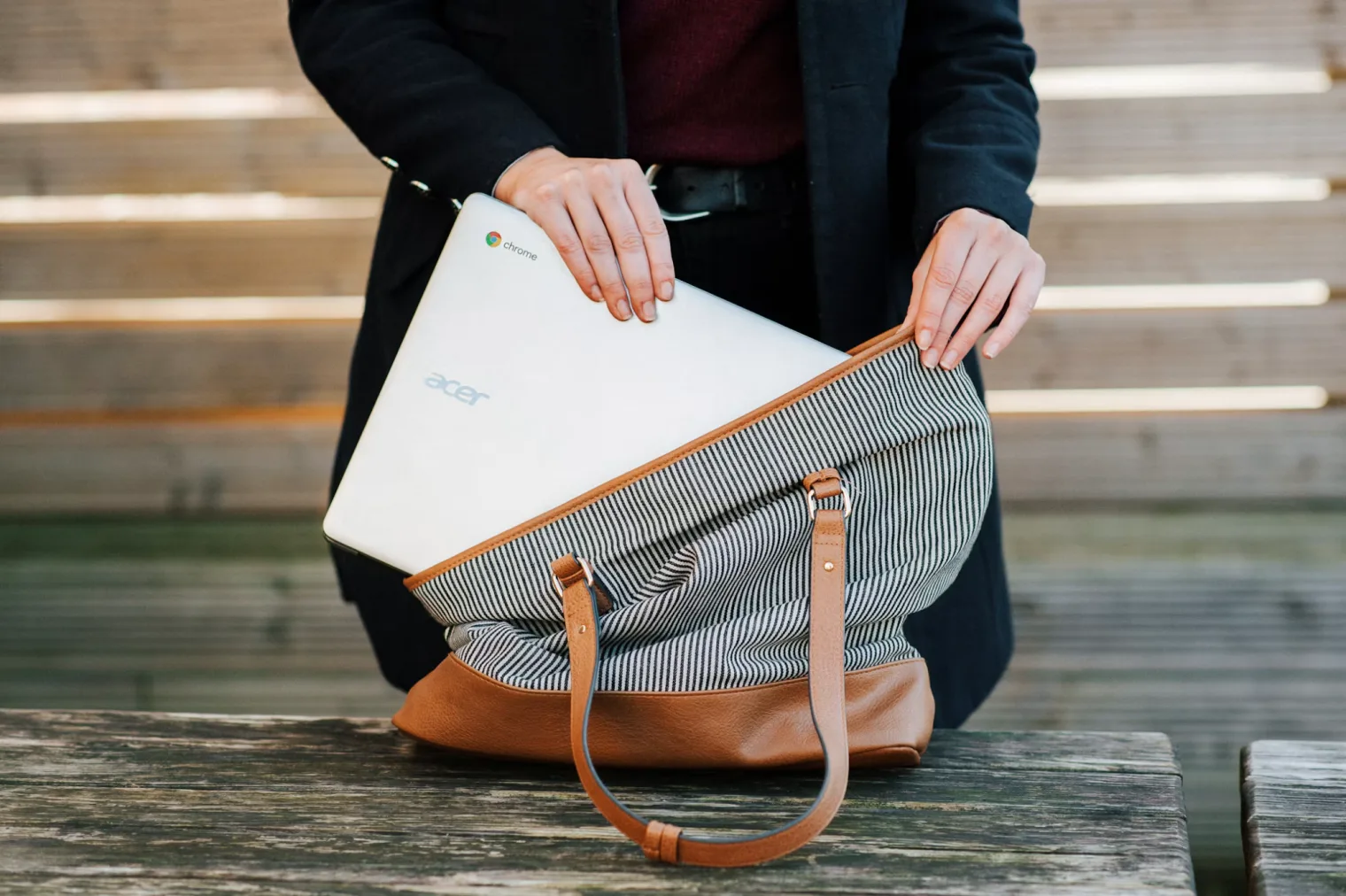
Start with your laptop. Compare its measurements with the bag’s posted interior or sleeve dimensions; a listed laptop pocket doesn’t guarantee your device will fit. Then check strap drop, the distance from the top of the bag to the highest point of the strap. Enough clearance lets you wear the tote over a winter coat. A top closure keeps papers covered, while interior pockets keep chargers and keys easy to find.
Day trips and errands
For errands and day trips, consider the bag’s empty weight. Nylon and lightweight canvas can keep the load manageable, though rain protection depends on the fabric and finish. If you walk a lot, a tote that converts to a backpack lets you carry weight on both shoulders. Slouchy and woven shapes are worth considering for days when you prefer a softer bag.
Flying as a personal item
Airlines set size limits for personal items carried under the seat. As examples, American Airlines lists 18 x 14 x 8 inches (45 x 35 x 20 cm), while JetBlue lists 17 x 13 x 8 inches (about 43 x 33 x 20 cm). These aren’t universal limits or guarantees of fit. Check your airline’s current rules before packing, then measure the bag when full.
Size, capacity, and organization
Dimensions and capacity answer different questions. Height, width, and depth help you judge physical fit; liters describe total volume. Follow the measurement order given in the listing rather than assuming every brand uses the same order.
A tote may have enough volume for your belongings but still have an opening or laptop sleeve that’s too narrow. Check the dimensions of your largest rigid item first. For daily use, look for room for a water bottle, a light layer, and essentials without needing to force the closure shut.
Closures, pockets, and security
An open-top tote offers quick access, but a zip-top is useful on crowded transport and when a bag might tip over. A closed zipper helps contain belongings and makes casual access harder, though it doesn’t make a bag theft-proof. Keep valuables in a closed interior pocket when available.
A trolley sleeve, a panel that slides over a suitcase handle, helps secure the tote to rolling luggage. For work, a padded laptop pocket separates your device from other items. A key leash keeps keys within reach. Choose pockets around what you carry rather than assuming more compartments are always better.
Where to shop and what to double-check
Online shopping makes the product details especially important. Auremyn’s tote bags for women include structured, slouchy, woven, and zip-top options, offering several styles to compare in one collection. Open each product page to check exact dimensions, materials, closure type, strap measurements, and included accessories. Review the return window, return costs, and condition requirements before ordering, particularly if you need to test laptop fit at home.
Materials that make a difference
Canvas is sturdy and casual, but untreated canvas can absorb rain and become heavier. Nylon is often light, though water resistance varies by construction and finish. Leather can suit a more formal work wardrobe, but it often adds weight and needs care appropriate to its finish.
Labels such as “leather-look” and “suede-look” describe appearance, not exact composition. Check the material listing rather than relying on photographs. Comparing individual product details helps you find an option that suits your preferred weight, texture, and care routine.
Fit test at home
While keeping the bag within its return conditions, pack your usual wallet, phone, filled water bottle, and light layer, plus your laptop if needed. Check whether the load feels balanced and whether the closure shuts easily. Wear it over your heaviest coat to test shoulder clearance. If you plan to fly, measure the packed bag in all three directions, including any bulging pockets, and compare it with your airline’s limits. A bag that pinches, slips, or needs constant rearranging may not suit your routine.
Features worth comparing
Concrete specifications are more useful than labels such as “roomy” or “compact.” These examples illustrate different feature combinations; confirm the current model and size before relying on a listing.
- Low empty weight: Patagonia’s Black Hole Tote is listed at 25 liters and 13.8 ounces.
- Work and luggage organization: The BÉIS Sport Tote includes a trolley pass-through and padded laptop pocket.
- A zip-top with stated capacity: L.L.Bean’s large zip-top Boat and Tote is listed at 35 liters and 15 x 17 x 7 inches.
- More room for overnight packing: Cuyana’s Easy Overnighter lists a capacity of 37 liters.
For another perspective on travel-ready carry, see these Mission Workshop bags built for adventure.
Conclusion
Choose a tote around a few practical checks: enough room for your regular load, comfortable straps, a suitable closure, and a material you’re willing to maintain. Whether you prefer a woven weekend shape or a lightweight nylon tote, the best fit is a bag that works comfortably with what you actually carry.
FAQs
Is a zip-top necessary for city travel?
Not always, but it helps prevent spills and limits easy access to belongings on crowded transport. Keep the zipper closed and valuables out of open exterior pockets.
How do I keep a tote from feeling heavy?
Start with a low empty weight and pack only what the day requires. Wider straps can distribute pressure more comfortably, but they don’t reduce the load. Empty the bag regularly so spare chargers, receipts, and other extras don’t accumulate.
What size tote works as a personal item?
There is no universal size because airlines set their own limits. Compare the packed bag’s height, width, and depth with your airline’s current personal-item rules, and verify the requirements before traveling.
Which material is easiest to maintain?
That depends on the finish and your routine. Nylon may be convenient for light everyday carry, while canvas and leather require different cleaning and care. Read the product’s care instructions before choosing.