Between school drop-offs, work deadlines, and family trips, there’s rarely time to stop and study your own face. Then an old photo pops up in your phone’s memories, and you notice it: the jawline looks a little softer, the skin under the chin a little looser, the lines around the eyes a little deeper than you remember.
If that sounds familiar, you’re far from alone. It has pushed more people to look into non-surgical skin tightening, a group of treatments that aim to firm skin without a scalpel or a long recovery. This guide explains how they work, what they can and can’t do, and how to choose a provider with confidence.
Why Skin Loses Firmness
Skin gets its firmness from collagen, a protein that provides structure, and elastin, which lets skin stretch and snap back. Both decline gradually with age, and a few things can speed up the change:
- Sun exposure. Ultraviolet light breaks down collagen over time.
- Pregnancy. Skin that stretched during pregnancy doesn’t always return fully to its earlier shape.
- Weight changes. Significant weight loss, or repeated gain and loss, can leave skin looser.
- Genetics. Some people simply develop laxity earlier than others.
- Smoking. It damages collagen and slows the skin’s ability to repair itself.
What Is Non-Surgical Skin Tightening?
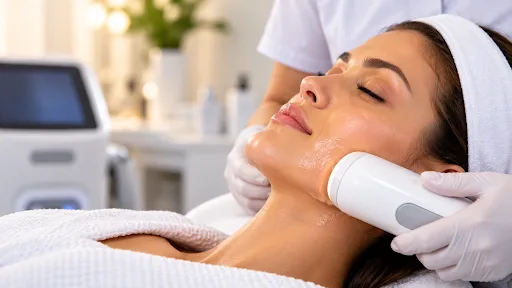
Non-surgical skin tightening is an umbrella term for treatments that firm skin without cutting or removing tissue. Most use a controlled form of energy, such as radiofrequency, ultrasound, or light, to gently heat tissue beneath the surface. That heat signals the body to begin collagen remodeling, a gradual rebuild of the skin’s support structure that can firm things up over months.
Because these treatments work with your skin’s own repair response, they aim for subtle, natural-looking improvement rather than a dramatic change. They’re also different from other cosmetic options. Dermal fillers add volume, botulinum toxin relaxes the muscles behind expression lines, and surgery such as a facelift removes excess skin and repositions deeper tissue.
Common Types of Non-Surgical Skin Tightening
- Radiofrequency. Uses electrical energy to heat deeper layers of skin and often involves a series of sessions.
- Ultrasound. Focuses sound energy on deeper layers while sparing the surface. Sofwave, for example, is needle-free, takes about 30 to 45 minutes for the full face and neck, is suitable for all skin types, and is FDA-cleared for facial lines and wrinkles and lifting the brow, under-chin and neck.
- Laser and light-based treatments. Deliver light energy that warms tissue, with the laser matched to your concern and skin tone.
- Microneedling. Uses fine needles to make tiny punctures that set off the skin’s repair response, and some versions add radiofrequency.
Each option works differently and suits different concerns and areas of the face and body, so there’s no single best choice. Skin tone matters too, since some energy-based treatments carry a higher risk of pigment changes in darker skin. Ask any provider about their experience with your skin tone.
What Results Can You Realistically Expect?
Expect gradual, modest improvement. Collagen takes time to rebuild, so results typically develop over weeks to a few months, depending on the treatment. Some treatments need several sessions, while others are designed as a single session.
How much you see depends on your age, skin condition, genetics, the area treated, and the technology used. Non-surgical treatments can’t match surgery for significant sagging or excess skin, and results don’t last forever because skin keeps aging. Some people choose periodic follow-up treatments to maintain their results.
What Happens During and After a Treatment?
Treatment typically begins with a conversation, in which the provider reviews your goals and health history. Depending on the device, a topical numbing cream may be applied. During treatment you may feel warmth or brief discomfort, and sessions can last from under half an hour to about an hour depending on the treatment and the area.
Many treatments involve little to no downtime, so people often return to their normal routines quickly. Temporary redness, swelling, or tenderness can occur. Rarely, more serious reactions such as burns, blisters, or pigment changes can happen, which is why an experienced provider and careful aftercare matter.
Who Is a Good Candidate?
These treatments tend to suit adults with mild to moderate laxity who want subtle improvement and understand the limits. They aren’t right for everyone. Tell your provider if you’re pregnant or breastfeeding, have a pacemaker or other implanted device, have a skin condition or infection in the treatment area, or take medications that affect healing, since some treatments aren’t recommended in these situations.
Everyday Habits That Support Firmer-Looking Skin
- Wear broad-spectrum sunscreen daily.
- Don’t smoke, and avoid secondhand smoke when you can.
- Eat a balanced diet with enough protein, and stay hydrated.
- Ask a dermatologist about skincare ingredients that support collagen, such as retinoids and vitamin C.
- Keep weight changes gradual when possible.
None of these will reverse significant laxity, but they help protect the collagen you have and support any treatment you choose.
How to Choose a Provider
Start with a consultation with a qualified, licensed provider, such as a board-certified dermatologist or plastic surgeon, or a trained clinician working under medical supervision. These questions can guide the conversation:
- What is this device cleared for? FDA clearance applies to specific devices for specific uses, so ask whether your area and concern match.
- How much experience do you have with it? Include experience with your skin tone.
- What results are realistic, and how many sessions will I need? Ask for honest limits, not just best-case outcomes.
- What are the risks, aftercare steps, and downtime? Get these in plain language before you agree.
- What does it cost in total? Cosmetic treatments are typically paid out of pocket, so ask what is included and whether follow-up visits cost extra.
Final Thoughts
Non-surgical skin tightening isn’t magic, and it isn’t surgery. It’s a gradual, modest way to support your skin’s own collagen, and it can be a good fit for people who want a subtle change without a long recovery. The place to start is a one-on-one consultation with a licensed provider, who can walk you through your options and help you set realistic expectations.
This article is for general information and is not medical advice.