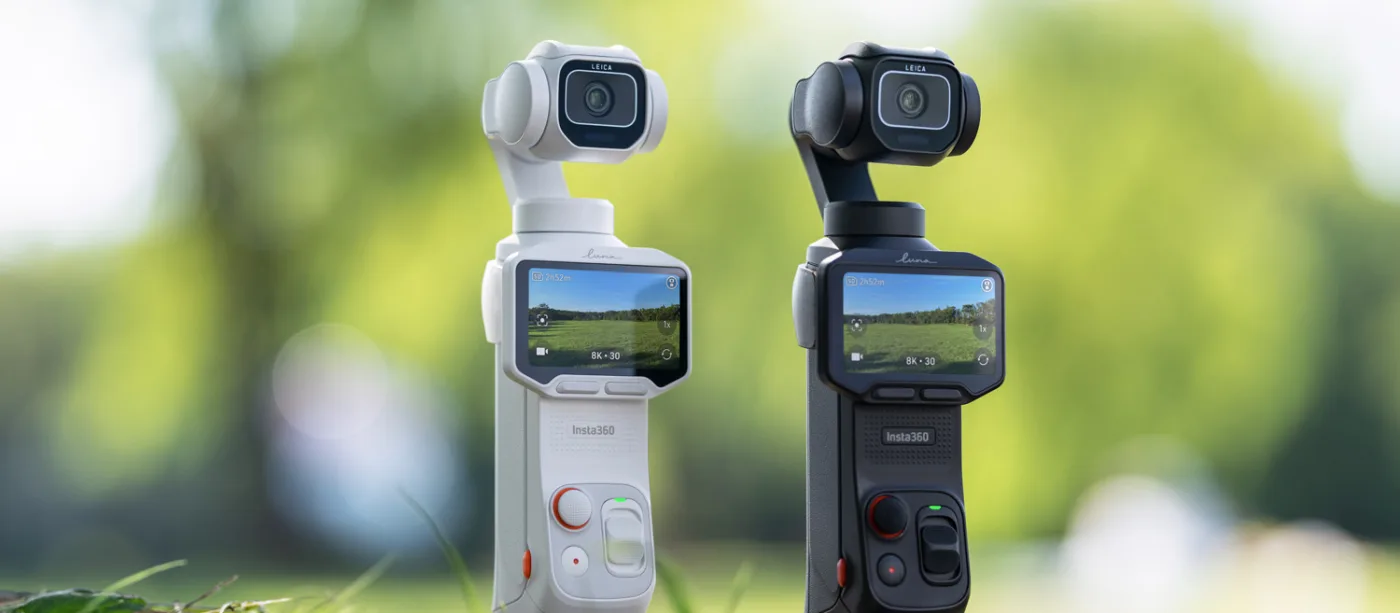
Five months after DJI released the Osmo Pocket 4, American buyers still don’t have an official way to buy one. Insta360 noticed. Today it put the Luna Pro on sale worldwide, including in the US, at $599.99. It’s a single-lens pocket gimbal co-engineered with Leica, with a 1-inch sensor, 8K Dolby Vision, and native 4K vertical video.
I shoot a lot of my travel footage on a DJI Osmo Pocket 3, and I haven’t had a Luna Pro in my hands yet. So read this as a Pocket 3 owner working through a spec sheet. The camera is built for solo creators who film vertical-first and want something smaller than a mirrorless rig. For US buyers the pitch is simple. It costs about $90 less than what third-party sellers have been asking for a Pocket 4, and it comes with a manufacturer warranty that gray-market DJI units don’t.
What the Insta360 Luna Pro actually is
The Insat360 Luna Pro is the one-camera version of the Luna Ultra, the dual-lens model Insta360 launched in June at $769.99. The Pro keeps the Ultra’s main camera, a Leica Summicron lens (20mm equivalent, f/1.8) over a 1-inch 8K sensor, and drops the telephoto module. That trade saves $170, about 22 percent off the Ultra’s price.
What you give up is reach. The Luna Pro tops out at 2x lossless zoom, with a 4x “HighRes Zoom” mode that leans on AI enhancement. If you regularly shoot things you can’t walk closer to (a ship pulling away from the pier, a street performer across a plaza), that’s the gap you’ll feel. For talking to the camera at arm’s length, the wide lens is doing the work anyway.
The spec that matters most for short-form creators
Native 4K30 vertical video is the headline for anyone posting to Reels, TikTok, or Shorts. The Luna Pro oversamples from 6K and switches orientation when you rotate the touchscreen, the same basic move the Pocket 3 made popular. You’re recording a true vertical frame instead of cropping a horizontal one in post and hoping the resolution holds.
Around that sits a spec sheet that mostly mirrors the Ultra’s main camera: 8K Dolby Vision, 4K at 120fps and 1080p at 240fps for slow motion, 3-axis mechanical stabilization, and AI subject tracking Insta360 calls Deep Track. Insta360 rates the battery at up to four hours. I’d treat that as a best-case number until someone runs one down shooting 4K on a warm day.
How the Luna Pro compares to the DJI Osmo Pocket 3 and Pocket 4
The Pocket 3 is still on sale and runs roughly $500 to $590 depending on the retailer. Against it, the Luna Pro adds 8K, a detachable screen, and 47GB of built-in storage. The Pocket 3 has no internal storage at all, so everything lives on microSD. You’re paying about $100 over Pocket 3 street pricing for those upgrades.

The Pocket 4 is the fairer fight, and the Luna Pro doesn’t win all of it. DJI’s camera has 107GB of internal storage, more than double the Luna Pro’s 47GB, and shoots 4K at up to 240fps against the Luna Pro’s 120. DJI’s global starting price is $499. In the US, though, recent third-party listings have run close to $690 with no DJI warranty. At that price the Luna Pro is roughly $90 cheaper, officially supported, and adds 8K.
DJI has also had years to refine its subject tracking, and no spec sheet can tell you whether Insta360 has caught up. That one waits for real-world testing.
The workflow features that stand out
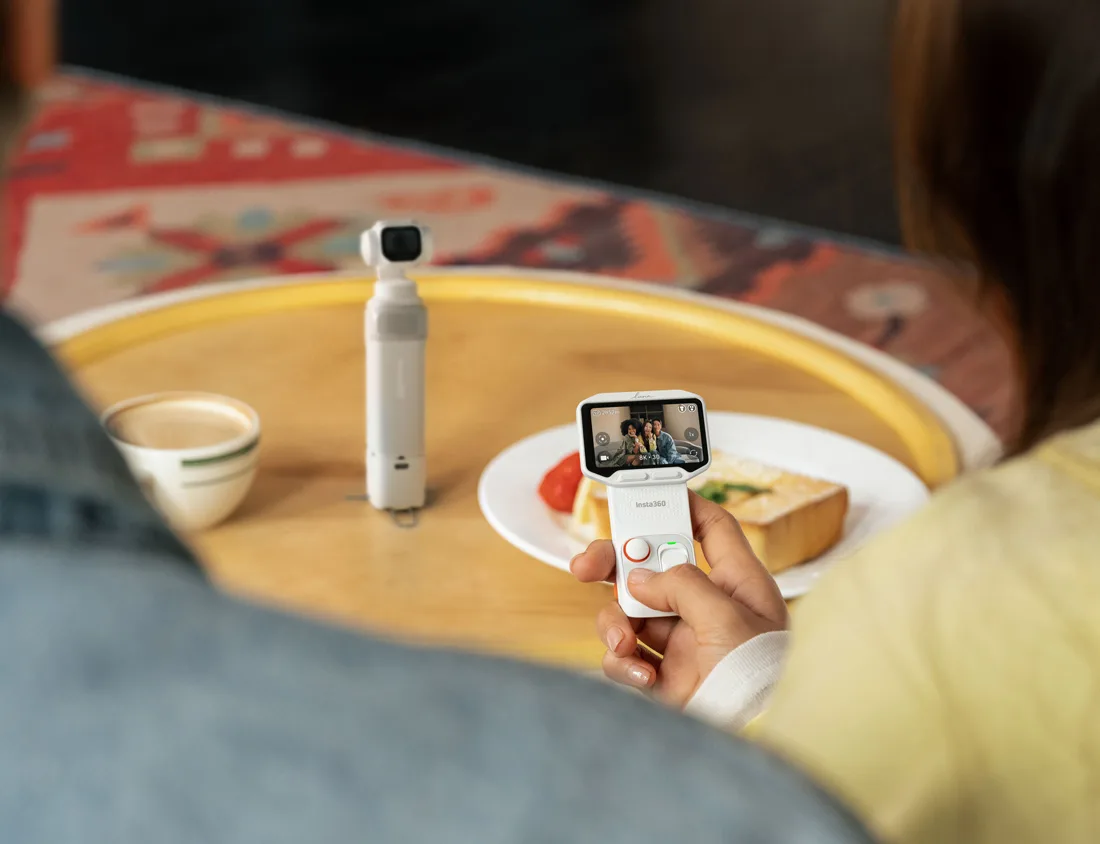
The detachable 2-inch OLED screen is the Luna design choice with no DJI equivalent. Pop it off and you can frame and monitor the shot from somewhere other than behind the camera, which matters when the camera is propped on a railing or a table and you’re the one in the shot.
For bigger projects, the Luna Pro records 10-bit I-Log with ACES support, has built-in timecode for multi-camera syncing, and pairs directly with Insta360’s Mic Series wireless mics. Insta360 names Final Cut Pro and Premiere Pro as supported editors. I cut in DaVinci Resolve, which syncs by timecode without complaint, so the omission doesn’t worry me.
If you’d rather skip color grading entirely, there are Leica Natural, Vivid, and Chrome profiles baked in. Insta360 also offers a POV Head Tracker accessory for first-person footage, and NFC lets you tap a phone to the camera to pull files into the app.
Who should buy the Luna Pro, and who should skip it
The Luna Pro makes the most sense for a US-based creator shooting vertical content solo who wants a step up from a Pocket 3 or a phone and wants a real warranty behind it. It’s also the easier buy if you already live in the Insta360 app with an X-series camera.
Skip it if you shoot a lot of distant subjects, because the Luna Ultra’s telephoto is worth the extra $170 there. Skip it if storage tops your list and you’re comfortable buying gray-market DJI. And if your Pocket 3 footage already looks good to you in daylight, nothing here forces an upgrade today.
The Luna Pro is available now through the Insta360 Store, Amazon, and select retailers in Cosmic Black and Stellar White, with the Standard Bundle at $599.99. I’ve shot Insta360’s X-series cameras for years, and I’m curious whether the company can match DJI on the thing DJI does best. That answer comes from a hands-on test, not a press release.
Questions people ask about the Insta360 Luna Pro
Can you buy the DJI Osmo Pocket 4 in the US?
Not through official DJI channels. DJI hasn’t released the Pocket 4 in the US, citing pending authorization, so units sold here come from third-party importers, usually at a markup and without DJI’s US warranty or support. If you go that route, read the seller’s return policy closely and confirm the camera can be set to English.
What’s the difference between the Luna Pro and the Luna Ultra?
The Luna Ultra adds a second camera: a 60mm f/2 telephoto on a 1/1.3-inch sensor, good for 6x lossless zoom and up to 12x total. It runs three AI chips to the Pro’s two. Both share the 1-inch, 20mm Leica main camera, 8K Dolby Vision, and the detachable OLED screen. The Ultra starts at $769.99.
When did the Insta360 Luna Pro come out?
Insta360 launched the Luna Pro in China on August 20, 2026, at 3,399 yuan, roughly $500 at the time. Global sales, including the US, started September 10, 2026, with the Standard Bundle at $599.99. The dual-lens Luna Ultra came first, launching in June 2026.


