Ring showed the world a flying security camera in 2020. It was called the Always Home Cam, it looked like a prop from a sci-fi short, and then it never shipped. Ring built at least two versions that never made it to a doorstep. So when Ring announced the Drone Cam on November 10, 2026, with a price and a ship date, the first question was not whether the idea works. It was whether this one actually arrives.
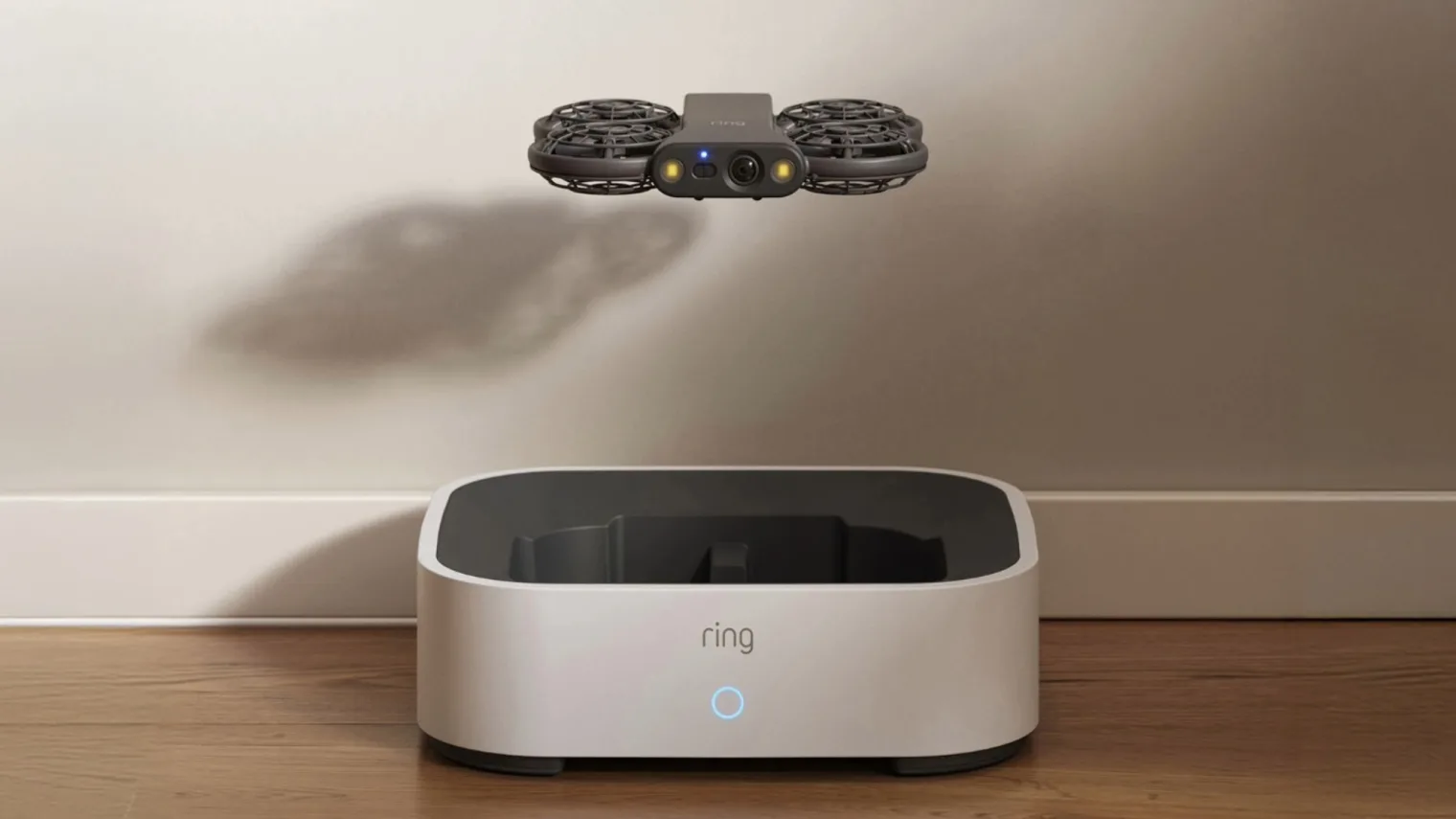
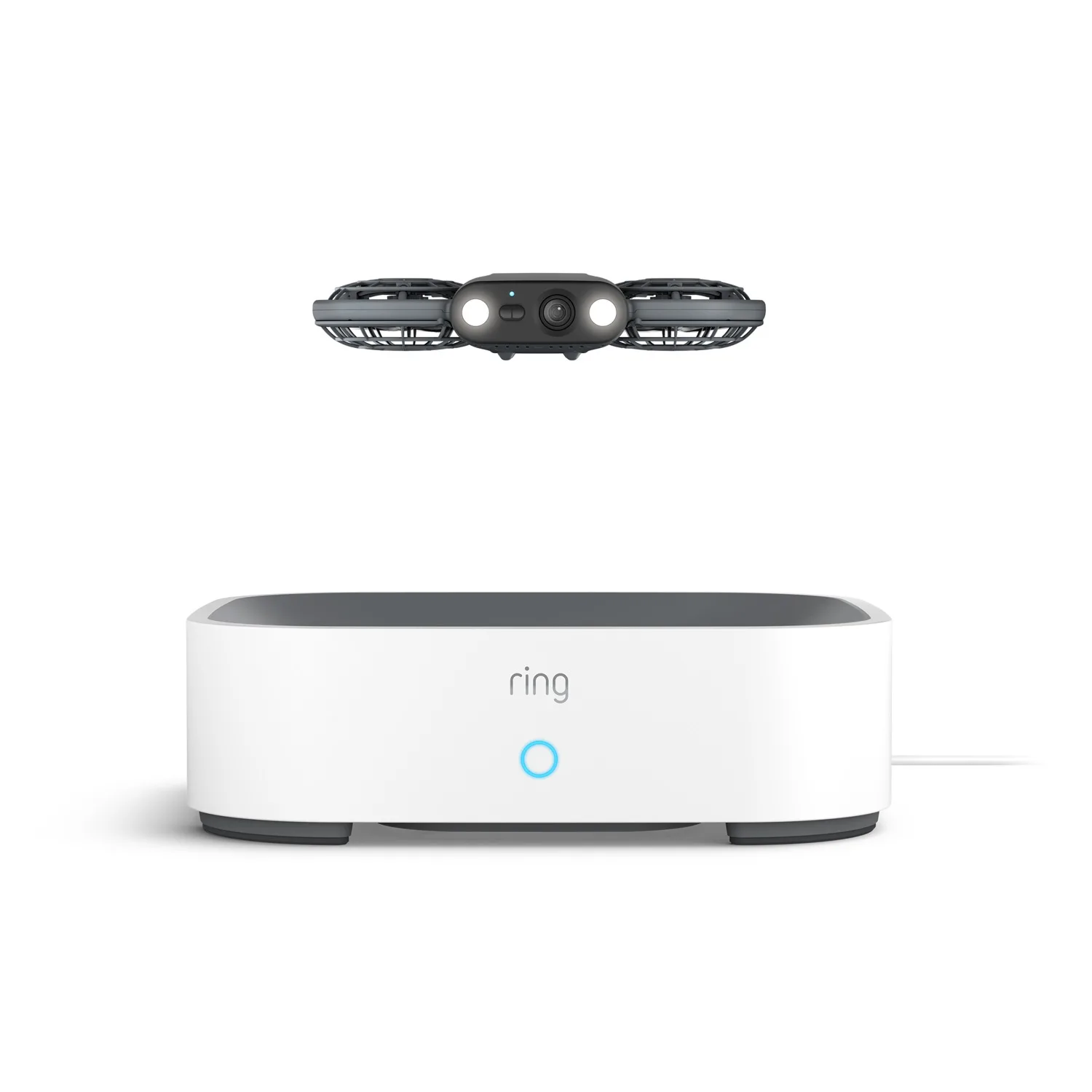
Here is the short version. The Drone Cam is a small indoor quadcopter with a 2K camera that lives on a charging dock, flies room to room on your command, and lands itself when the flight is over. It costs $249.99. Ring has it down to ship on January 27, 2027. And it still needs a green light from the Federal Communications Commission before anyone can legally sell it, which is why Ring’s own page right now only takes your email address and promises to let you know when it launches. I have not flown one. Nobody outside Ring has. But the spec sheet tells a clear story about who it is for, and who should wait.
How it actually works
Setup starts on foot: you carry the Drone Cam through your rooms so it can map the space, and Ring’s navigation system, which the company calls AI Pilot, builds a floor plan it can fly. After that, everything runs from the Ring app. Tap a room, tap a saved viewpoint, or tap a spot on the map, and the camera lifts off its dock and goes there. You can set patrol routes with numbered stops and send it on a loop, or let a connected Ring camera, sensor, or alarm send it to a preset point on its own when something trips.
The camera records 2K video at 1920 by 1920, with a 148-degree field of view, and it rotates a full 360 degrees to look around a room. Two LED spotlights light up dark rooms and hallways, because there is no infrared night vision here. The camera records only while it is airborne. Once it lands back on the dock, recording stops, which is the whole privacy pitch in one move. A camera that is physically docked cannot watch you.
Flights last up to 8 minutes, tested by Ring with a new, fully charged battery under controlled conditions. When the flight ends or the battery runs low, the Drone Cam flies itself back to the dock to recharge. The drone measures 171.8 by 136.9 by 33.15 millimeters, roughly 6.8 by 5.4 by 1.3 inches, or about the footprint of a paperback, and it comes in gray. The dock needs a flat surface, a power outlet, and Wi-Fi. Ring says setup takes 5 to 10 minutes. It needs dual-band Wi-Fi with at least 5 Mbps upload, and it is indoor only, rated for 41 to 95 degrees. One-year warranty.
The catch: it still can’t be sold
Here is the part most launch coverage buried. Ring’s own page carries a Federal Communications Commission notice: the device has not been authorized as required by FCC rules, and it is not, and may not be, offered for sale or lease, or sold or leased, until authorization is obtained. Ring’s product page lists the Drone Cam as out of stock and offers only an email signup to be notified when it launches. The January 27 ship date stands only if the FCC signs off first.
That makes the Drone Cam a strange product to get excited about in November: you can read the spec sheet, join a list, and wait. Ring is not the only company staring at this wall. DJI’s Pocket 4P, a pocket camera with no US launch in sight, has sat on the FCC’s Covered List since last December. Two different companies, two different products, same gatekeeper deciding when Americans can buy the gadget. Ring announced a $999.99 wheeled sibling, the Rover Cam, the same day, which tells you where the company is headed: security cameras that move now, not just watch.
What it costs, and what it keeps costing
The price is $249.99. That is the easy part. The ongoing cost is the subscription. Scheduled patrols need a compatible Ring Protect plan, and so does video history, which runs up to 180 days with a plan. The subscription is free for the first 30 days. Without a plan, you still get live view and manual flights, but the features that make it feel automatic sit behind the paywall.
Here is the comparison Ring does not make for you. Ring’s own Indoor Cam 4K costs $99.99. Three of them cost $299.97, which is $49.98 more than one Drone Cam. Those three fixed cameras watch three rooms around the clock. The Drone Cam watches one room at a time, for eight minutes at a time. To match a single fixed camera’s 24 hours of coverage with 8-minute flights, you would need 180 flights a day. That is the real tradeoff here, and it is not a flaw so much as a choice: mobility instead of constancy. One camera that goes everywhere, briefly, or several cameras that stay put and never blink.
The subscription question is the same one that follows every Ring product. Eufy’s pet camera records and tracks without a monthly fee at all. Ring’s approach is the opposite: the hardware is the entry ticket, and the plan is where the features live. If you already pay for Ring Protect across a house full of doorbells and cameras, the Drone Cam slots into a system you own. If you do not, the $249.99 price is the start of the bill, not the end of it.
What it can’t do
The spec sheet is as interesting for what is missing as for what is there. The Drone Cam has no microphone and no speaker, so it records no audio and supports no two-way talk. It has no siren. That cuts both ways. It cannot eavesdrop on your living room, which is a genuine privacy plus for a camera that flies around your house. It also cannot do the one thing Ring doorbells are famous for, which is talking to whoever is at the door.
It is indoor only, and the temperature range is narrow, 41 to 95 degrees. There is no outdoor mode, no weather sealing, no garage in January. And the flight time is the number that keeps catching my eye. Eight minutes is short. DJI’s Mini 2 SE, a $369 palm-sized drone built for fun, stays up for 31 minutes. The DJI Air 3 stretches that to 46 minutes. A toy drone outflies Ring’s security drone by nearly four times. The difference is the job. The DJI drones are built to fly; the Ring is built to look, land, and recharge. Eight minutes means every patrol is a quick loop, not a stakeout.
One more line from the fine print: some features are not available for customers in Illinois, because of state-specific legislation. Ring does not spell out which features on the product page, so if you live in Illinois, check before you join the list.
Who it’s actually for
I spend half my life in hotels and on ships, and the use case that makes sense to me is the empty house. A fixed camera watches the front door. A flying camera checks the kitchen, the back hallway, and the room with the good windows, then goes home. If you travel the way I do, one device that can look at the whole place from your phone is a better answer than a camera in every room, as long as you accept that it looks in eight-minute bursts.
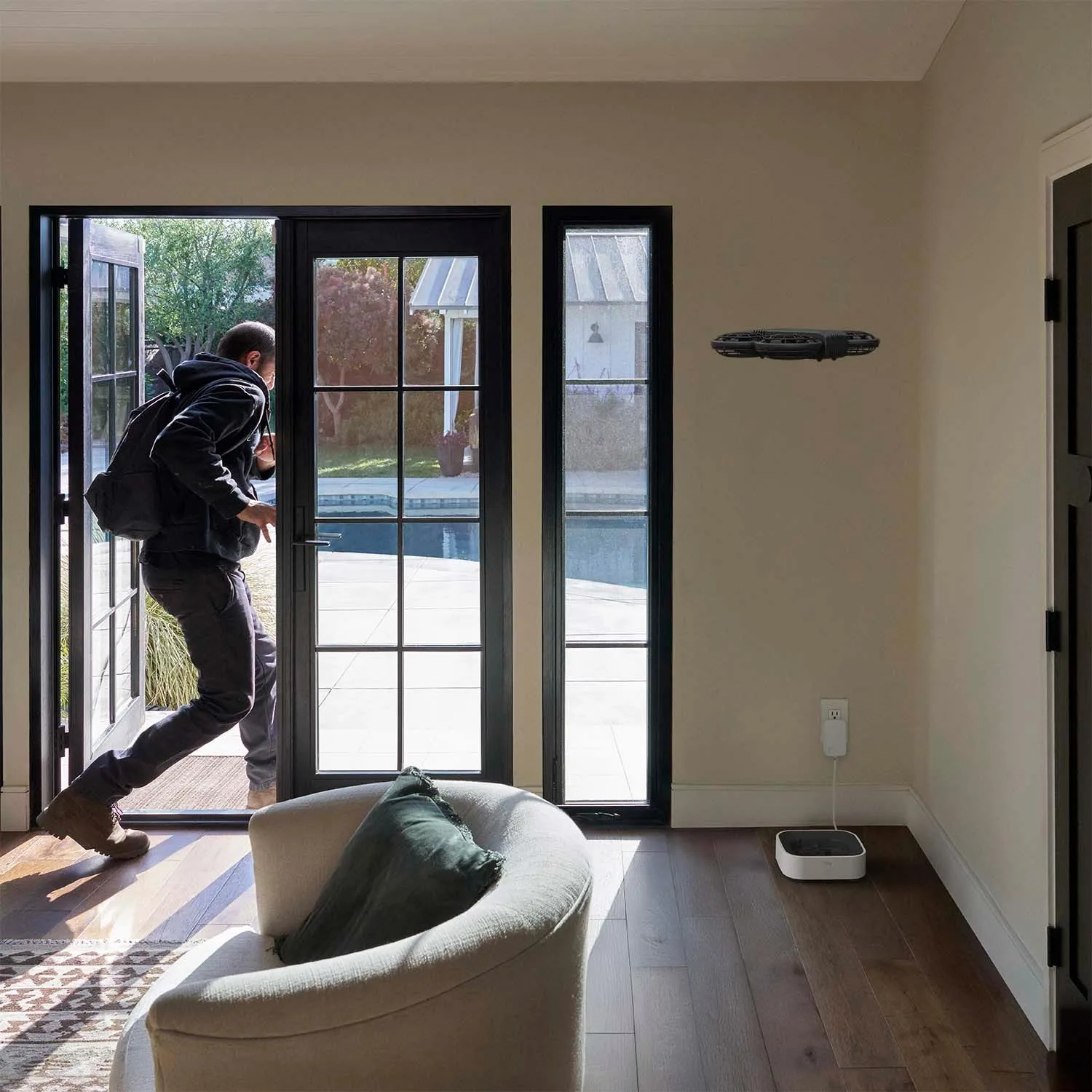
It also fits homes where the floor plan is open and the camera count would otherwise climb: one big living space, a loft, a house with a hallway full of doors. And it fits people who are uneasy about a camera that records all the time. The dock is the off switch, and the off switch is physical. When the Drone Cam is home, it is not watching.
It is not for anyone who wants one spot recorded around the clock. That is still a fixed camera’s job. It is not for anyone who wants to talk through a camera or hear what is happening in a room. And it is not for anyone who does not want a subscription to get the full product. The Drone Cam is a second camera for a Ring house, not a first camera for a new one.
Ring first teased this idea in 2020, and the founder said at the launch that the company has been working on a flying camera since 2016. Six years from tease to ship date is a long time to wait for a product, and the FCC still has to sign the last page. But the thing itself is finally real. For $249.99, you get a camera that flies to the problem instead of waiting for the problem to walk past it. Whether that is worth more than three fixed cameras and a subscription is the question Ring is asking you to answer with your email address, for now.