Molekule has built its name on a single idea: that the air in your house is dirtier than you think, and their PECO-equipped purifiers can break pollutants down at the molecular level instead of just trapping them. It’s expensive tech. The Air Pro runs north of a thousand dollars. The Air Mini+ is $360. These are flagship products from a brand that wants to be the Tesla of indoor air.
So when I saw they’d launched a $99 ultrasonic humidifier with a mood light, I had questions.
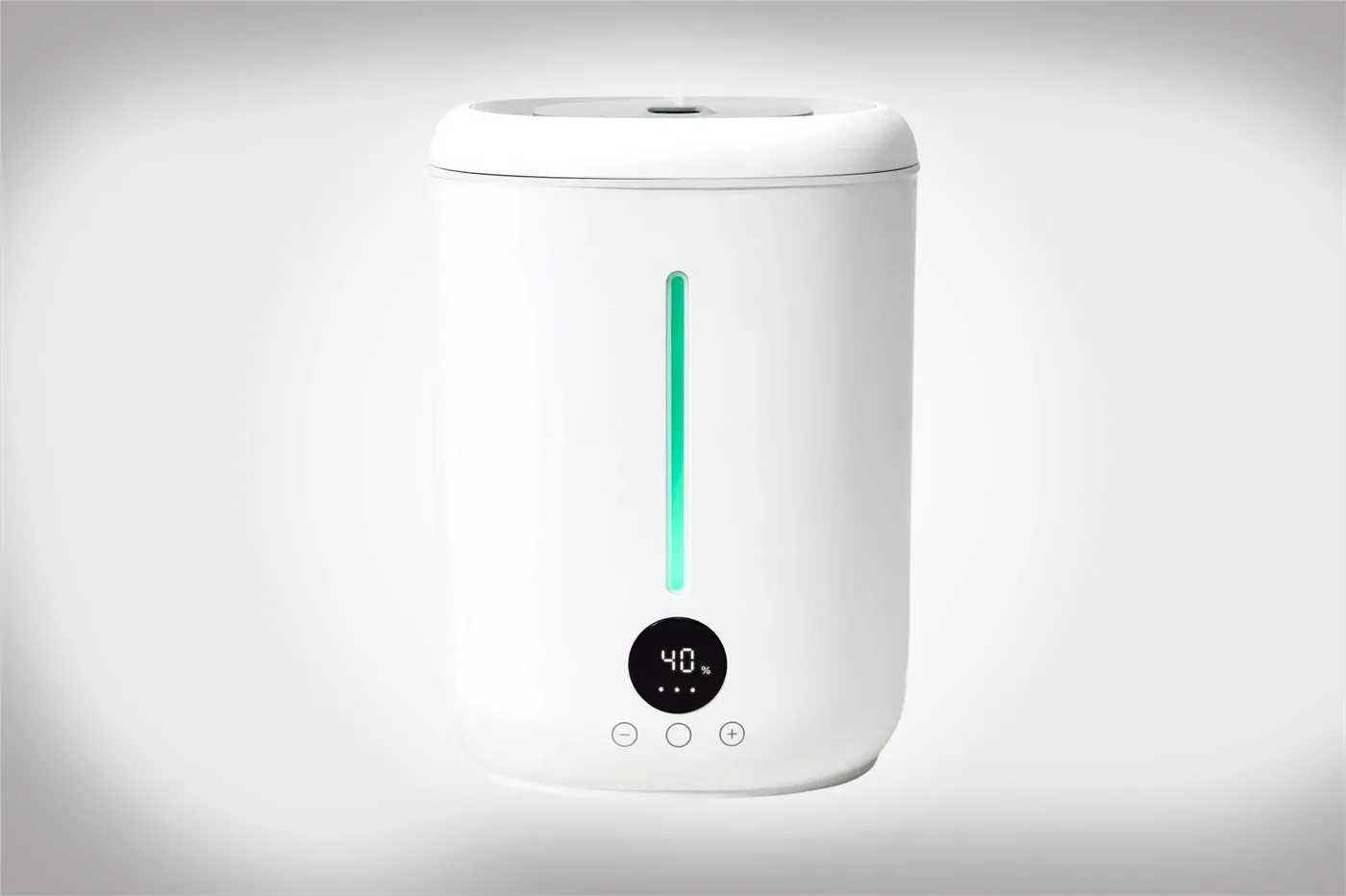
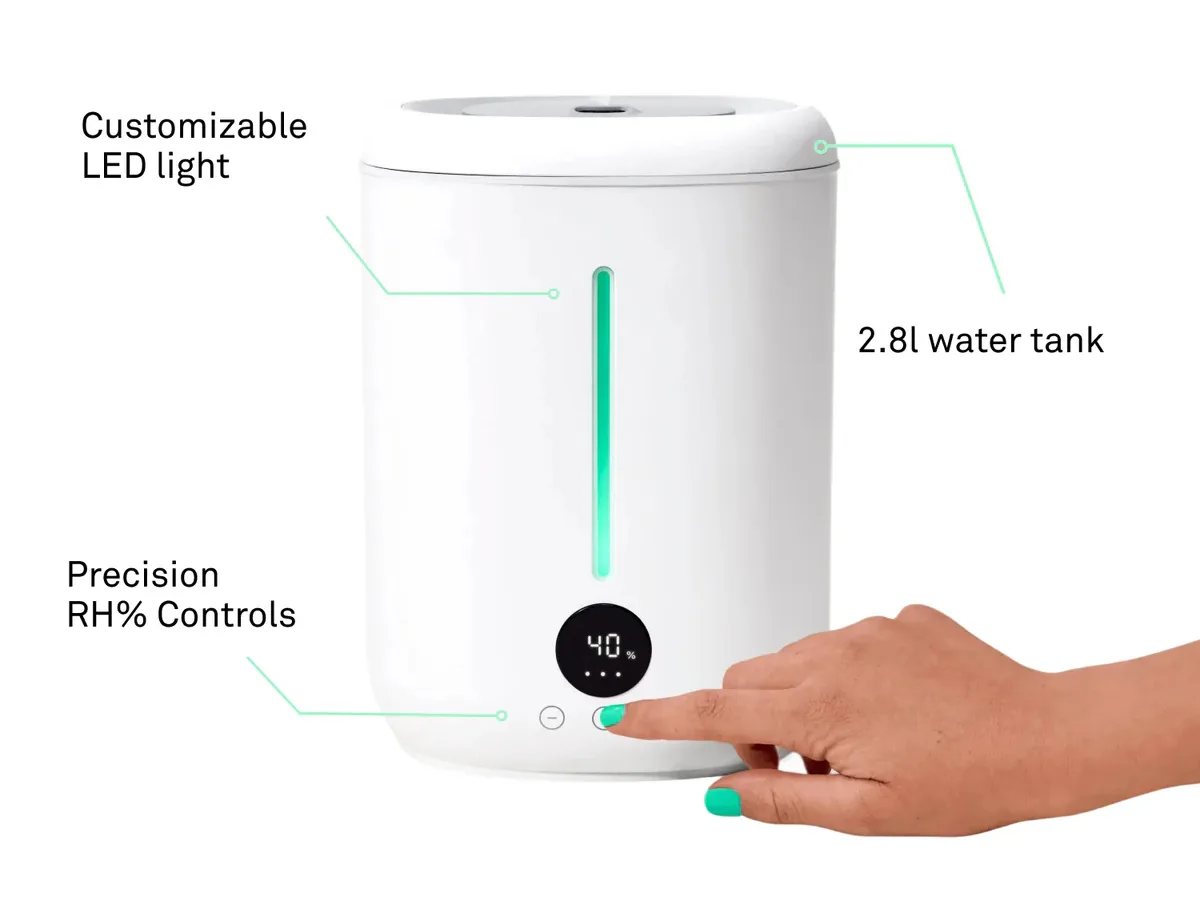
The product is called Glow, part of a new sub-line called Mo, and on paper it’s a perfectly fine smart humidifier. 2.8 liter tank, app control, auto mode, nine programmable light colors, sleep timers, runs under 35 decibels at full tilt. It’s the kind of thing Levoit, Canopy, Dreo, and a half-dozen Amazon brands already make for less money. Which is exactly the problem I’m trying to work through before I buy one.
The Brand Name Is Doing a Lot of Heavy Lifting Here
Here’s what I keep getting stuck on. PECO is Molekule’s whole thing. It’s the technology, the patent, the FDA-cleared 510(k) classification on their flagship purifiers, the reason the brand exists. The Glow doesn’t have it. It’s a humidifier. Humidifiers don’t filter air, they add moisture to it, and ultrasonic humidifiers have been a commodity category for at least a decade.
So the value proposition isn’t “this is the best humidifier ever made.” It’s “this is a humidifier from a company you already trust for air stuff.” That’s a real argument if you already own a Molekule purifier and want one app to control everything. It’s a much weaker argument if you’re shopping humidifiers cold and comparing it against a Levoit Classic 300S that costs half as much and pulls down four-and-a-half stars from forty thousand Amazon reviewers.
Molekule also has a complicated past with consumer-facing claims. The FTC came after them in 2022 over performance assertions on their original purifiers, and while the current FDA-cleared lineup has cleaned that up, the brand-as-shorthand-for-credibility argument has some asterisks. I’m not bringing that up to dunk on the company. I’m bringing it up because “trust the name on the box” is doing real work in their marketing for Glow, and it’s worth knowing what you’re actually trusting.
What I Actually Like About It on Paper
A few things genuinely caught my attention. The under-35-decibel rating is the spec I care about most because I sleep light and my office is also my recording space. Most humidifiers in this price range hum, gurgle, or click. If Glow really does run that quiet at full mist, that’s worth something on its own.
The Night Glow light feature is the one I’m split on. Part of me thinks a programmable ambient light is exactly the kind of feature a $99 humidifier doesn’t need and adds twenty bucks to the cost. The other part of me already has a Hatch on my nightstand and a bias light behind my desk monitor, so apparently I am the target market for ambient glow whether I want to admit it or not. If Glow can replace one of those, the math changes.
The dishwasher-safe parts are also a quiet win. Anyone who’s owned a humidifier for more than a season knows the real long-term cost is the gunk that builds up inside the tank, and most ultrasonic units are a pain to clean properly. Throwing the parts in the dishwasher is the kind of thing you don’t appreciate until you’ve spent ten minutes scrubbing mineral scale with a bottle brush.
What I’m Skeptical Of
The smart features are where I want to see receipts. App-connected humidifiers tend to fall into two camps: the ones where the app actually adds something (real humidity sensing, scheduling, multi-device control) and the ones where the app is a marketing checkbox that lets the brand charge thirty extra dollars. Auto Mode that senses and adjusts based on relative humidity is the feature that decides which camp Glow lands in. If it works well, it’s a real upgrade. If it just runs on a timer and calls itself smart, it’s a sticker price problem.
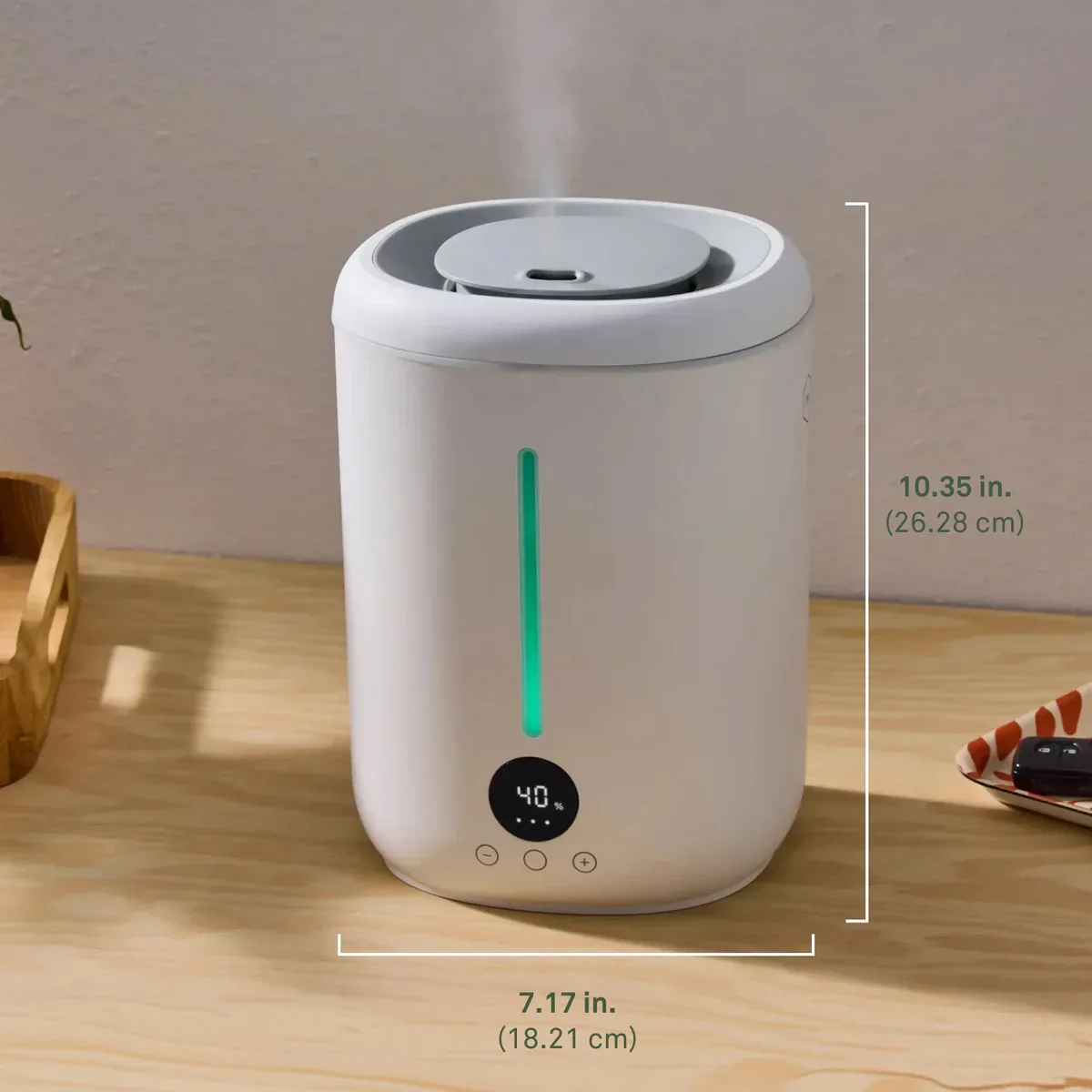
The 2.8 liter tank is fine for an office or a small bedroom. It is not fine for a large primary bedroom that needs to run all night through the dry months, which is exactly the use case I’d be testing it in. Joe-in-Edwardsville-in-February burns through humidifier water fast.
And the price. $99 isn’t cheap for a humidifier without filtration. The same money buys you a Levoit OasisMist 4.5L with a much bigger tank, or gets you almost to a Canopy filtered humidifier that addresses the actual concern people have with ultrasonic units (white dust, mineral content, mold growth). Glow doesn’t filter the water. Most ultrasonic units don’t. But at this price point, that omission is starting to feel like a real gap.
Where This Leaves Me
I’m reserving one. Molekule’s site has it listed as “Restocking soon,” which gives me time to keep researching and lock in a unit for a real long-term test. I’ll run it in the bedroom for at least a month, ideally through a stretch of dry winter air, and I’ll specifically be testing whether the auto humidity sensing actually maintains a target RH or just runs at a fixed mist level. I’ll compare it head-to-head against the Levoit unit currently in my office. I’ll see if the Night Glow earns its keep or if it’s a feature looking for a problem.
If it ends up being a quietly excellent humidifier with a useful app and a light I actually want, I’ll say so. If it’s a $99 commodity humidifier in premium packaging, I’ll say that too. The Molekule name buys you the benefit of the doubt, but it doesn’t buy you a free pass.
The real review is coming. Stay tuned.


