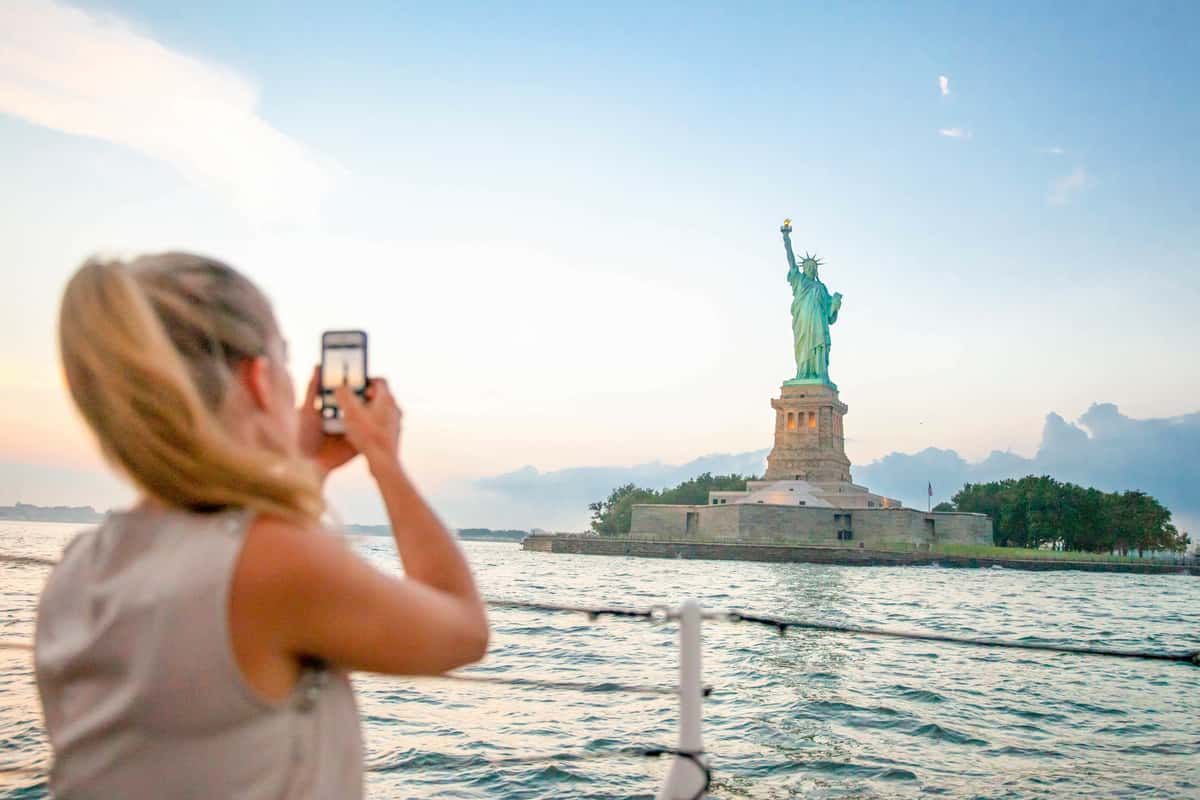
I’ve sailed more than 50 cruises across half a dozen brands, and I can count on one hand the number of times the Great Lakes came up in conversation with another cruiser. That’s about to look really stupid in retrospect.
Next month, American Cruise Lines launches its inaugural Great Lakes season with American Patriot sailing round-trip out of Buffalo. They become the seventh cruise line operating in the region for 2026, joining Pearl Seas, Victory, Viking, Ponant, Hapag-Lloyd, and St. Lawrence Cruise Lines. Ten ships total. Roughly 175,000 passenger visits projected. A regional economic impact expected to top $300 million, up 25 percent year over year.
For a cruise market most Americans don’t even know exists, that’s a wild trajectory.
How a Sleepy Region Became a Crowded One
The Great Lakes have always had cruise traffic. What’s changed in the last few years is the caliber of the brands paying attention. When Viking parked Octantis and Polaris on the lakes, that was the signal. Viking doesn’t move ships into a region as a hobby. They go where they think the demand is and where the per-passenger spend justifies the operating cost. Hapag-Lloyd bringing Hanseatic Inspiration is the same kind of bet from a brand that does not chase fads.
Then you have the smaller, U.S.-focused operators who’ve been there longer. Pearl Seas with the Pearl Mist. Victory with Victory I and Victory II. St. Lawrence Cruise Lines running the Canadian Empress. Ponant flexing its expedition fleet on Le Bellot and Le Champlain. And now American Cruise Lines pushing in with the American Patriot out of Buffalo.
That’s seven distinct brand strategies competing for the same lakes. A few years ago, you could fit the entire Great Lakes cruise scene on a napkin. Now it looks like a real market.
What’s Actually Driving It
A few things are going on at once.
The first is geography arbitrage. Americans, particularly post-2020, started looking harder at domestic travel. The Great Lakes deliver the kind of scenery and history that European river cruisers have always sold, except you don’t need a passport, you don’t lose a day to a transatlantic flight, and you’re spending dollars instead of euros. Mackinac Island, Niagara Falls, the locks at Sault Ste. Marie, Georgian Bay, the Apostle Islands, Canadian port stops in Toronto, Montreal, and Quebec City. That’s a serious itinerary list.
The second is the demographic fit. Great Lakes cruising skews older, more affluent, more interested in enrichment than entertainment. No water slides. No casinos. No 5,000-passenger megaships. The whole region runs on small ships with high crew-to-guest ratios and lecture programming, and that’s exactly what a chunk of the cruise market is asking for right now.
The third is the U.S.-flagged angle. American Cruise Lines makes a big deal out of being the only fully U.S.-flagged small ship fleet, and on the Great Lakes that’s not just marketing. Domestic flagging changes what itineraries are legally workable under the Jones Act and Passenger Vessel Services Act, which has historically constrained how foreign-flagged ships can string together U.S. ports. American Patriot can do round-trip Buffalo cleanly. A foreign-flagged competitor doing the same route has to thread a more complicated needle.
Where American Cruise Lines Fits
I’ve been watching American Cruise Lines for a while because they keep doing the unglamorous thing that actually matters: building ships and adding routes. Twenty-eight ships, more than 50 itineraries, 35-plus states. They are not chasing the Caribbean. They are systematically owning the domestic small-ship market while everybody else fights over the same Mediterranean and Alaska summers.
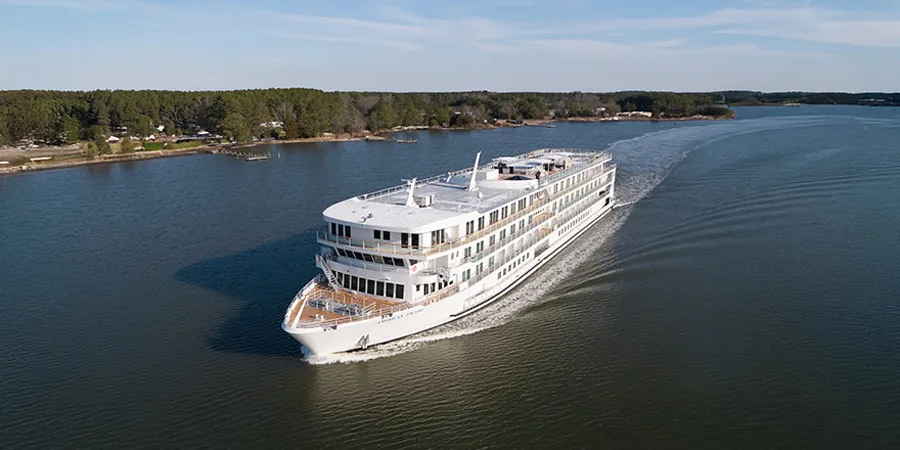
Their May 2026 calendar tells you everything about the strategy. American Encore launches on the Columbia and Snake Rivers and gets christened in Lewiston, Idaho on May 12. A 36-day Civil War Battlefields itinerary leaves New Orleans the same week. A 52-day cruise from Portland, Oregon to Boston rolls out at the end of the month. And then American Patriot opens the inaugural Great Lakes season on May 22 with a 9-day Great Lakes and Thousand Islands cruise out of Buffalo.
That’s not a marketing month. That’s a company doubling down on the parts of cruising that nobody else can run because nobody else is U.S.-flagged at scale.
What I Think Happens Next
The Great Lakes season is short. May to October, give or take. Capacity is constrained because the locks and port infrastructure can only handle so much. Which means the region is going to behave more like Alaska in the early 2000s than the Caribbean: a small number of operators, growing demand, prices creeping up every year, and itineraries that fill earlier than people expect.
I’d bet on three things over the next 24 months. First, more small luxury brands testing the waters. Seabourn, Silversea, even a Windstar move would not surprise me at all. Second, pricing continuing to climb past where it should be on a comparable mileage basis, simply because supply is capped. Third, more U.S. departure ports getting in the game. Buffalo is new in 2026. Cleveland, Detroit, Milwaukee, Duluth all have legitimate cases.
Here’s the honest part. I haven’t sailed the Great Lakes yet. After 50-plus cruises across pretty much every other domestic and international itinerary I’ve cared to try, that feels like a real gap, and I think a lot of cruisers are about to realize the same thing about their own travel logs. A 9-day round-trip out of Buffalo, hotel stay in Syracuse included, is genuinely on my radar for a future sailing. American Patriot’s debut feels like a good time to finally book one.
If you’ve been waiting for the moment to take the Great Lakes seriously, this is probably it.