


5 minute read
Insta360 didn’t wait for DJI to make the first move. The Luna Ultra launched today, a full-blown pocket gimbal camera co-engineered with Leica, and it landed before DJI even pulled the covers off the Osmo Pocket 4P. As someone who has carried an Osmo Pocket 3 through airports, cruise terminals, and more shore excursions than I can count, I’ve been waiting for this one. I haven’t gotten my hands on a Luna Ultra yet, but I’m actively working on getting a unit in for a full review, and after going through everything announced today, I have plenty of thoughts.
What Insta360 Actually Built
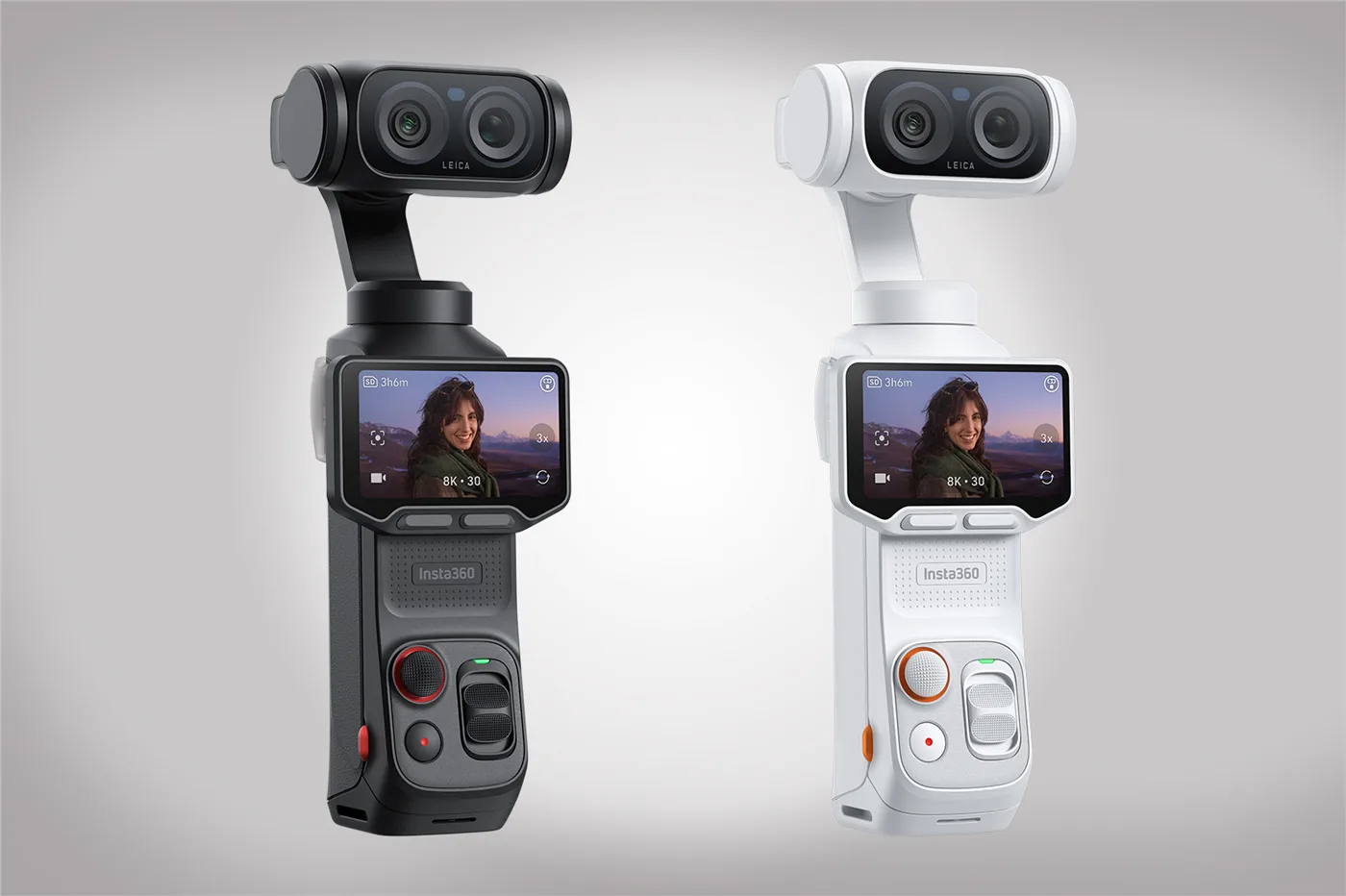
The Luna Ultra is Insta360’s first true gimbal camera, and they didn’t ease into the category. The main camera pairs a Leica Summicron lens with a 1-inch sensor that shoots 8K30 with Dolby Vision, plus 10-bit I-Log for anyone who grades their own footage. There’s a second telephoto lens with a 1/1.3-inch sensor riding alongside it, giving you up to 12x zoom with 6x of it lossless. All of that sits on a three-axis mechanical gimbal in a body that weighs 233 grams.
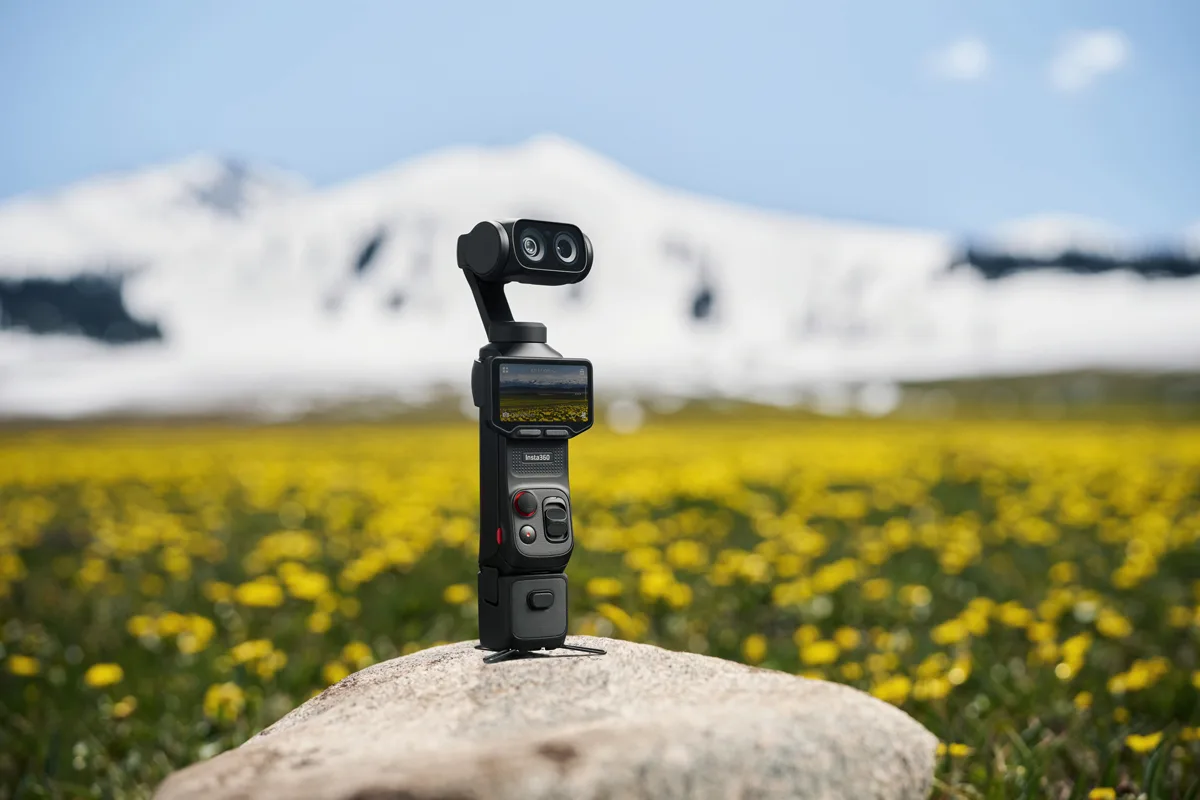
The spec that actually made me sit up is the screen. The 2-inch OLED touchscreen detaches from the camera and becomes a wireless remote and monitor with HD transmission up to 65 feet, and it has its own built-in microphone. Set the camera down, walk into frame, monitor your shot, and record your audio from the remote in your hand. For a solo creator, that’s not a gimmick. That’s the feature.
Rounding it out: 47GB of internal storage with microSD support up to 1TB, a battery rated around four hours that fast-charges to 80% in about 23 minutes, built-in timecode for multi-camera sync, and wireless support for the Insta360 Mic Air and Mic Pro. It comes in Cosmic Black or Stellar White for $769.99, available now.
How It Stacks Up Against My Pocket 3
The Osmo Pocket 3 has been my everyday carry for a reason. The 1-inch sensor, the rotating screen, the fact that it disappears into a jacket pocket on a port day. It earned its spot. But reading through the Luna Ultra’s sheet, I kept finding answers to things I’ve quietly worked around for two years.
The Pocket 3 has no real zoom to speak of. On a ship, that matters more than people think. When you’re trying to grab sail-away footage of the coastline or pull in a detail across the pool deck, you’re cropping in post and praying. A dedicated telephoto with 6x lossless zoom solves a problem I run into on almost every sailing.
The screen is the other one. The Pocket 3’s rotating display is clever, but it’s attached to the camera, which means every static shot of me walking into frame involves a guess and a replay check. A detachable monitor in my hand changes how I’d shoot entire segments. And four hours of battery is a real number; the Pocket 3 has me carrying a charging brick on long excursion days.
DJI still has a counterpunch coming with the Pocket 4P, and I’m not pretending otherwise. But Insta360 shipping first, at $769.99, with Leica glass and a feature DJI doesn’t currently offer? That’s a confident swing.
The Ecosystem Is the Quiet Advantage
Here’s the part that matters specifically for me. I already shoot Insta360. Their cameras have been part of my travel kit for a while, which means the app, the editing workflow, the AI-assisted edits, the way footage moves from camera to phone to post, all of that is muscle memory at this point. Adding the Luna Ultra wouldn’t mean learning a new system. It would mean consolidating one.
Right now my travel kit is a Sony a7 IV for the hero shots, the Pocket 3 for stabilized walk-and-talk, and Insta360 for everything immersive. The Luna Ultra potentially collapses two ecosystems into one app, one accessory line, one workflow. When you’re packing for ten days at sea and every cubic inch of the camera bag is contested space, that consolidation is worth real money.
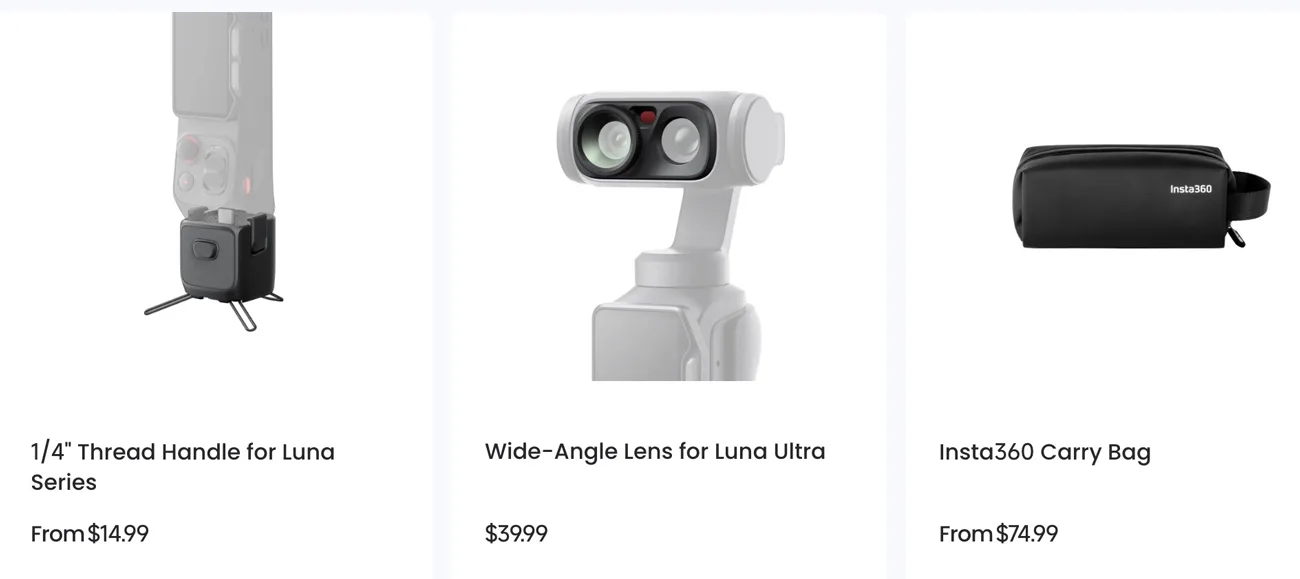
The Insta360 Luna Ultra accessory list also reads like it was written for travel creators: a wide-angle adapter that pushes the field of view to 108 degrees, ND filters, Black Mist filters, and a POV head tracker for hands-free shooting. I can already picture half of these in use on a gangway.
What I Want to Test First
The spec sheet is one thing. Whether the telephoto footage holds up in mixed lighting, whether the detachable remote stays connected on a windy top deck, whether 8K files are workable in a hotel-room edit session, those questions only get answered with the camera in hand. That’s the review I want to make, and I’m working on getting a unit now.
If you want to see that review the moment it drops, subscribe to the YouTube channel and keep an eye on my socials. And if you’ve already ordered a Luna Ultra, tell me in the comments what you want me to test first.