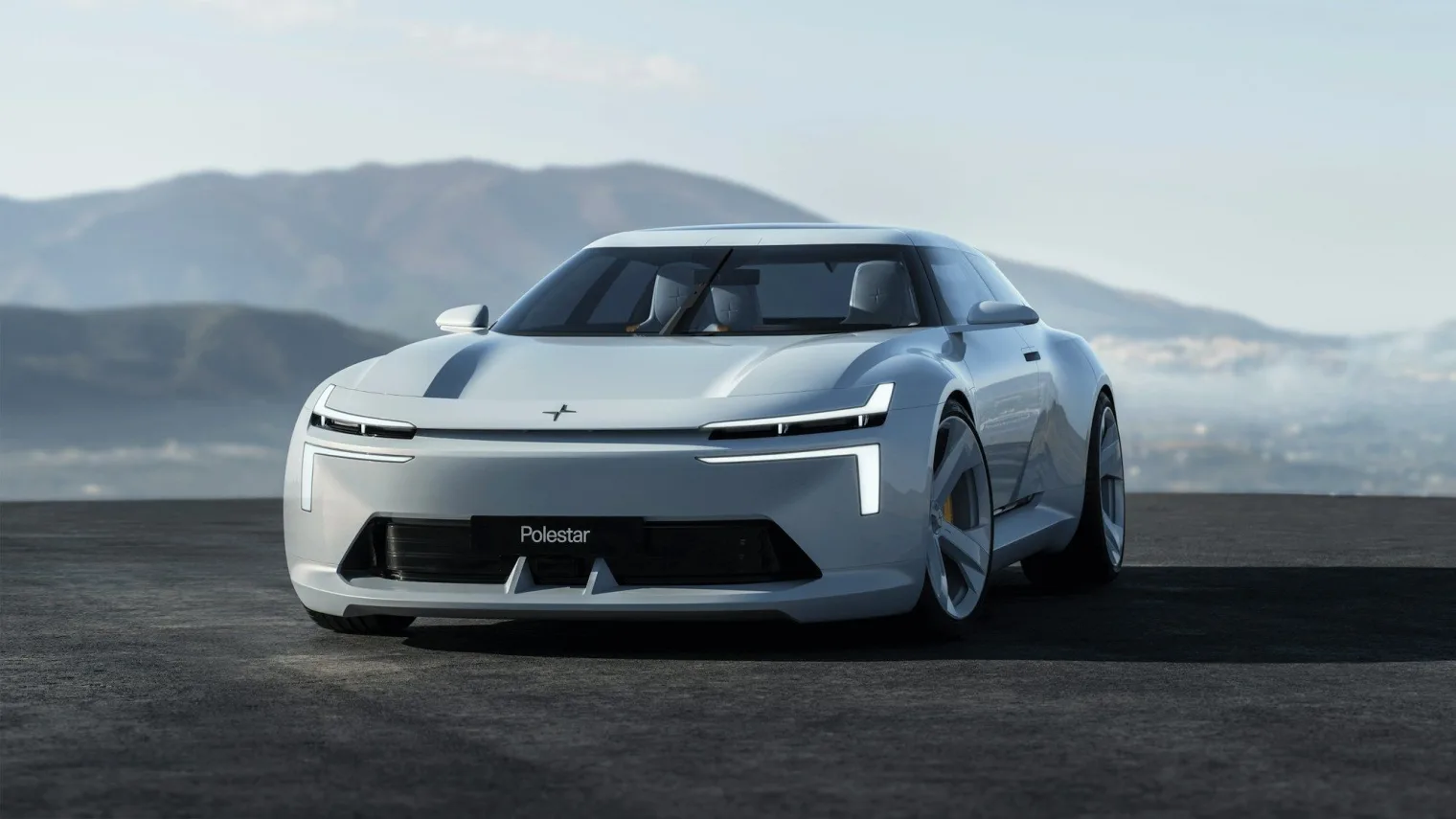
Polestar just revealed the future of its design, and the first thing that caught my eye was not the shape. It was the buttons. The Formula 2030 concept, unveiled on November 10, is a low four-door electric sports car. It previews the next Polestar 2 and the Polestar 7. I have not seen this car in person, and I have not driven it. Polestar has not said it will build it. What follows comes from Polestar’s own concept page and Electrek’s full breakdown. Polestar is betting its next cars on sharper design and a cockpit that puts the driver back in charge.
A Sports Car That Sits Between Two Polestars
Polestar calls the Formula 2030 a compact practical four-door sports car that sits within its own segment. It is 4,680 mm long, 2,021 mm wide, and 1,350 mm tall. The wheelbase is 2,780 mm. It is about three inches longer and five inches lower than the Polestar 2 on sale today. Polestar says the concept lands somewhere between the next Polestar 2 and the Polestar 7 in size.
The proportions are classic sports car. Long hood, short overhangs, the cabin pushed back over big rear haunches, and 22-inch centre-lock wheels. Gold Brembo calipers sit behind those wheels. The rear doors are hinged at the back. There is no B-pillar, so the whole side opens up to four individual seats. This is the first show car built under head of design Philipp Römers, who joined from Audi in 2024. Römers calls it a bold evolution, not a revolution.
Polestar says various design attributes from the car will show up on the next Polestar 2, planned for 2027. They will also show up on the Polestar 7, a compact SUV expected in 2028 and built in Europe. Those are two of the four new models Polestar plans to launch in three years. The concept itself will never be built. This one is a preview, not a promise.
The Face of the Next Polestar 2
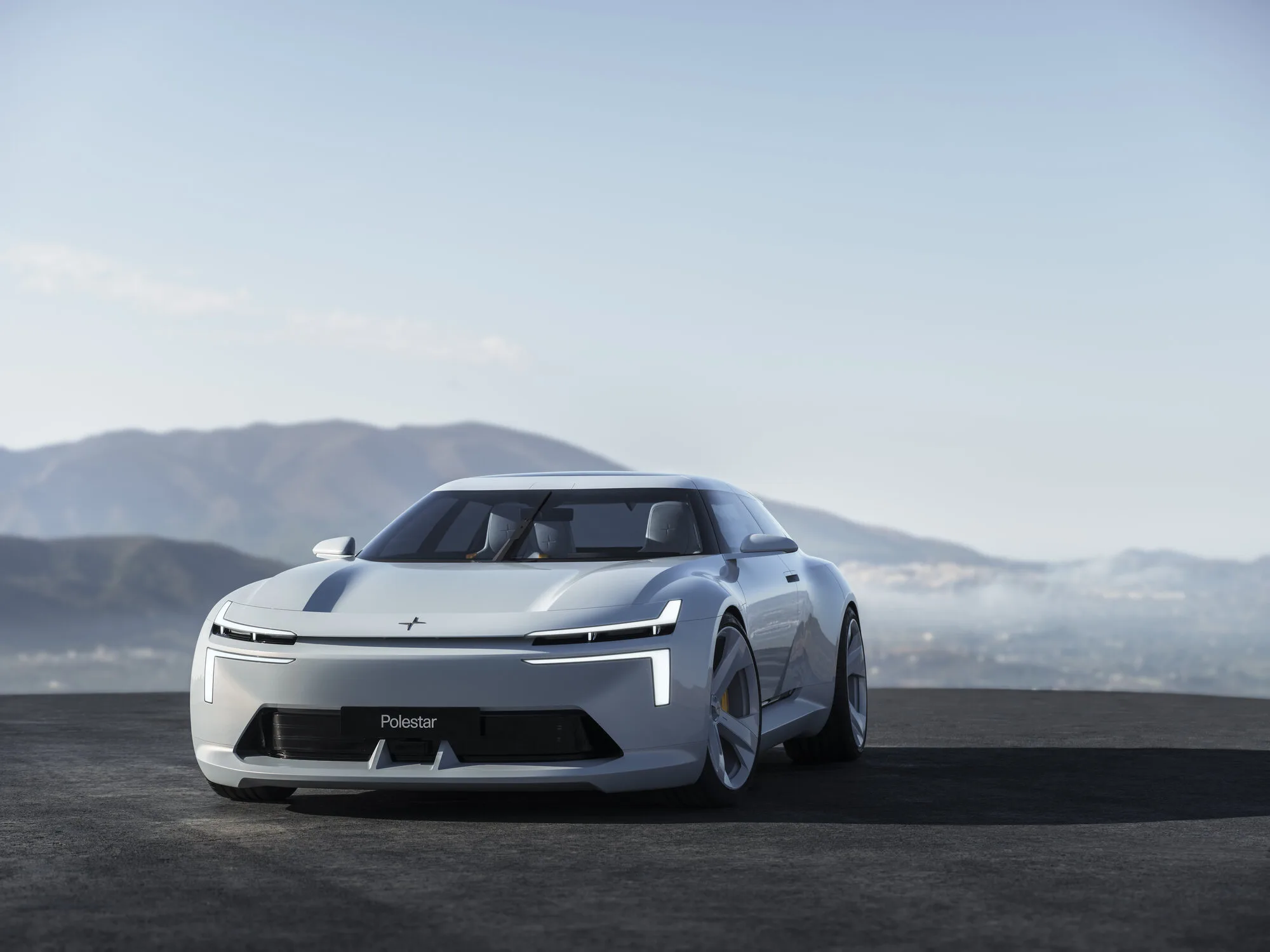
The front of this car is the part that matters most. It is the part you will actually see on the road. Polestar kept its Dual Blade headlights. It set them into an aero wing over a shark nose and a deep splitter. Polestar says this is the face of the next-generation Polestar 2 planned for 2027.
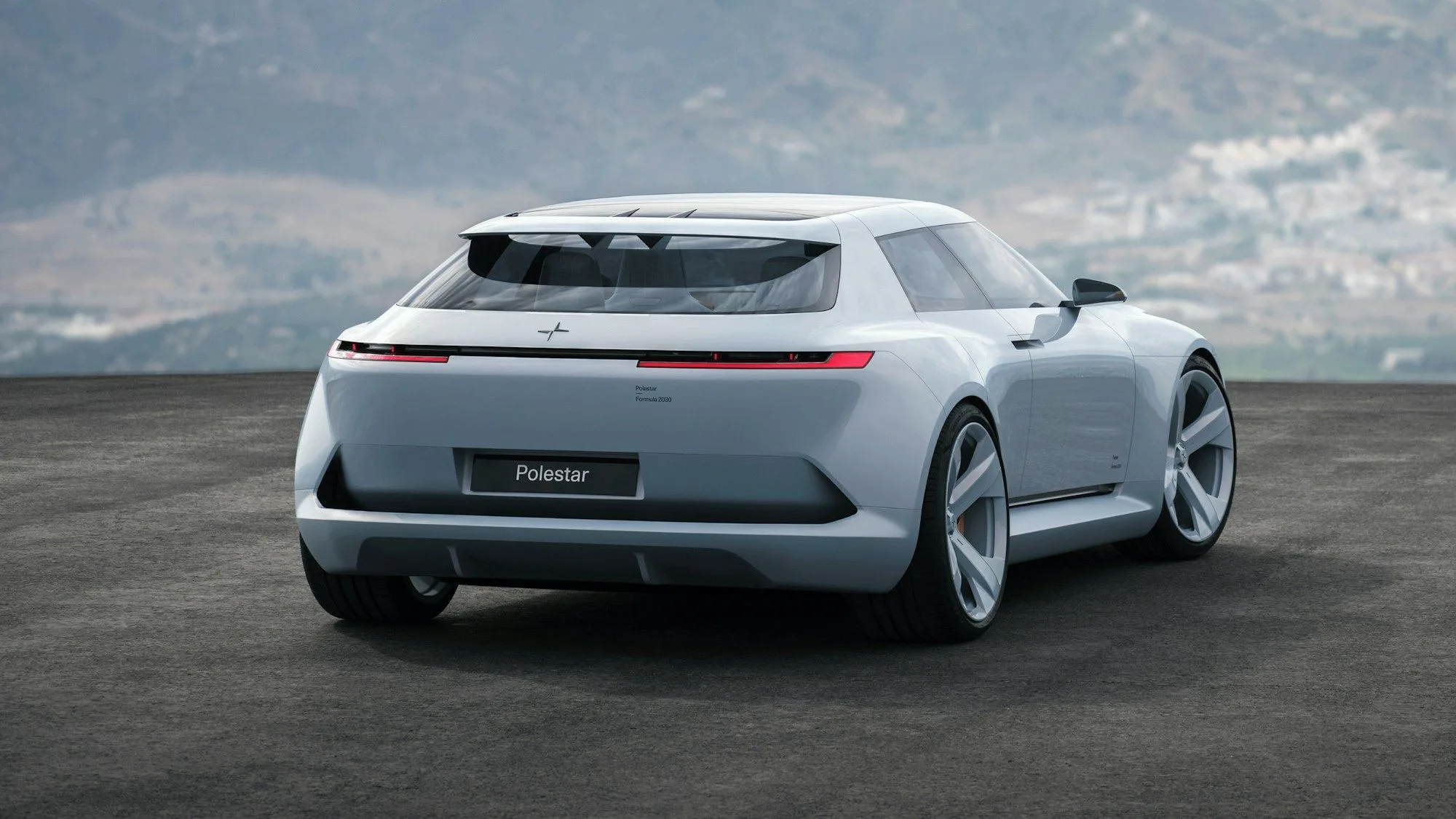
The details reward a closer look. There is a single vertical windshield wiper, like on a race car. It sits on a wraparound windscreen that nods to the first Polestar 2. A LiDAR unit hides under an aerodynamic shroud, and only shows itself when the car is driving autonomously. At the back, Polestar dropped the full-width light bar that sits on just about every EV today. In its place are Single Blade rear lights, introduced here ahead of series production. The rear wing is fixed centrally through lit mounts.
Buttons Are Back
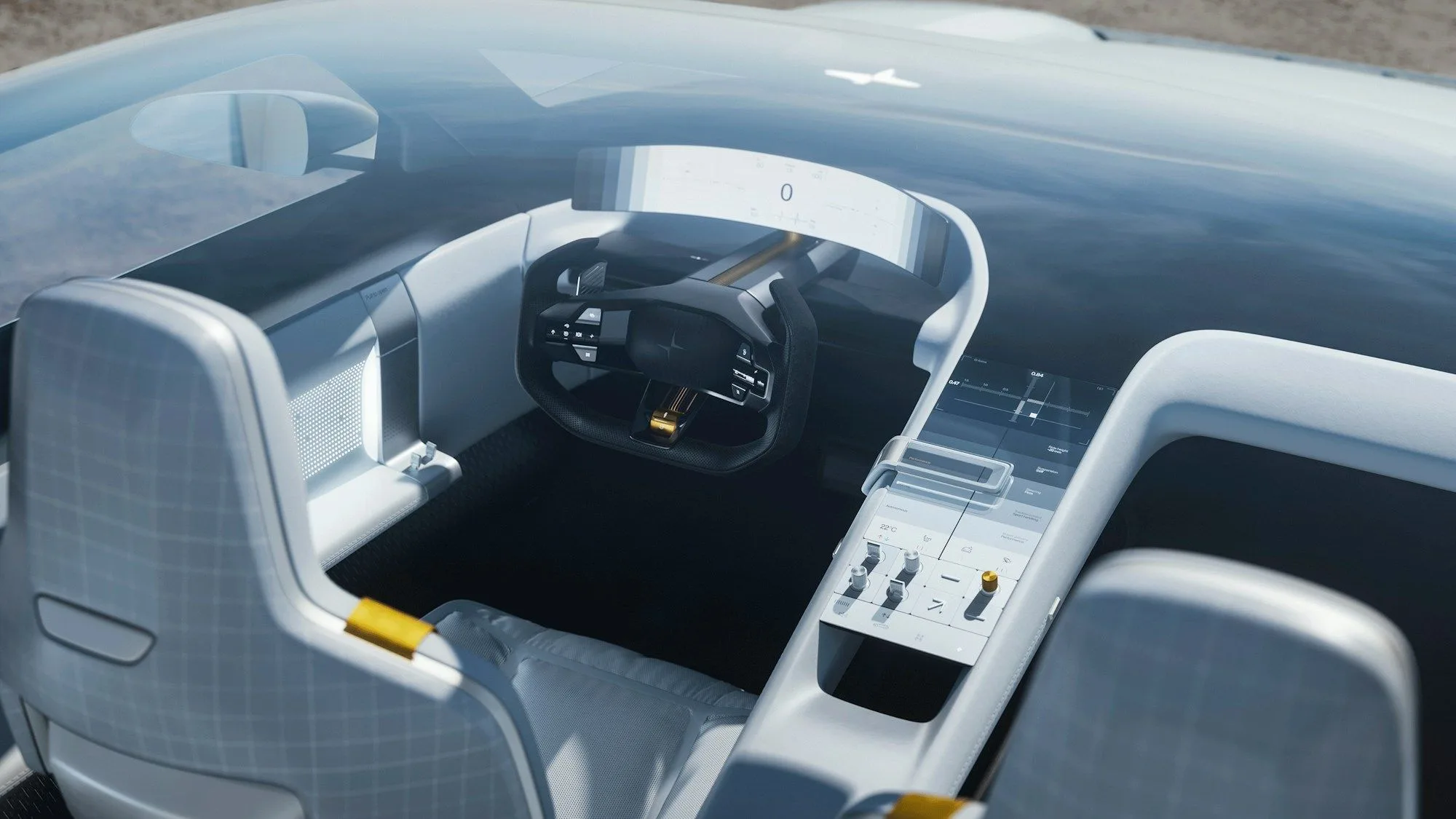
The interior is where Polestar makes its biggest statement. It is the one I care about most. The cockpit is built around the driver. A curved 20-inch HyperDIM display is mounted directly on the steering column. A 12.2-inch centre screen sits in the centre tunnel. Polestar added a panel of eight physical controls for the most-used functions. Owners can swap between types of controls, like rocker switches or rotary knobs. They can program what each one does.
Polestar says it is committing to rebalance the mix of physical and digital. Juan Pablo Bernal, the company’s head of interior design, puts it plainly. As a performance brand, Polestar sees a renewed focus on the driver. So it is re-balancing the digital and the physical. It is introducing physical buttons and controls. I have written before about how much I want carmakers to bring buttons back. This is the clearest sign yet that one of them is listening.
The cabin changes with the drive mode. There are three of them: Performance, Normal, and Autonomous. In Performance, the centre screen drops flush into the console. The steering wheel and its display pull closer to the driver. In Autonomous, the wheel and the seat move away from each other as the car takes more control. The steering is steer-by-wire, with no mechanical column. Haptic feedback is there to gauge road feel and wheel resistance. Mercedes is already doing steer-by-wire on the 2027 Mercedes-Benz EQS, and I wrote about that car earlier this year.
Sustainability Is the Other Story
The seat backs are made from a bio-based composite. It combines European flax and bio-based polypropylene in a signature grid weave. The doors use a mono-material concept, with all layers from the same polymer family. That prepares them for closed-loop recycling. The seat frame and cross-car beam are made from low-emission galvanised steel.
The colour is new too. Nitrogen is a concept-specific shade that reacts to natural light. It flows over the whole car. Swedish Gold is the brand’s performance signature. It shows up on the Brembo calipers, the valve caps, the interior detailing, and the seat belts. The cargo area is the strangest part of the car. The rear opens as a clamshell, and the trunk floor is transparent. Bespoke Polestar bags are strapped down underneath it with Swedish gold straps. Up front, the frunk holds two race helmets and a fire extinguisher, framed by a gold strut brace. Polestar itself calls the rear UFO-esque, and I am not going to argue with that.
What It Means, and the American Problem
Now for what is missing. Polestar did not release a single powertrain spec. No battery size, no range, no power output, and no price. This is a design study, and Polestar is not saying it will build it. Judge it on the design ideas, not on numbers that do not exist yet. The current Polestar 2 is a useful baseline. The Long Range Single Motor version runs an 82 kWh battery. It offers up to 320 miles of EPA range. The Formula 2030 sets the bar for how the next one should look.
There is a harder question for American readers. Polestar is shut out of the US under the federal connected-vehicle rule. The US Bureau of Industry and Security did not grant the authorisation Polestar sought. It wanted to sell vehicles in the United States from model year 2027 onward. That means the next Polestar 2, planned for 2027, has no clear path to American showrooms right now. A calendar-year launch in 2027 is not the same thing as a model-year 2027 car. So the picture could still change.
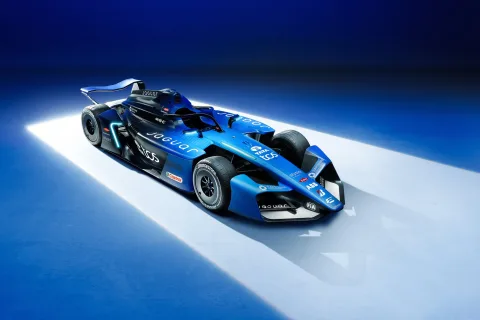
Polestar lost $842 million in the first half of this year on a negative gross margin. Design has never been Polestar’s problem. Building these cars and selling them at a profit is. If it keeps even half of this stance, it will be one of the best-looking cars in its class. Jaguar is playing the same game with the Type 01. The Rivian R2 shows how far electric design has come for regular buyers. Polestar needs to be in that conversation. The Formula 2030 is its opening line.