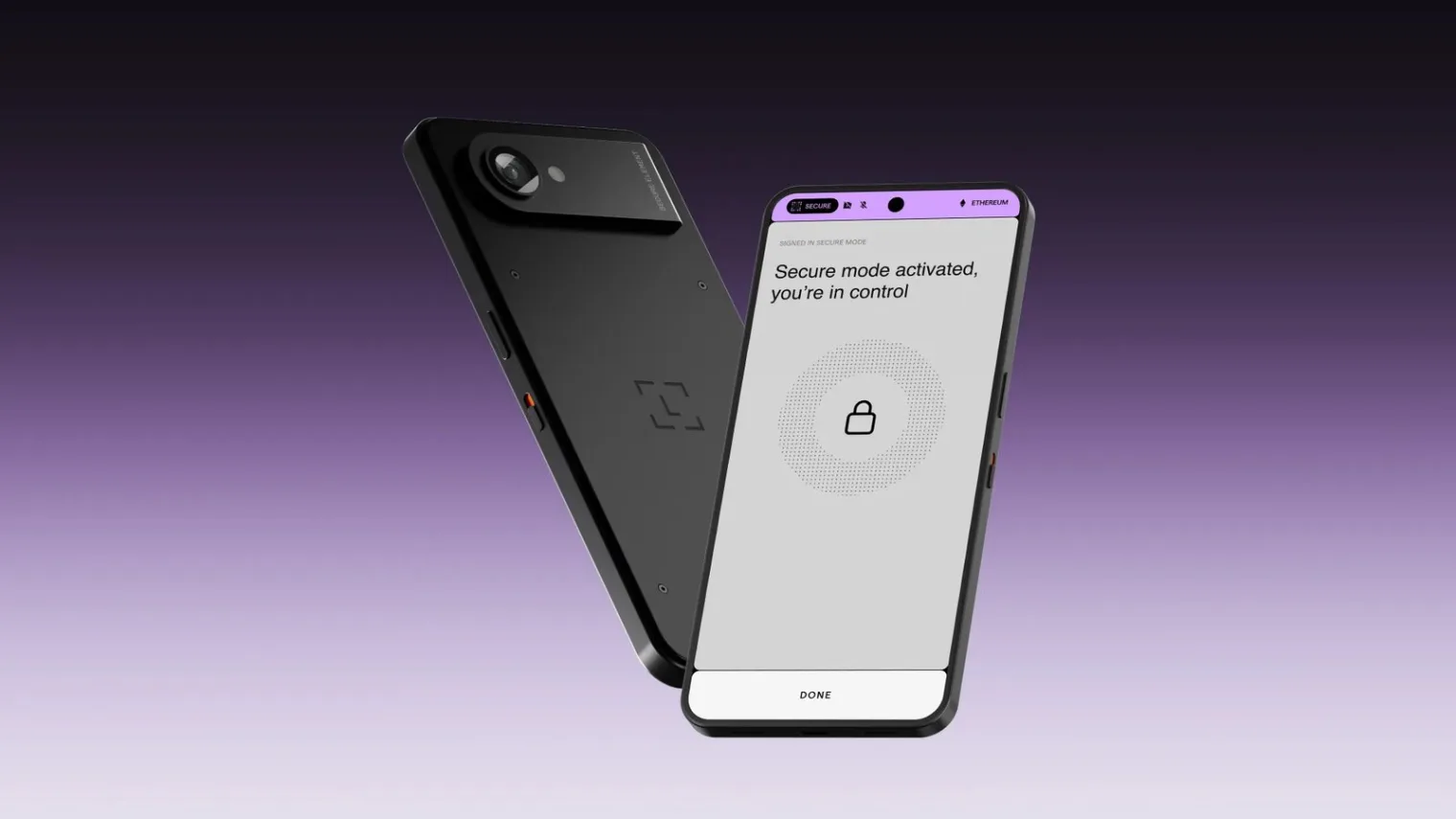
For years, people have been asking Ledger to make a phone. At its Op3n event in Paris this week, the company finally answered. Sort of. The Ledger Atom is not a phone, and Ledger is very clear about that. It is something the company claims has never existed before: a Ledger hardware signer that runs your everyday Android apps, with a secure chip, a secure screen, and Ledger OS standing guard underneath.
I have covered Ledger’s hardware for years, from the Ledger Nano Gen5 to the Ledger Flex. Every one of those devices lived in a drawer or a pocket, coming out only when it was time to sign something. The Atom is the opposite bet. It wants to be the device you carry everywhere, the one your apps live on, with the security built in rather than bolted on.
Two modes, one device
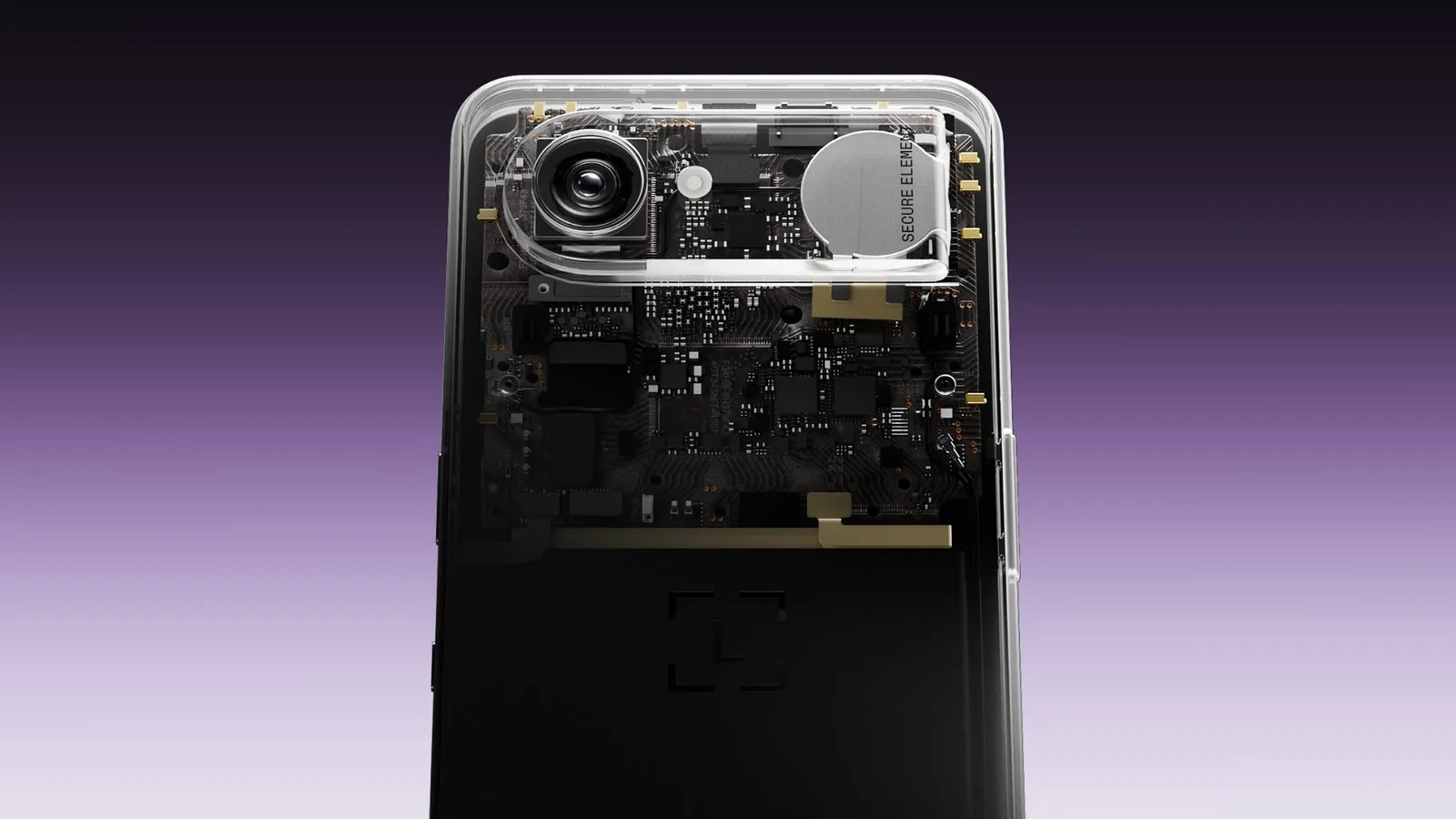
Here is the core idea. The Atom runs Android Open Source Project software for everyday life, and Ledger OS on a Common Criteria EAL6+ certified Secure Element for everything that matters. An FPGA chip keeps the two worlds physically separated. When you are about to do something sensitive, like approving a payment or a transaction, the device switches into Secure Mode automatically. Ledger OS takes over the entire display, the camera, microphone, and sensors like the accelerometer get cut, and a strip at the top of the screen called the Secure Bar lights up. Only the secure element can write pixels to that bar, so it cannot be faked by malware. Your Ledger OS PIN, which is separate from the PIN or fingerprint that unlocks the everyday side, confirms it is really you.
That separation matters because of a blunt truth: even a malicious Android app can only send a transaction request. It cannot change what you see once that request reaches Secure Mode. The real details still show up on the trusted display for your approval. Nothing moves without your physical sign-off. Ledger calls the concept Proof of You. You prove who you are and what you approve, without handing your personal information to another database.
There is also a physical Privacy Switch that cuts the camera and microphone at the hardware level, plus encrypted messaging where the keys live in the secure chip. Drop a secure message into any app on the device and only the intended recipient, on another Atom, can read it.
The security pitch, and why the timing matters
The hardware reads like a flagship phone spec sheet that went to security school. A 6.77-inch AMOLED Trusted Display. A 50 MP rear camera with HDR and a 32 MP front camera. A fingerprint sensor built into the power button. 4G and 5G data over eSIM, Wi-Fi 6E, USB-C, Bluetooth 5.4, NFC, and a 4,000 mAh battery rated for more than a day. The secure element is ready for post-quantum cryptography, which matters more than it sounds: when quantum computing arrives, much of today’s cryptography breaks, and Ledger says the Atom is already prepared for the migration.
The tamper story is where the announcement gets pointed. The Atom’s enclosure and sensors are designed to detect screen removal, casing removal, and drilling in core areas, and the tamper sensors run on independent power even when the device is switched off. Ledger also says the protections would block the kind of screen-reading implants seen in recent supply chain attacks. To limit that risk further, the company plans to sell the Atom directly through its own website at first, cutting third-party resellers out of the chain. After a rough stretch for hardware wallet supply chains, that direct-sales decision feels like the real headline hiding inside the product launch.
One honest caveat from the fine print: the Atom is a data-only device. It does not make cellular voice calls, send SMS, or reach emergency services, even with an eSIM installed. Voice and video calls work only through internet apps over data or Wi-Fi. Keep your regular phone around for 911.
Built for the age of AI agents
The part of this announcement I keep coming back to is the AI angle. Ledger’s thesis is that agents are about to act at machine speed on your behalf: monitoring markets, shopping, preparing payments. The danger is an agent doing something you never approved. The Atom’s answer is Ledger Agent Intent. Your agents queue up proposals, and every request for approval lands in one place for you to review on the Secure Screen. Agents propose, humans approve, hardware enforces.
The agent toolkit, called the Ledger Agent Stack, has been live for developers since July, and Agent Intent works on the Nano Gen5, Flex, and Stax too. The Atom just gives it the best home, with OpenClaw integrated from day one. If you have ever watched an AI agent move faster than your comfort level, you understand the problem this is solving.
Ledger is not building this ecosystem alone. The Seeker app from Solana Mobile comes preinstalled, opening up more than 1,500 apps from the Solana dApp Store. Ledger is working with Payward, the parent company of Kraken, on exchange integrations that would let Atom users sign sensitive transactions on the secure screen. Cyber50, which handles secure communications for businesses and governments in the UAE, is a launch partner. And Persona, the identity verification company, is on board for what Ledger calls proof of age and identity without overexposure: prove you are over eighteen to a website, or prove who you are to your bank, without revealing more than the moment requires.
What it costs and when it ships
The Founders Edition is $849, reserved with a fully refundable $100 deposit, and the regular price after launch will be $899. That is more than double the top of Ledger’s current lineup, which runs from $69 to $399, so this is clearly not a replacement for the Nano or Flex. It is a different category, and Ledger says so outright: the company is moving from securing your crypto to protecting your entire digital life.
Shipping is estimated for the second quarter of 2027, pending certification, and Ledger is upfront that this is a reservation, not a purchase of a finished product. Specs, features, design, and even price can change before launch. The deposit is refundable in full if you cancel before paying the balance.
I am not ready to call the Atom the future of anything. A $849 reservation for a device that ships in 2027, in a category nobody has proven yet, is a leap of faith no matter how good the pitch sounds. But the logic underneath it is hard to dismiss. I have spent years telling readers to lock down their Ledgers because the threats keep getting smarter. The Atom’s bet is that the threats are about to get faster too, and that the only sane response is hardware that keeps a human in the loop. If AI agents are really about to start spending your money while you sleep, I would rather have a gate than a window.


