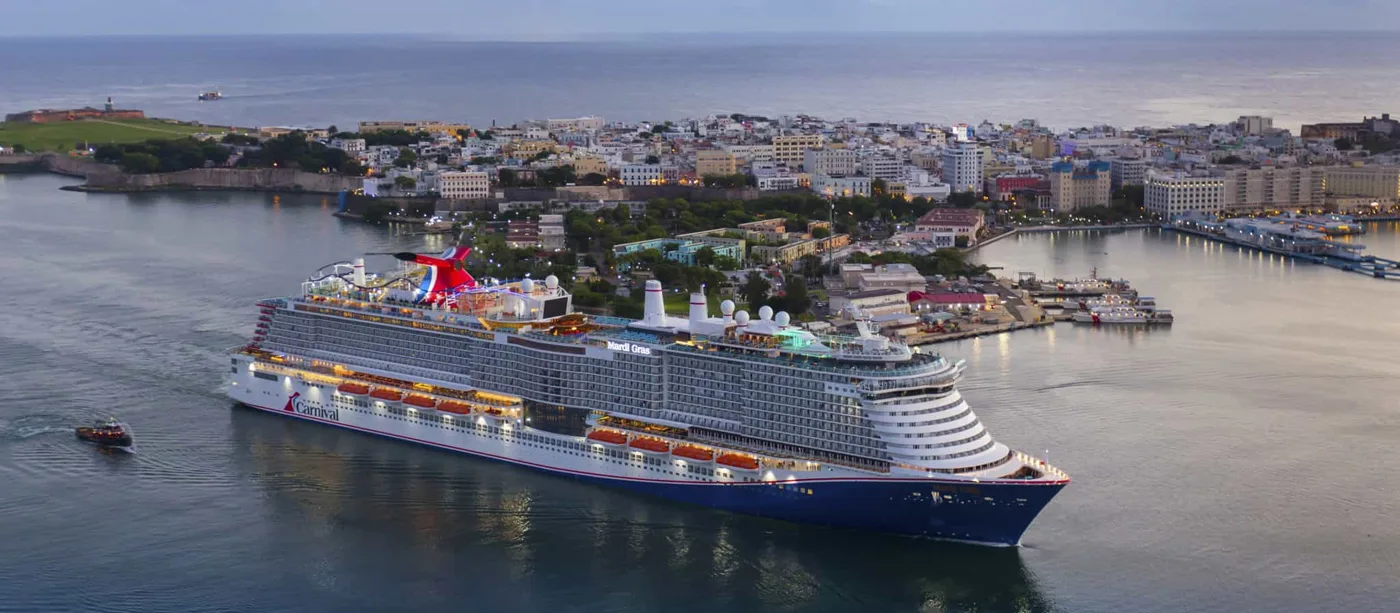
The first real decision of a San Juan port day gets made before you step off the ship, and it has nothing to do with what you want to see. It is which pier you are tied to. Dock at Piers 1 through 4 and Old San Juan starts at the end of the gangway. Dock at the Pan American Pier on Isla Grande and the old city sits across the bay, a 12 to 15 minute taxi each way that nobody budgeted for.
This is for the cruiser with one day in San Juan who wants to make the call fast and get moving. San Juan is on my November itinerary, so this is the plan I built for my own port day, laid out in the order the decisions actually arrive. The short version: almost everything worth seeing in the old city is walkable and costs almost nothing, and the excursions worth paying for are the ones that leave the old city behind. Those are the ones you have to time against your all-aboard.
Which San Juan cruise pier you get changes the whole day
San Juan runs two separate cruise areas, and cruisers confuse them constantly. Piers 1, 3, and 4 sit along the Old San Juan waterfront. Walk down the gangway and you are in the historic district in two to ten minutes depending on the berth. The Pan American Pier is on Isla Grande, across the bay, and the walk is not realistic. Most lines run a shuttle for a few dollars, and a taxi runs about $10 and takes ten to fifteen minutes.
As a general rule, port calls skew toward the Old San Juan piers and turnaround days skew toward Pan American, and the biggest ships in the fleet get pushed across the bay more often. That is a tendency, not a promise. Assignments come from the Puerto Rico Ports Authority and shift with harbor traffic. Your cruise documents usually confirm the berth 24 to 48 hours out, and checking that the night before is the single cheapest thing you can do for this port. This applies whether you are on Royal Caribbean, Carnival, Princess, or anything else. The pier decides your day, not the line.
Is San Juan safe to walk around from the cruise port
Old San Juan is one of the more straightforward Caribbean ports to explore on your own. It is a compact grid of about seven by seven blocks, heavily trafficked by visitors during ship hours, patrolled, and easy to navigate without a phone once you get the sense of the blue cobblestones. Standard city awareness applies. Watch your bag in crowds near the piers, keep your phone in your pocket rather than in your hand on the wall walk, and use a rideshare or a marked taxi rather than an unmarked car.
Puerto Rico is a US territory, so there is no language barrier for most American travelers, English is widely spoken in tourist areas, and your carrier plan works normally with no roaming charges. The areas that come up in “neighborhoods to avoid” searches are largely residential districts well outside the tourist corridor, and a cruise day gives you no reason to be in them. If your ship is in port late, stick to Old San Juan, Condado, and the walk along the water rather than wandering inland after dark.
What a day in San Juan actually costs
Puerto Rico uses the US dollar. There is no exchange, no conversion math, and no need to hit an ATM before you leave the ship. This question comes up constantly and the answer is genuinely that simple.
The rest of the cost picture is friendlier than most Caribbean ports. Entry to both forts, Castillo San Felipe del Morro and Castillo San Cristóbal, is $10 for anyone 16 and older. Kids 15 and under are free, the site is cashless, and one receipt covers both forts for 24 hours. If you are sailing around Veterans Day, admission is waived as part of the National Park Service fee-free program. So the two highest-rated sights in the city run you ten bucks total, which is less than half the price of the cheapest guided tour on the island.
Food is where San Juan gets expensive if you are not paying attention. Waterfront restaurants directly across from the piers price for cruise traffic. Walk three or four blocks inland and the same mofongo costs noticeably less.
What Puerto Rico’s water rationing means for your port day
Puerto Rico has been dealing with a serious drought and a failing water system through 2026. Rationing began on August 7 for more than 180,000 accounts across San Juan and six neighboring municipalities served by the Carraízo reservoir, running on alternating 48-hour cycles. Service was paused in early September after rainfall from the remnants of Tropical Storm Dolly, though the utility has published a September interruption calendar and has not committed to a restart date.
For a cruise passenger this is mostly a matter of awareness rather than logistics. You sleep, shower, and use the bathroom on the ship. Restaurants and attractions in the tourist corridor have stayed open throughout. What it does mean: carry a bottle from the ship rather than buying one every hour, do not assume every public restroom is functional, and be a considerate guest in a city where residents are rationing something you are treating as unlimited. Check the AAA schedule or Discover Puerto Rico’s advisory page in the week before you sail, because the situation moves.
San Juan excursions sorted by how many hours you actually have
Before any of this: an independently booked tour does not obligate the ship to wait for you. A cruise line excursion does. That trade is the entire reason line excursions cost more, and it is the reason I gate the following by time rather than by interest. Book to your window with real margin, not to the tour’s advertised duration.
If you have three hours or less, stay in the old city
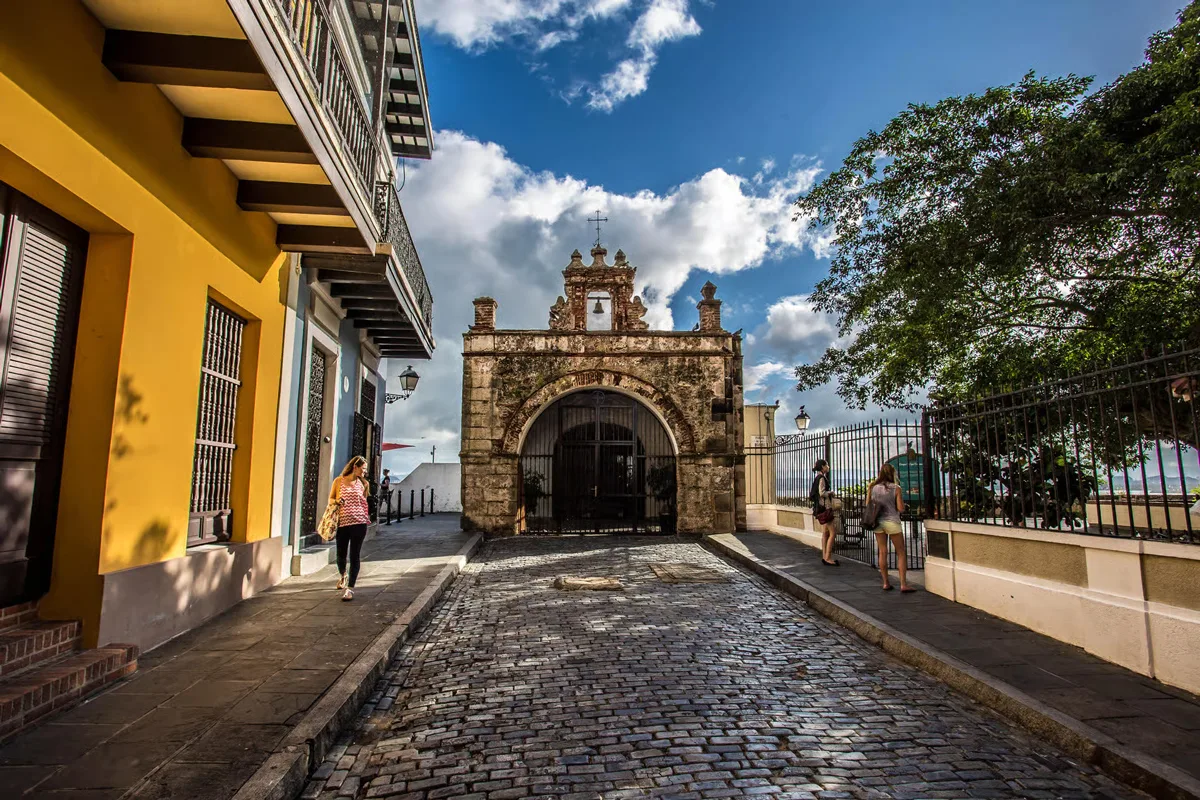
The Old San Juan walking tour with a certified guide runs $24 for two hours and holds a 4.8 across 125 reviews, which works out to $12 an hour for context you cannot get from a map. The history walking tour is the upgrade at $50 for the same two hours with a 4.9 across 398 reviews. If you would rather ride than walk, Old San Juan in a golf cart is $134 for 90 minutes, which is about $89 an hour to cover ground you could cover on foot. That is roughly seven times the hourly rate of the walking tour. It earns its price only if mobility or heat is the actual constraint, in which case it earns it completely.
If you have four to five hours, cross the bay for rum
 Casa Bacardí is $45 and the most-reviewed distillery option in the port by a wide margin, at 4.7 across more than 1,600 reviews. It sits in Cataño, directly across the harbor from the Old San Juan piers. Ron del Barrilito is the connoisseur pick at $90 for two hours, small group, skip-the-line, from Puerto Rico’s oldest rum house in Bayamón. Bacardí is the better call if you are short on time and Barrilito is the better call if you actually care about rum. For something with water and adrenaline in it, Charco Azul with caves, waterfalls, and a beach stop is $115 for five hours at 4.9, and the east coast jet ski run to Isla Verde is $251 per group of two for 90 minutes, which is about $84 per person per hour and is a splurge in the honest sense of the word.
If you have eight hours or more, El Yunque opens up

The rainforest and waterslide tour at $58 is the most-reviewed activity in the entire San Juan catalog, 4.7 across more than 2,400 reviews. The waterslide tour with transportation is $70 for the same seven hours with a 4.9 across 320. Twelve dollars buys you a higher rating and a smaller group, and I would pay it. Run the math honestly before you book either one. A seven-hour tour against an eight-hour port call leaves you sixty minutes of total margin for traffic, a late tender, and the walk back. That is not margin.
The Fajardo boat trips need an overnight or a very long call
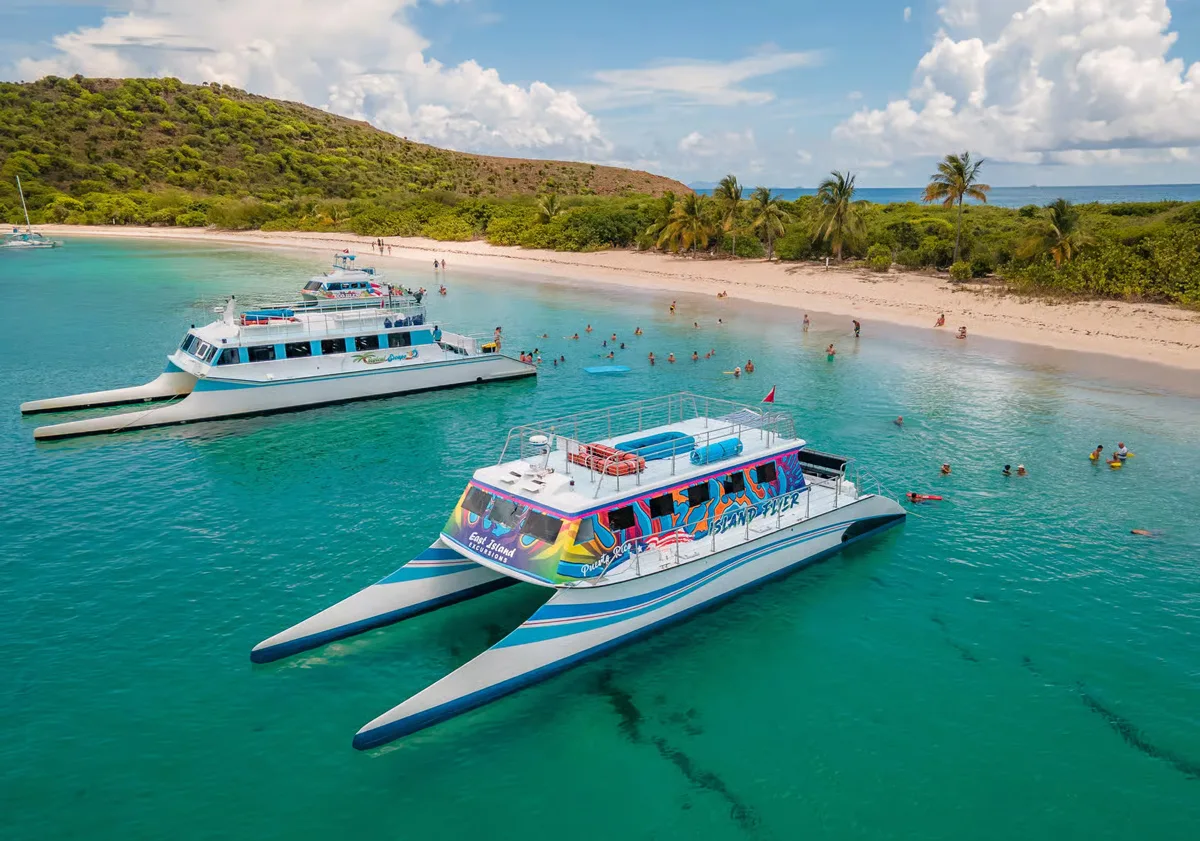
The Icacos Island full-day catamaran at $155 and the Culebra and Cordillera islands snorkel trip at $185 are both excellent and both depart from Fajardo, roughly an hour from the San Juan piers each way. Six hours on the water plus two hours of driving is an eight-hour commitment before anything goes wrong. The Culebra trip works out to about $31 per hour of boat time with lunch included, which is real value on a land day and a real risk on a port day. Book these if your ship overnights in San Juan. Otherwise let them go.
Skip the bioluminescent bay
It comes up in every San Juan search and it is a night activity in Fajardo. Unless your ship is staying past midnight, it is not happening, and I would rather tell you that than watch you try.
If your ship is in port late and you want one more thing, La Placita de Santurce is the move. It is a produce market by day and a street party by night, and it only makes sense on a late call.
What you can see for free on foot in Old San Juan
Old San Juan rewards walking more than almost any port in the Caribbean, and the best of it costs nothing. The Paseo del Morro runs along the base of the old city wall from the San Juan Gate out toward El Morro, right at the water. Paseo de la Princesa gives you the fountain, the vendors, and the view back toward the bay. Plaza de Armas and Plaza de Colón are where the city actually sits and eats. The cats along the wall near El Morro are a genuine local institution and free entertainment for as long as you want it.
The green field in front of El Morro is public and open. You can walk the entire approach, get every photograph people take of that fort, and never pay the $10. Paying it gets you the tunnels, the sentry boxes, and the levels, and I think it is worth it, but you should know the difference before you decide.
If you want a beach without an excursion, Balneario El Escambrón is the closest real option to the old city, roughly ten minutes by car, with facilities and calm water inside the reef. Condado is another five minutes past it with more of a resort strip feel. Either works as a half-day move if you have a long port call.
Who should skip the excursions entirely
If your ship is at an Old San Juan pier for six hours or less and this is your first time in the city, book nothing. Walk off, pay the $10, do both forts, eat inland, and be back with time to spare. You will see more of San Juan that way than most people who spent $150 to be driven somewhere else. The excursion budget makes sense on a repeat visit or a long call, not on a first six-hour look at a walkable UNESCO city.
I am sailing into San Juan in November and I will be running some of these myself, with the pier assignment checked the night before like always. I will report back on what the real timings looked like against the advertised ones, because that gap is where port days go wrong. If you have done any of these, tell me what you would cut in the comments.
Questions People Ask About a San Juan Port Day
How many hours do you need in port for a San Juan excursion to be worth it?
Take your scheduled port time, subtract an hour for disembarking and getting back aboard, then subtract another hour of buffer. What remains is your usable window. If that number is under four hours, stay in Old San Juan. Four to five opens up rum tours and short adventure trips. Eight or more is the threshold for El Yunque.
Is San Juan safe at night for cruise passengers?
Old San Juan and Condado stay active and well trafficked into the evening, and ships that stay late leave plenty of passengers moving through both. Stay in those corridors, use rideshare rather than walking between neighborhoods, and skip inland residential areas you have no reason to be in. The same rules you would apply in any US city apply here.
Do you need cash in Puerto Rico?
Cards work nearly everywhere, and the forts are cashless entirely. Carry $20 to $40 in small bills anyway for taxi drivers, tips, and market vendors. Puerto Rico uses the US dollar, so whatever is in your wallet already works with no conversion or foreign transaction fee.
What should I do in San Juan if it rains?
Duck into the Museo de las Américas in the old Ballajá barracks, the Catedral de San Juan Bautista, or the covered galleries around Plaza de Armas. The fort tunnels at San Cristóbal are largely sheltered too. A rain day is also the argument for booking the golf cart tour rather than the walking tour.